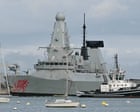
The Royal Navy is stretched thin in the High North. That isn't just a political talking point or a dramatic headline from Westminster. It's a math problem that refuses to go away.
When British lawmakers warn that the service lacks the resources to counter Russia in the far north, they're pointing at a very real mismatch between ambition and hull count. You can't police a freezing, sprawling maritime frontier with ships that are stuck in dry dock, crewed by an overstretched force, or pulled toward crises halfway around the globe. Honestly, it's frustrating to watch a navy with centuries of cold-water tradition try to square a circle using spreadsheets and wishful thinking.
The High North isn't a quiet backwater anymore. Melting ice, shifting trade routes, and Russian military modernization have turned the waters around Norway, the Barents Sea, and the Greenland-Iceland-UK gap into a high-stakes chess board. Britain's security depends heavily on keeping those sea lanes open and predictable. Yet the gap between what London expects the Royal Navy to do and what the fleet can actually deliver keeps widening.
What MPs Are Actually Warning About
When parliamentary committees sound the alarm over Britain's northern posture, they aren't inventing doom for sport. They're looking at readiness figures, maintenance delays, recruitment bottlenecks, and the sheer scale of Russian submarine and surface activity.
Russia has spent years rebuilding and modernizing its Northern Fleet, headquartered on the Kola Peninsula. Quiet attack submarines, long-range strike capabilities, and Arctic-capable vessels give Moscow serious leverage near critical underwater cables, shipping lanes, and naval choke points. Meanwhile, the Royal Navy has had to juggle persistent crew shortages, tight budgets, and competing commitments in the Indo-Pacific, the Middle East, and the Atlantic.
A frigate can't be in two places at once. Neither can a maritime patrol aircraft.
Critics sometimes brush off parliamentary warnings as routine defense lobbying. That's a mistake. Committees like the House of Commons Defence Committee dig into operational readiness, fleet availability, and industrial capacity—details that don't always show up in glossy press releases about future ship classes. When MPs say the service is short of resources in the High North, they're reflecting concerns raised by defense analysts, naval watchers, and officials who know how hard it is to sustain continuous presence in brutal weather.
Why the High North Matters So Much to Britain
If you've ever wondered why a stretch of cold ocean north of the Arctic Circle matters to someone living in Manchester or Bristol, look at what sits above and below the waves.
First, geography does the heavy lifting. The waters between Greenland, Iceland, and the United Kingdom—known as the GIUK gap—form a natural funnel between the Norwegian Sea and the wider North Atlantic. For decades, tracking Russian submarines moving south into the Atlantic has been central to Western anti-submarine warfare. If you lose track of quiet boats up north, finding them later gets a whole lot harder.
Second, modern economies run on invisible infrastructure. Undersea cables carry massive amounts of data, financial traffic, and communications between Europe and North America, alongside vital energy pipelines and shipping routes. A hostile actor doesn't need to invade a coastline to cause chaos; disrupting critical subsea links or shadowing patrol vessels can create massive headaches without firing a single shot.
Third, climate change is altering access. Retreating sea ice doesn't turn the Arctic into a peaceful summer cruise overnight—conditions remain harsh, dark, and dangerous—but it does open seasonal pathways and sharpen competition over resources and influence. NATO allies, especially Nordic countries like Norway, rely on credible partners to keep deterrence steady across northern Europe.
The Hull Count and Readiness Trap
Here's the uncomfortable truth about modern navies. Building a shiny new warship takes years. Keeping an existing fleet ready to sail takes relentless, unglamorous work every single day.
Over the past couple of decades, the Royal Navy's surface escort fleet shrank dramatically compared to its Cold War size. Even when new ships arrive, availability matters just as much as total numbers. Ships go into refits, maintenance runs over schedule, equipment needs upgrading, and sailors need training and rest. If a handful of destroyers or frigates are in dock or short of crew at the same time, the number of hulls actually available for northern patrols drops fast.
Personnel strain makes the problem worse. Recruiting and retaining skilled engineers, warfare officers, and ratings is tough across Western militaries, and civilian industries compete hard for the same technical talent. When crews face long deployments and heavy workloads, burnout creeps in. You can buy steel and electronics, but you can't rush experience at sea.
Then there's the global stretch. Britain wants to play an active role in European waters while also showing up in other regions alongside allies. Every deployment elsewhere carries an opportunity cost. Put a ship in one theater, and you have fewer options in another if tensions spike in the north.
Cold Water Changes Everything
Operating in the High North isn't like cruising through calmer waters. Everything gets harder when the temperature drops and winter darkness stretches for hours on end.
Equipment behaves differently in freezing conditions. Ice accumulation affects decks, sensors, and superstructure, while rough seas test hulls, seamanship, and crew endurance. Navigation, communications, and aviation operations all face steeper margins for error. A system that works smoothly in mild weather can run into trouble when salt spray freezes on contact.
Subsurface warfare is especially demanding. Water temperature, salinity, and ice cover create complex acoustic conditions that affect how sonar travels. Hunting modern submarines in those waters requires specialized platforms, trained crews, and persistent presence—not occasional drive-by visits.
That's why "presence" isn't just a buzzword in naval strategy. Being there consistently builds familiarity with the environment, deters risky behavior, and lets forces respond quickly when something unusual pops up. Sporadic appearances don't carry the same weight.
Where the Debate Gets Messy
Not everyone views Britain's northern challenge through the exact same lens, and pretending there's a single neat consensus would be dishonest.
Some analysts argue that defense spending debates often exaggerate worst-case scenarios to win bigger budgets. Others counter that threats move faster than procurement cycles, so waiting for clear proof of crisis is a recipe for being caught flat-footed. Both arguments have merit depending on how much risk you're willing to tolerate.
There's also disagreement over what kind of capability matters most. Should Britain focus primarily on traditional large surface combatants and crewed submarines, or lean much harder into uncrewed surface and underwater drones, space-based sensors, and tighter integration with NATO allies? Honestly, it's probably not an either-or choice. Unmanned systems can expand sensing and patrol reach at lower cost, yet they still need command networks, maintenance, and resilient platforms to back them up.
Allied burden-sharing adds another layer. With Finland and Sweden joining NATO alongside Norway, northern European defense has shifted in major ways. Britain doesn't carry the High North alone, and coordination with allies can multiply effect. Still, allies expect each member to bring real, dependable capability to the table rather than relying on everyone else to fill the gaps.
Common Misconceptions About Naval Readiness
People outside defense circles—and plenty inside them—often fall for a few neat myths about sea power.
Myth one: A bigger budget immediately fixes ship shortages. Money helps, obviously, but defense procurement and shipyard capacity move slowly. Supply chains, skilled labor, and design timelines mean cash alone can't conjure a frigate or submarine next month.
Myth two: A single high-tech platform solves a wide-area problem. One advanced ship or aircraft is valuable, but geography is huge. Covering vast ocean stretches and choke points takes numbers, endurance, and layered sensors working together.
Myth three: Peacetime patrols don't matter unless shots are fired. In maritime competition, day-to-day presence, monitoring, and deterrence shape behavior long before any crisis peaks. Once a crisis starts, trying to scramble assets you don't have in place is a painful place to be.
Practical Next Steps If You're Following This Issue
If you want to cut through spin and track how this story actually plays out in the High North, start with concrete indicators rather than slogans.
- Read primary committee reports and defense briefings. Look directly at parliamentary defence committee evidence sessions and official fleet readiness updates to see what officials and experts say behind the headlines.
- Track ship availability, not just announcements. Pay attention to when vessels enter or leave maintenance, when new classes reach full operational capability, and where ships are actually deployed.
- Watch NATO northern integration. Follow how the UK coordinates maritime patrol, undersea infrastructure protection, and cold-weather exercises with Norway and other northern allies.
- Separate short-term fixes from long-term plans. Keep an eye on how government budgets balance immediate operational strain against multi-year shipbuilding and uncrewed technology programs.
Closing the gap between northern ambitions and naval reality won't happen overnight. It takes honest accounting of limits, steady investment, and clear priorities about where Britain's ships need to be when the weather turns rough.