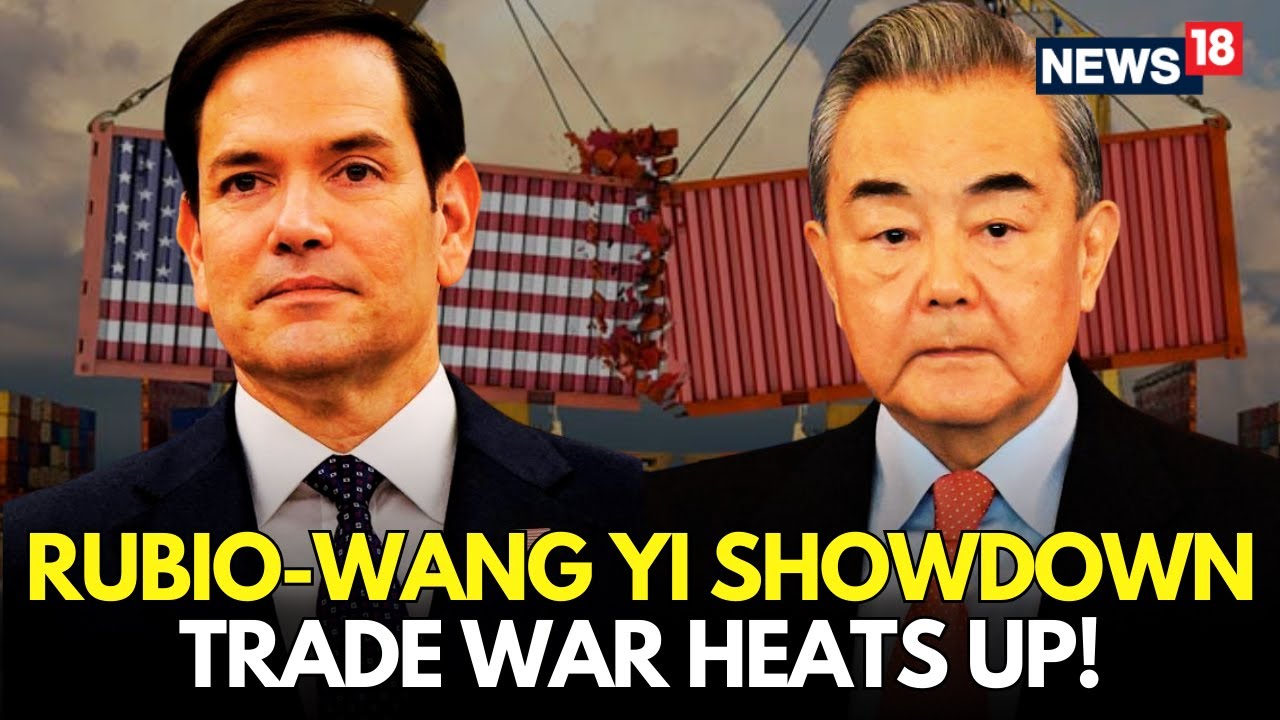
The diplomatic machinery between Washington and Beijing is grinding back into gear with a friction that suggests the old rules of engagement have been permanently discarded. Secretary of State Marco Rubio’s recent dialogue with Chinese Foreign Minister Wang Yi serves as the opening salvo for a state visit by Donald Trump that promises to be more than a mere photo opportunity. While the official readouts emphasize "global stability," the reality on the ground is a frantic scramble to define the boundaries of a new, more aggressive era of managed competition. This isn't about finding common ground; it is about establishing the floor of a relationship that has been in a freefall for years.
The Architect of Pressure Meets the Veteran of Defense
Marco Rubio’s presence at the negotiating table represents a seismic shift in how the United States intends to handle its primary peer competitor. For years, Beijing viewed Rubio as a hardline ideological adversary, a man who built his career on highlighting human rights abuses and the strategic threat of the Chinese Communist Party. Now, they must deal with him as the chief architect of American foreign policy. Also making waves lately: Regional Friction and the Doctrine of Strategic Defiance.
Wang Yi, a man who has survived decades of internal shifts within the Politburo, represents the continuity of Chinese ambition. His task is to project an image of a confident, stable superpower while privately grappling with a domestic economy that is no longer the unstoppable engine it once was. The dialogue between these two men isn't just a discussion of logistics for a presidential visit. It is a high-stakes stress test of two conflicting worldviews.
The primary objective for the State Department is to secure concessions on trade and fentanyl precursors before Trump even steps off Air Force One. Beijing, conversely, is looking for a "reset" that allows them to maintain their industrial subsidies while avoiding the sledgehammer of universal 60 percent tariffs. Additional information regarding the matter are detailed by NBC News.
The Tariff Shadow and the Art of the Pre-Deal
Every word spoken between Rubio and Wang is overshadowed by the looming threat of a renewed trade war. During the first Trump administration, tariffs were used as a blunt force instrument. This time, the preparation suggests a more surgical, yet more expansive, application of economic pressure. Rubio has signaled that the U.S. is no longer interested in the "constructive engagement" that defined the last three decades. Instead, the focus has shifted to de-risking critical supply chains and ensuring that American capital does not fund Chinese military modernization.
China’s strategy involves leveraging its dominance in green energy and rare earth minerals. Wang Yi knows that while the U.S. wants to decouple in high-tech sectors like semiconductors, the American economy remains deeply entangled in Chinese manufacturing for the "energy transition."
- The Semiconductor Chokepoint: Washington is tightening the screws on high-end chip exports, treating technology as a national security asset rather than a commodity.
- The Rare Earth Counter: Beijing has hinted at export controls on gallium and germanium, a move designed to show that they can hurt American industry just as easily as Washington can hurt theirs.
- The Currency Question: Stabilization of the Yuan remains a quiet but vital point of contention, as a devalued currency would offset the impact of American tariffs.
Security Redlines and the Taiwan Equation
Stability is the buzzword, but the South China Sea and the Taiwan Strait remain the most volatile flashpoints in the world. Rubio has been one of the most vocal supporters of increased military aid to Taipei, a position that Wang Yi has characterized as "interference in internal affairs."
The upcoming visit will likely see a performative dance around these issues. However, the investigative reality is that both sides are preparing for a long-term standoff. The U.S. is actively bolstering the "First Island Chain" defense strategy, while China continues to build out its blue-water navy.
The "stability" Wang Yi speaks of is essentially a demand for the U.S. to step back from China's doorstep. The "stability" Rubio seeks is a world where China’s expansionism is checked by a network of American-led alliances. These two definitions are fundamentally incompatible. The goal of the Rubio-Wang talks is to ensure that this incompatibility doesn't lead to an accidental kinetic conflict before the two heads of state have a chance to speak face-to-face.
The Fentanyl Crisis as a Diplomatic Lever
For the American domestic audience, no issue is more pressing than the flow of illicit fentanyl. Washington has long accused Beijing of turning a blind eye to the export of precursor chemicals used by Mexican cartels. Rubio has made it clear that cooperation on this front is a prerequisite for any softening of the American stance on trade.
Beijing has historically used this cooperation as a bargaining chip, turning the "faucet" of enforcement on or off depending on the state of the broader relationship. By bringing this to the forefront of the pre-visit discussions, Rubio is attempting to take that chip off the table. He is framing the drug crisis not as a side issue, but as a direct attack on American social fabric that requires a "clear and verifiable" response from the Chinese security apparatus.
The Shifting Sands of Global Influence
We are seeing a move away from the multilateralism of the past. Neither Rubio nor the Trump administration appears interested in the traditional "G2" framework that some diplomats once envisioned. Instead, they are pursuing a transactional realism. This means that agreements will be specific, time-bound, and strictly enforced, rather than broad statements of friendship.
China is adapting to this. Under Xi Jinping, the focus has shifted toward the "Global South," attempting to build a coalition of nations that are wary of American hegemony. When Wang Yi speaks of global stability, he is also speaking to an audience in Africa, Latin America, and the Middle East, positioning China as the "reasonable" power in the face of what he portrays as American volatility.
The Economic Undercurrents
While the political rhetoric is focused on security and "winning," the underlying economic data tells a story of mutual vulnerability.
- China’s Property Crisis: The collapse of the real estate sector in China has wiped out trillions in household wealth, making Beijing more desperate for export markets than they admit.
- U.S. Inflationary Pressures: While the U.S. wants to hit China with tariffs, the administration is acutely aware that a sudden spike in consumer prices could erode their political mandate.
- The Manufacturing Resurgence: The U.S. is pouring billions into domestic manufacturing through various incentives, a process that will take years to bear fruit, leaving a "vulnerability gap" in the interim.
The Empty Chair at the Table
Noticeably absent from the official rhetoric is any mention of the climate cooperation that defined the previous decade of diplomacy. The Rubio-led State Department has signaled a pivot toward energy dominance, viewing climate policy through the lens of economic competition rather than global altruism. This removes one of the few areas where the two nations previously found common ground, further narrowing the channel of communication to hard-power issues.
The preparation for this visit is being handled with a level of skepticism that borders on hostility. There are no illusions of a "grand bargain." Instead, the focus is on a series of tactical "ceasefires" in the trade war that allow both sides to regroup.
A New Protocol of Confrontation
The dialogue between Wang Yi and Marco Rubio is the beginning of a cold, calculated restructuring of the world order. The "stability" they are discussing is not the peace of the 1990s; it is the managed tension of a new bipolar world.
The upcoming visit by Trump to Beijing will not result in a return to the status quo. It will likely formalize the division of the world into two distinct economic and technological spheres. The success of the Rubio-Wang talks won't be measured by the warmth of the subsequent joint statements, but by the clarity of the "no-go" zones established to prevent a total systemic collapse.
The old era of globalization is dead. What Rubio and Wang are currently negotiating are the terms of the funeral, and the rules for whatever comes next.
If the U.S. successfully forces China to curb its industrial overcapacity and precursor exports, it will be hailed as a victory for "America First" diplomacy. If Beijing manages to trade minor concessions for a reprieve from the most punishing tariffs, they will have successfully bought more time to insulate their economy. Both sides are playing a long game where the objective is not to win the argument, but to outlast the opponent's resolve.
The final test will be whether the guardrails established in these preliminary talks are strong enough to withstand the inevitable shocks of a relationship built on mutual distrust. There is no going back to the way things were; there is only the difficult work of ensuring that the competition remains controlled.
Business leaders and regional allies should stop waiting for a "return to normalcy." Normalcy has been redefined. The blueprint being drafted by Rubio and Wang is one of permanent, high-level competition where every trade deal, every diplomatic cable, and every state visit is a move on a global chessboard that has no "end game," only a series of shifting advantages.
The definitive action for observers is to prepare for a bifurcated global market where neutrality is no longer a sustainable business model.