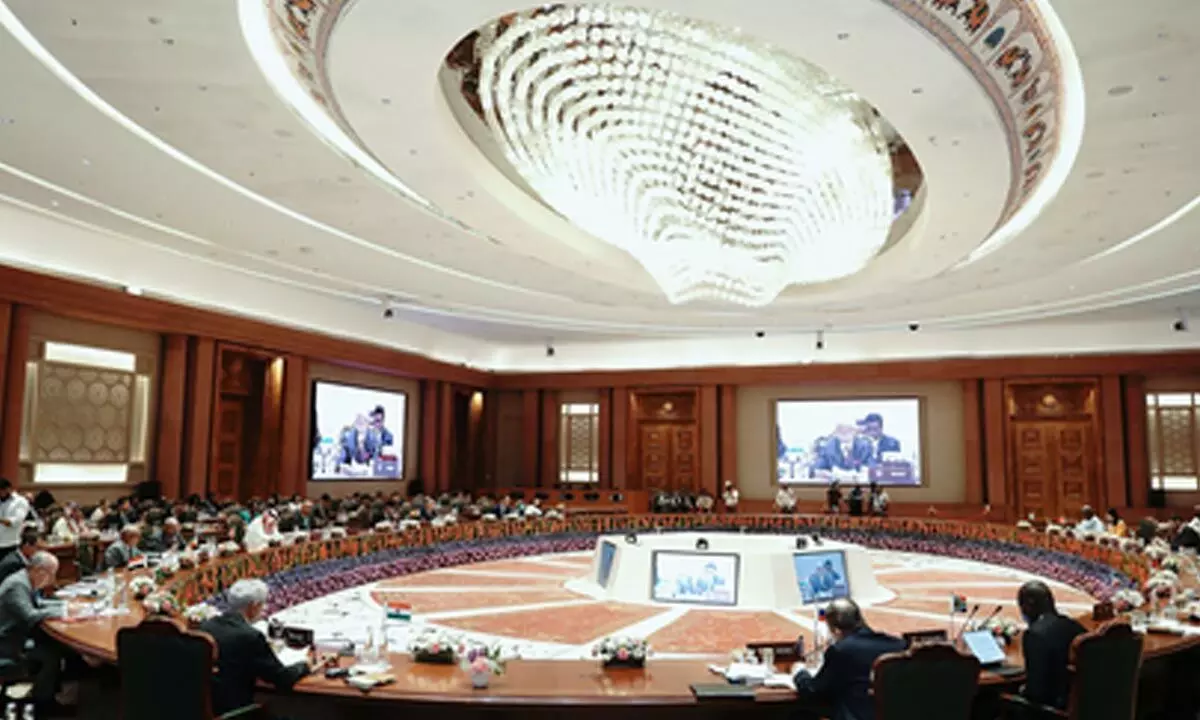
Geopolitical chess is rarely subtle, but the diplomatic signaling coming out of the recent BRICS summit in New Delhi caught seasoned observers off guard. According to the Kremlin, both Indian Prime Minister Narendra Modi and Chinese President Xi Jinping stepped forward to offer their "good offices" to help facilitate a peaceful resolution to the devastating war in Ukraine.
This diplomatic push arrives at a very specific moment: Washington is struggling to break the stubborn deadlock. With US President Donald Trump’s administration finding its initial peace blueprints sputtering against hardened frontline realities, New Delhi and Beijing are carving out an active mediation space. Understanding why this matters requires looking past the standard press releases and examining the cold arithmetic of modern international relations.
The Context Behind the Kremlin Announcement
Moscow didn't drop this detail by accident. Kremlin spokesperson Dmitry Peskov explicitly noted that Russian President Vladimir Putin welcomed the readiness expressed by both Asian giants. For months, Western capitals have tried to isolate Moscow economically and diplomatically. Yet, the imagery from New Delhi—featuring Putin, Modi, and Xi standing shoulder to shoulder—projected an entirely different reality.
India and China maintain massive economic stakes in the global energy and commodity markets. India’s leadership has consistently walked a tightrope, refusing to sever ties with traditional defense and economic partner Russia while maintaining open channels with Kyiv and Western allies. Modi's recurring mantra that "today's era is not an era of war" has been repeated on global stages, establishing New Delhi's moral high ground to speak to both sides.
Why Washington Is Struggling to Break the Deadlock
Washington’s peace initiatives have faced steep hurdles because neither Moscow nor Kyiv is willing to accept terms that look like defeat. The frontlines in eastern Ukraine remain heavily contested, and the strategic demands from both sides are fundamentally incompatible. Kyiv demands total territorial restoration, while Moscow insists on retaining control over captured regions.
Trump's transactional approach to diplomacy has pressured both sides, but it lacks the regional buy-in required to enforce a lasting ceasefire. When an outside power attempts to force a diplomatic shortcut without addressing the core security architecture of Eurasia, it usually fails. That vacuum is precisely what Modi and Xi are moving to fill.
The Strategic Position of New Delhi and Beijing
You might wonder why India and China are suddenly stepping into a mediation role when their own bilateral relationship has experienced profound friction. The answer is self-interest wrapped in global statesmanship.
- Protecting Economic Arteries: Disruptions in the Black Sea and volatile commodity markets directly impact food and fuel security across the Global South. India, as a major importer of energy and agricultural goods, bears the brunt of these supply chain shocks.
- Asserting Strategic Autonomy: By offering mediation, both New Delhi and Beijing signal to Washington and Brussels that global conflict resolution cannot happen without the consent and participation of major Asian powers.
- Shaping the Post-Conflict Order: Whoever helps broker the eventual exit from this conflict secures immense geopolitical leverage over the reconstruction and economic agreements that follow.
What Happens Next on the Ground
Diplomatic posturing is easy; ending an artillery-heavy war is brutally hard. While the Kremlin's acknowledgment of Modi and Xi's offers is a diplomatic milestone, translating good intentions into a functional peace framework remains a monumental challenge.
Zelenskyy has floated the possibility of high-level diplomatic engagements on the margins of upcoming global summits, but the baseline demands of both belligerents haven't shifted. Until Moscow and Kyiv find an acceptable middle ground on territorial sovereignty, external mediators can only offer a table to talk at—they cannot force a breakthrough.
The real test will be whether New Delhi's unique brand of multi-aligned diplomacy can bridge a gap that Western pressure alone has failed to close.
Putin Welcomes Modi-Xi Ukraine Peace Push As Trump Struggles To Break Deadlock
This video provides an in-depth look at the diplomatic dynamics between Modi, Xi, and Putin during the BRICS summit amidst stalled US peace efforts.