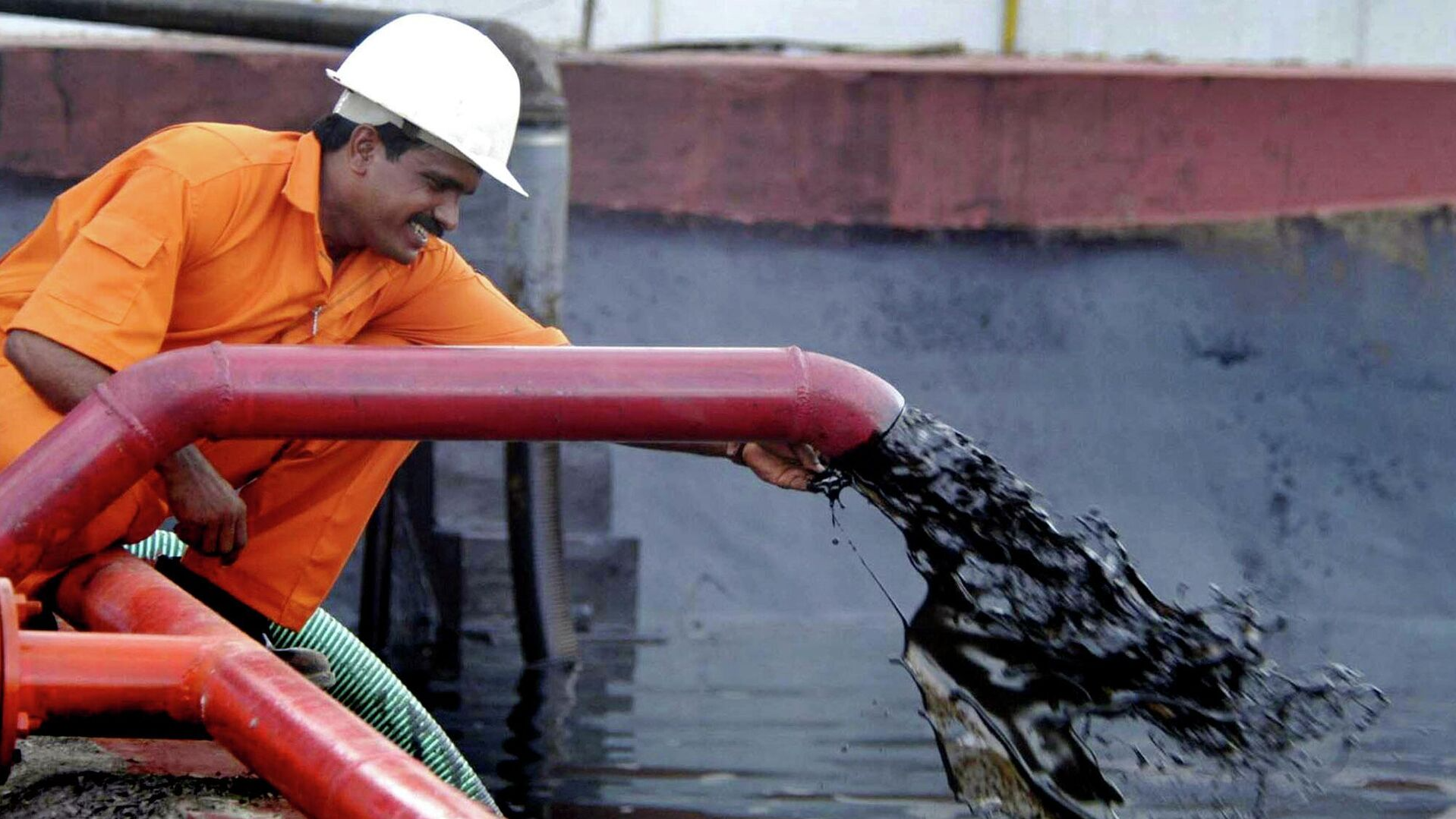
India’s energy strategy has shifted from cautious balancing to a high-stakes sprint. As volatility tears through the Middle East, the world’s third-largest oil consumer is no longer waiting for traditional suppliers to stabilize the market. In a massive procurement move exceeding 10 million barrels, Indian state-run and private refiners have pivoted back to Russian Urals. This isn't just about finding a cheaper barrel of oil. It is a calculated defensive maneuver designed to insulate the Indian economy from a supply shock that could otherwise cripple its industrial growth and ignite domestic inflation.
For decades, the Persian Gulf was the undisputed cornerstone of India’s energy security. That era is fading. The current geopolitical friction in the Middle East has introduced a level of risk that Indian policy makers can no longer ignore. By locking in Russian shipments, India is effectively creating a buffer against the unpredictability of the Strait of Hormuz.
The Arithmetic of an Energy Pivot
The math behind this shift is as cold as it is practical. When Brent crude prices spike due to regional instability, the Indian economy feels the impact within hours. Every dollar increase in the price of a barrel adds billions to the country’s trade deficit. Russian crude, despite the logistical hurdles and the scrutiny of Western sanctions, offers a necessary reprieve.
The recent purchase of over 10 million barrels represents more than just a logistical update. It serves as a clear signal to the global market that India will prioritize its own internal stability over geopolitical alignment. While the G7 price cap remains a theoretical ceiling, Indian refiners have mastered the art of navigating complex shipping and insurance arrangements to keep the flow constant. This is a masterclass in opportunistic procurement.
Why the Middle East is No Longer Enough
Relying on a single geography for the lifeblood of an economy is a strategic blunder. Indian refineries, particularly those in the public sector like IOC and HPCL, have historically been optimized for Middle Eastern grades. However, the constant threat of supply interruptions—ranging from drone strikes on infrastructure to the threat of maritime blockades—has made that dependency a liability.
Russian oil, once a negligible part of the Indian import basket, now occupies a dominant position. The transition required massive technical adjustments. Refineries had to recalibrate their processing units to handle the specific sulfur content and density of Russian Urals. This wasn't a temporary fix. It was a permanent infrastructure shift that indicates Russia will remain a primary partner for the foreseeable future.
The Invisible Mechanics of the Russian Trade
Behind the headlines of "10 million barrels" lies a sophisticated network of "shadow" fleets and non-dollar payments. The West watches closely, but India has been blunt about its requirements. To keep the lights on in Delhi and the factories running in Gujarat, the oil must flow.
The transaction process has become increasingly opaque. We are seeing a move away from the SWIFT system for these specific deals, with payments occasionally settled in non-Western currencies. This bypasses the traditional financial choke points that the United States and its allies have used to exert pressure. For India, the moral calculus is simple: a failure to secure energy leads to social unrest. No government will choose international approval over domestic stability.
The Refiner Advantage
Private giants like Reliance Industries and Nayara Energy have been even more aggressive than their state-run counterparts. These entities possess the complex secondary processing capacity needed to turn heavy Russian crude into high-value exports like diesel and jet fuel for the European market.
It is a profound irony of the current global situation. Europe, while publicly distancing itself from Russian energy, frequently ends up purchasing refined products that originated in Russian oil fields, processed in Indian refineries. India has positioned itself as the world’s "laundry," cleaning the origins of the molecules through industrial processing and reselling them to a world desperate for fuel. This middle-man status has padded the profit margins of Indian refiners to historic levels.
Geopolitical Friction and the Strategic Reserve
India is also quietly filling its Strategic Petroleum Reserves (SPR). The 10-million-barrel surge is partly about immediate consumption and partly about long-term hoarding. If the Middle East descends into a broader conflict that shutters the Persian Gulf, India needs more than just a few weeks of supply.
The government is currently scouting for new underground salt cavern storage sites. They know the current capacity is insufficient for a true global crisis. By buying Russian crude now, they are effectively "buying time." They are banking on the fact that as long as the Ukraine conflict continues, Russia will remain a distressed seller, providing India with the cheap feed-stock necessary to build a national safety net.
The Logistics of Defiance
Shipping 10 million barrels is a massive undertaking. The voyage from Baltic ports like Primorsk or Ust-Luga to the Indian coast is significantly longer and more expensive than the short hop from Iraq or Saudi Arabia. To make the economics work, the discount on the crude must be deep enough to cover the increased freight costs and the "risk premium" associated with the trade.
- Freight Costs: Tanker rates for Russian routes have stayed elevated due to the limited pool of willing insurers.
- Insurance Gaps: Indian firms have increasingly relied on domestic or non-Western insurance providers to cover these voyages.
- Ship-to-Ship Transfers: A significant portion of this oil is moved via mid-ocean transfers to hide the original source or to move oil onto larger vessels for better economies of scale.
The Myth of Divergence
Critics often argue that India is "turning its back" on its Western partners by deepening ties with Moscow. This is a misunderstanding of Indian foreign policy. India isn't moving toward Russia; it is moving toward India. The policy is one of radical multi-alignment.
The Indian leadership views energy as a sovereign right. When the U.S. or the EU suggests that India should scale back these purchases, the response from New Delhi is usually a pointed reminder that Europe’s own energy transition was built on decades of cheap Russian gas. The hypocrisy is not lost on the Indian diplomatic corps. They see the 10-million-barrel purchase as a necessary act of economic self-defense in a world where the old rules of trade are being rewritten daily.
The Role of Domestic Pricing
The real pressure point is the Indian consumer. Petrol and diesel prices at the pump are a massive political issue. If the government allows prices to track the global Brent benchmark without any mitigation, the ruling party faces a backlash at the polls.
By sourcing discounted Russian crude, the government allows state-owned oil marketing companies to absorb some of the global price volatility. This prevents a direct pass-through to the citizen. In this sense, every barrel of Russian oil bought is a subsidy for the Indian middle class. It is the grease that keeps the wheels of the economy turning during a period of global friction.
The Risks of the Long Game
This strategy is not without peril. If the U.S. decides to implement "secondary sanctions"—penalizing any entity that deals with Russia regardless of the price cap—India could find itself in a precarious position. So far, Washington has looked the other way, recognizing India’s importance as a strategic counterweight to China in the Indo-Pacific.
However, that patience has limits. If the volume of purchases continues to climb, or if India moves to help Russia significantly bypass the technicalities of the price cap, the diplomatic cost might eventually outweigh the economic benefit. For now, the Indian government has judged that the risk of an energy shortage is far more dangerous than the risk of a diplomatic spat.
The Supply Chain Reality
The physical infrastructure of global oil is changing. We are seeing a bifurcation of the market. There is now a "Western-compliant" market and a "parallel" market. India is the primary bridge between these two worlds.
This dual-role gives India immense leverage. It can negotiate better terms with Middle Eastern suppliers like Saudi Arabia and the UAE by pointing to its Russian alternatives. For the first time in history, India is not a "price taker" in the energy market. It has become a "price maker," or at the very least, a highly disciplined shopper that can walk away from a bad deal.
Impact on the Middle East Balance
The traditional heavyweights of the oil world are watching this pivot with growing concern. Saudi Arabia has already begun adjusting its Official Selling Prices (OSPs) for Asia to stay competitive. They realize that they can no longer take the Indian market for granted.
This competition is a win for India. By playing Moscow against Riyadh, New Delhi is ensuring that it always has a seat at the table. The 10 million barrels are just the latest move in a much larger game of chess where the goal is not to win the war, but to ensure you never run out of fuel.
The Refining Tech Gap
The long-term success of this strategy depends on India’s ability to continue upgrading its refineries. Processing Russian Urals is harder on equipment than processing light, sweet crude from elsewhere. It requires more sophisticated desulfurization and coking units.
Investment in this technology is surging. India is not just buying oil; it is building a specialized industrial complex designed to handle the "difficult" crudes of the world. This gives India a massive advantage over other developing nations that are still tied to specific, easy-to-refine oil grades. If you can refine anything, you can buy from anyone.
The Reality of Energy Sovereignty
The narrative that India is simply "helping Russia" is a convenient oversimplification. In reality, India is exploiting a global crisis to secure its own future. The 10 million barrels of crude are a bridge over the current instability of the Middle East, providing a lifeline to an economy that cannot afford to stop growing.
The global energy map is being redrawn, and the lines are no longer being dictated solely by the West or the OPEC+ cartel. India has carved out its own path, defined by a ruthless pragmatism that prioritizes the needs of its 1.4 billion citizens over the desires of external powers.
This isn't a temporary shift in the trade balance. It is the emergence of a new energy superpower that knows exactly how to use its market weight to get what it wants. The shipments will continue, the tankers will keep moving, and the "shadow" market will become the new normal. If the rest of the world doesn't like it, they have yet to offer a more affordable alternative.
Keep a close eye on the shipping lanes of the Indian Ocean. The tankers arriving at Jamnagar and Mundra are carrying more than just oil; they are carrying the weight of India's industrial ambitions.