Neutrality Is A Myth Built To Shield Bureaucrats
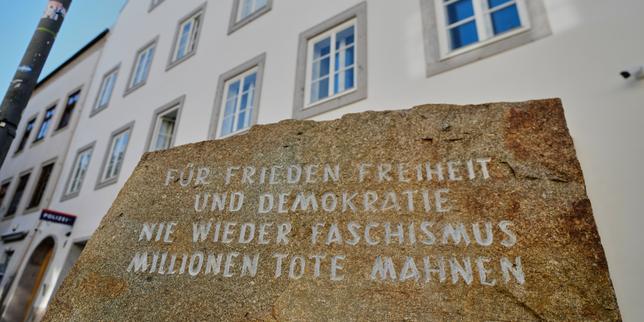
Austria’s decision to turn Adolf Hitler’s birthplace in Braunau am Inn into a police station isn't a victory for democracy. It’s an exercise in state-sponsored amnesia.
For decades, politicians wringed their hands over the 17th-century building at Salzburger Vorstadt 15. The media consensus was predictable: turn it into a police station to establish "neutrality," neutralize its symbolic power, and deter neo-Nazi pilgrimage. On paper, it sounds like pragmatic governance.
In reality, it’s a failure of moral courage.
Converting a site of supreme historical infamy into an everyday municipal building doesn't neutralize history. It buries it. By handing the keys to local law enforcement, the Austrian state attempted to perform a administrative magic trick—converting a painful monument of totalitarian origin into a sanitized symbol of law and order. You cannot paint over dark history with state authority and expect the ghost to leave.
The Neutralization Trap
Let’s dismantle the primary justification for this renovation: the obsession with preventing a Wallfahrtsort—a pilgrimage site for extremists.
The rationale goes that if you turn the building into a functioning state instrument, neo-Nazis won't be able to gather, lay flowers, or take photographs without immediately facing arrest. The logic is embarrassingly naive. Extremists don't care about the state's intended function for a building. They care about the geography. The soil. The coordinates.
When you place a police station on that coordinate, you don't eradicate the obsession. You simply add a layer of irony that fringe groups quietly celebrate. Worse, you send a clear message to the rest of the public: Look away. There is nothing left to learn here.
Historical memory requires friction. It demands that citizens and tourists stand in front of a site, feel uncomfortable, and confront the brutal realities of how an ordinary town produced an extraordinary monster.
What does a police station offer? Tinted glass, secure entry doors, and bureaucratic indifference.
It is the architectural equivalent of sweeping radioactive waste under an office rug and claiming the room is clean.
The Cowardice Of Bureaucratic Erasure
I have spent years observing how governments handle uncomfortable architecture. From post-Soviet monuments across Eastern Europe to Confederate statues in the American South, the instinct of the ruling class is almost always the same: destroy, relocate, or neutralize.
Neutralization is the most dishonest option of the three. Demolition at least requires a deliberate stance, even if it is destructive. Preservation as a memorial requires emotional and financial investment. But neutralization? Neutralization is the bureaucrat’s escape hatch. It allows politicians to pretend they took decisive action while actually committing a slow, quiet act of historical erasure.
The Austrian government spent millions on architectural competitions to make the building look as non-descript as possible. They intentionally stripped away defining features to make it look like any other pastel-colored structure in Braunau.
Think about the absurdity of that concept: spending taxpayer funds to make history invisible.
The Alternative Everyone Was Too Afraid To Execute
The debate was always framed as a false dichotomy: either let it become a Nazi shrine, or turn it into a police station.
This binary choice was constructed by politicians who wanted to avoid a difficult conversation. There was a third path—one that required actual conviction.
The building should have been transformed into an unsparing, confrontational education center dedicated to the mechanics of complicity. Not a generic "peace museum" that hands out brochures on tolerance, but a hard-nosed, analytical institution dissecting how ordinary citizens in small towns become active participants in fascist regimes.
Braunau am Inn did not drop from the sky into Hitler's biography. It was a community. The surrounding region supported the regime. The real power of keeping the birthplace intact as an educational site would have been to force visitors to confront the terrifying mundanity of evil.
Instead, Austria chose to house traffic officers and administrative staff in the birthplace of the person who orchestrated the total destruction of Europe.
What People Also Ask (And Why They Get It Wrong)
Should Hitler’s birthplace simply be demolished?
No. Demolition is a quick hit of catharsis that solves nothing. Razing the building creates a blank slate—a literal void that becomes an even more romanticized myth for extremists. Demolition says, "We are too fragile to look at this." Preservation with context says, "We own this failure, and we will dissect it endlessly."
Doesn't a police station symbolize the triumph of the rule of law over fascism?
This is the ultimate propaganda win for government press offices. Slapping a police department onto a historical site isn't a triumph of democratic values; it's a lazy branding exercise. Law enforcement enforces current statutes; it does not educate future generations on historical fascism. Conflating the two is an insult to civil education.
How do you stop neo-Nazis from visiting without hiding the building?
You out-educate and out-confront them. You cover the facade with explicit historical context. You make the site so thoroughly dedicated to exposing totalitarian failure that visiting it offers zero romantic appeal to a fascistic worldview. Extremists thrive on hidden symbols and denied history. They wither under rigorous, transparent exposure.
The Cost Of Comfort
We live in an era obsessed with comfort. We want our history clean, categorized, and neatly tucked away behind modern glass panels.
When we convert the origin points of human atrocities into mundane administrative offices, we aren't protecting society from fascism. We are protecting ourselves from the discomfort of memory.
Austria had a chance to build a monument to radical transparency. Instead, it built a precinct.
Stop celebrating administrative laziness as moral victory. History isn't something you clean up and file away. It's something you leave out in the open, even when it burns to look at it.