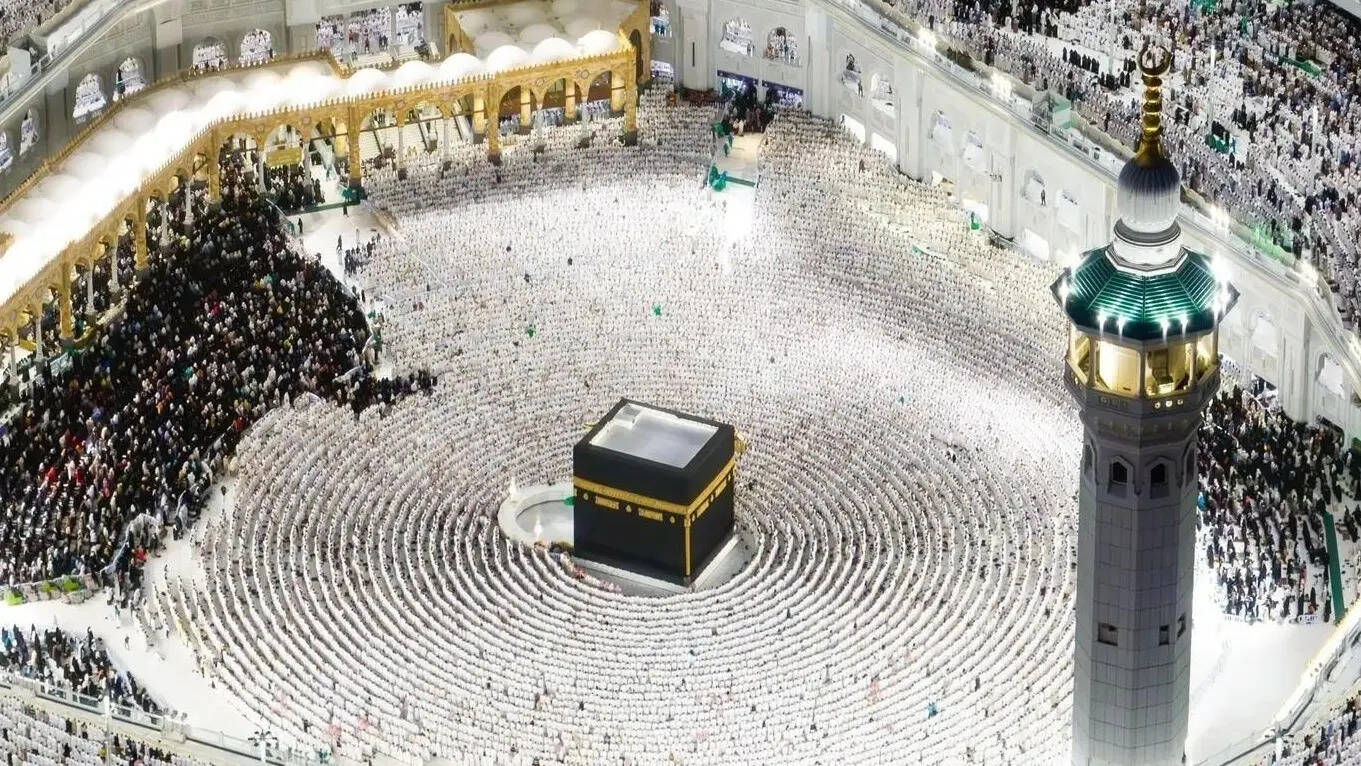
The era of the "backdoor Hajj" is over. Saudi Arabia has effectively locked the gates to the 2026 pilgrimage for anyone attempting to bypass official channels, backing its new security protocols with a punitive regime designed to bankrupt and banish violators. For decades, thousands of pilgrims arrived in the Kingdom on tourist or visit visas, hoping to melt into the crowds at Makkah without the mandatory Nusuk Hajj permit. That gamble now carries a price tag of SAR 20,000, immediate deportation, and a decade-long exile from the country.
This is not a mere bureaucratic update. It is a fundamental shift in how the Kingdom manages its most sensitive religious and logistical event. By tightening the net now, Riyadh is signaling that the days of "informal" pilgrimage, which often led to overcrowding and safety lapses, are a liability they will no longer tolerate.
The Financial and Legal Iron Fist
The Ministry of Interior has made the math simple and painful. If you are caught within the designated Hajj zones—Makkah, the Central Area, or the Holy Sites of Mina, Muzdalifah, and Arafat—without a valid permit, the SAR 20,000 fine is just the opening move. This penalty applies to everyone: citizens, residents, and visitors alike.
Authorities are not just targeting the pilgrims. They are going after the infrastructure that sustains the underground Hajj economy. Anyone caught transporting permit-less pilgrims faces a sliding scale of misery that includes jail time and the seizure of their vehicle. For expatriates living in Saudi Arabia who attempt to assist unauthorized relatives or friends, the "No Permit, No Hajj" rule is a career-ender. You don't just lose your money; you lose your residency.
Why the Crackdown is Accelerating Now
To understand the intensity of these 2026 regulations, one must look at the tragic events of previous years. Heatwaves in the Hejaz region have become increasingly lethal. In 2024, hundreds of pilgrims died from heat-related illnesses, and a significant portion of those fatalities were among "unregistered" pilgrims.
Registered pilgrims have access to air-conditioned tents, dedicated medical transport, and official cooling stations. Those operating outside the system are forced to walk long distances in 50°C heat, often hiding from security patrols in areas without shade or water. The Saudi government is framing this crackdown as a humanitarian necessity. By pricing out the risk-takers, they hope to prevent the PR nightmare and the genuine human tragedy of mass casualties on the plains of Arafat.
The Digital Panopticon
The enforcement isn't just about boots on the ground. The Kingdom has invested billions in the Makkah Route Initiative and AI-driven surveillance. Every entry point into the holy sites is now a digital checkpoint.
- Biometric Verification: Security forces at the "Serya" checkpoints around Makkah use mobile scanners to link physical presence to the Nusuk database in seconds.
- Plate Recognition: Automated systems track vehicles entering the region, flagging those without the specific transport permits required for the Hajj season.
- Drone Surveillance: Aerial monitoring identifies illegal encampments in the mountains surrounding Makkah where permit-less pilgrims historically hid to evade patrols.
The Economic Reality of the Official Path
The elephant in the room is the cost. For many in the Muslim world, the price of an official Hajj package has skyrocketed. Global inflation, coupled with the Saudi government's push for high-end infrastructure, has made the journey a once-in-a-lifetime expense that many simply cannot afford.
This creates a desperate market for "Hajj brokers"—middlemen who sell fake permits or promise "safe passage" on visit visas. The new SAR 20,000 fine is specifically calibrated to be higher than the cost of many official packages in certain regions, effectively destroying the economic incentive to cheat the system. If the penalty for getting caught is double the price of the legal route, plus a 10-year ban from the Holy Cities, the "discount" of an unofficial trip vanishes.
Accountability for the Middlemen
Security forces are now prioritizing the "Organizers of Deception." These are the travel agencies and individuals who exploit the religious fervor of the elderly or the poor by convincing them that a visit visa is "good enough" for Hajj. Under the 2026 rules, these entities face massive fines and public "naming and shaming" in local media.
The Kingdom is also working with foreign governments to intercept these scams at the source. By the time a pilgrim lands at King Abdulaziz International Airport in Jeddah, if they don't have the right barcode on their phone or the right wristband on their arm, the system has already flagged them. There is no longer a "grey area" where a sympathetic officer might let you through.
The Ten Year Exile
The 10-year entry ban is perhaps the most psychological weapon in the Saudi arsenal. For a believer, the prospect of being barred from Makkah and Madinah for a decade is a spiritual death sentence. It removes the possibility of performing Umrah or visiting the Prophet’s Mosque for a significant portion of one's remaining life.
The Saudi authorities are betting that the fear of this long-term exclusion will do more to thin the crowds of unauthorized pilgrims than the threat of a fine ever could. They are shifting the stakes from a temporary legal headache to a permanent spiritual loss.
Logistics as a Matter of National Security
Managing two to three million people in a confined geographic space over five days is a logistical feat comparable to hosting a World Cup every single year, but with the added complexity of ritual movements that must happen at specific times. When 500,000 "ghost" pilgrims enter that system, the entire plan breaks.
Food supplies run short. Emergency lanes for ambulances become blocked. Sanitation systems fail. From the perspective of the Saudi Ministry of Hajj and Umrah, an unauthorized pilgrim is not just a rule-breaker; they are a threat to the safety of the two million people who followed the law.
The Zero Tolerance Border
Expect 2026 to be the year of the hard border. In previous decades, a certain level of "leakage" was accepted as part of the chaotic beauty of the pilgrimage. That era is dead. The "Vision 2030" goals demand a streamlined, tech-heavy, and safe environment that can eventually accommodate even larger numbers—but only through the front door.
If you are planning to attend, the message is blunt. Verify your permit through the official Nusuk platform. Ensure your travel agent is licensed by the Ministry. The SAR 20,000 fine is not a threat; it is a budget line item already being prepared by the enforcement divisions. The checkpoints are being built, the software is updated, and the patience of the authorities has officially run out.