The occurrence of a targeted stabbing in an urban center like London is not merely an isolated criminal act; it is a failure of the immediate security perimeter and a manifestation of specific socio-political friction points. When two Jewish men are attacked in broad daylight, the incident must be analyzed through the lens of asymmetric threat vectors and the operational response cycle of municipal law enforcement. This analysis deconstructs the London incident by examining the mechanics of the assault, the failure of deterrent presence, and the logistical aftermath of the arrest.
The Triad of Incident Causality
Every violent engagement of this nature functions within a fixed structural framework. To understand why this specific attack occurred, we must evaluate the intersection of three critical variables: Target Vulnerability, Attacker Motivation, and Environmental Permeability.
- Target Vulnerability: In this context, the victims were identified by visible markers of religious identity. This makes the vulnerability "fixed" rather than "situational." Unlike a robbery where a victim might be chosen for a visible luxury watch, these targets were selected based on demographic classification, which suggests a premeditated selection process.
- Attacker Motivation: The swiftness of the attack and the lack of secondary gain (theft) point toward ideological or pathological drivers. This shifts the event from "resource-driven crime" to "identity-based violence," which requires a different psychological profiling for risk assessment.
- Environmental Permeability: The London streetscape provides high "ingress-egress fluidity." The attacker was able to close the distance to the targets without triggering a defensive response from bystanders or automated surveillance systems until the kinetic phase of the event began.
The Kinetic Phase: Breakdown of the Assault
The physical act of the stabbing represents the "Kinetic Phase," where the transition from intent to action occurs. Data regarding urban knife crime suggests that the majority of these interactions happen within the "Reactionary Gap"—a distance of less than 21 feet where the attacker has a significant temporal advantage over the victim and responding officers.
In the London case, the proximity of the two victims provided the attacker with a target-rich environment. The use of a bladed weapon indicates a preference for high-lethality, low-signature equipment. Unlike firearms, which produce an acoustic signature that alerts the environment instantly, a knife attack is often silent until the victims or witnesses vocalize the threat. This delay in the Detection-to-Action pipeline is why the attacker was able to strike two individuals before being neutralized.
The Law Enforcement Response Loop
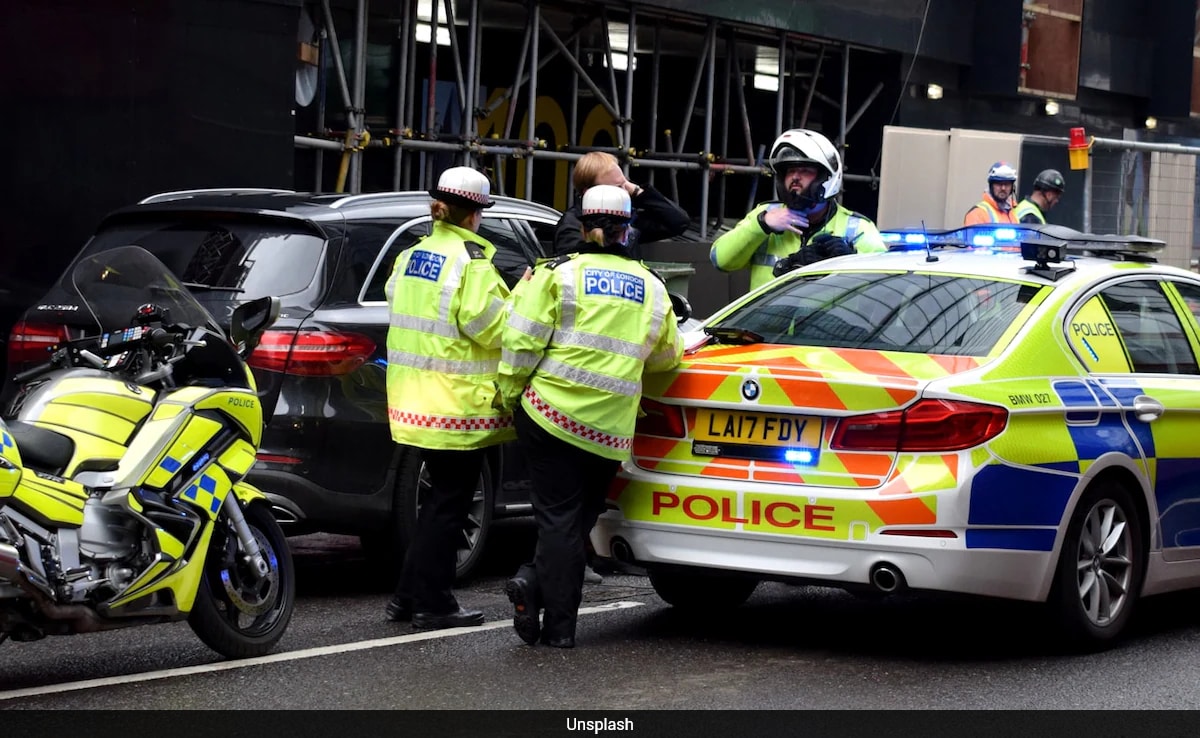
The Metropolitan Police’s arrest of the suspect serves as a case study in the Containment-to-Apprehension cycle. The efficiency of an arrest following a street-level stabbing is dictated by three operational metrics:
1. Surveillance Density
London maintains one of the highest CCTV densities globally. The speed of the arrest suggests that the "Digital Breadcrumb Trail" was utilized immediately. Real-time monitoring allows dispatchers to provide responding units with a "Vector of Flight," minimizing the search radius and preventing the suspect from entering a high-obscurity environment like the London Underground.
2. Public Intervention Threshold
The role of bystanders in these incidents is a volatile variable. In high-density urban areas, the "Bystander Effect" often delays response. However, the rapid notification of emergency services in this instance indicates that the public’s internal threshold for intervention was crossed, likely due to the overt nature of the violence.
3. Rapid Deployment Protocols
The "Arrested" status of the suspect within a short window of the event confirms that police were either in a state of high-readiness or were already patrolling a high-risk zone. This is a deployment strategy known as Hot Spot Policing, where resources are concentrated in areas with historical or predicted friction.
Structural Implications of Targeted Hate Crime
When an attack is categorized by the identity of the victims, the impact scales from the individual to the collective. This creates a Social Friction Tax. The community targeted must now divert economic and cognitive resources toward private security, altered transit routes, and psychological recovery.
The logic of the attacker in these scenarios is rarely to "defeat" the individual but to "signal" to the group. This is a form of low-level psychological warfare intended to reduce the target group's "Environmental Comfort." If the state cannot guarantee the safety of specific demographics in public squares, the social contract suffers a localized breach.
Resource Allocation and Preventative Metrics
To mitigate future occurrences, urban planners and security consultants must shift from Reactive Containment to Proactive Deterrence. This requires a recalibration of how police interact with high-risk neighborhoods.
- Static vs. Mobile Guarding: Static security posts provide a sense of safety but are easily bypassed by a mobile attacker. A "Fluid Patrol" model, where movement is randomized, creates uncertainty for an attacker conducting pre-attack surveillance.
- Behavioral Detection: Training law enforcement in the recognition of "pre-attack indicators"—such as target pacing, hand-positioning, and scanning behaviors—can intercept the Kinetic Phase before the weapon is deployed.
- The Weaponry Paradox: Despite strict knife laws in the UK, the "Accessibility Coefficient" of bladed weapons remains high. Because knives are ubiquitous household tools, supply-side intervention is largely ineffective. The focus must remain on the "Demand-Side" (the motivation of the attacker).
Technical Limitations of Current Security Frameworks
Current urban security relies heavily on the Human Intelligence (HUMINT) and Signal Intelligence (SIGINT) overlap. The limitation of this framework is the "Lone Wolf" or "Spontaneous Actor." If an individual does not communicate their intent online or belong to a monitored cell, they exist in a "Blind Spot" until the first strike.
The London stabbing highlights this gap. No amount of digital surveillance can predict a sudden physical movement in a crowded street without the use of Advanced Behavioral AI, which currently faces significant legal and ethical hurdles regarding privacy. Therefore, the security burden remains on the speed of the Post-Incident Response, rather than true prevention.
Strategic Recommendation for Community Defense
The primary objective for communal organizations in the wake of this event should be the hardening of "Soft Perimeters." This does not mean creating fortified enclaves, which signals a retreat from the public sphere, but rather implementing a Layered Defense Strategy.
First, situational awareness training must be commoditized for the general population. The ability to identify a closing threat three seconds earlier can be the difference between a minor injury and a fatality. Second, the integration of private security feeds with municipal police databases must be streamlined to reduce the Information Lag Time.
The stability of London's social fabric depends on the perception of "Omnipresent Law." If the state's response is perceived as merely "cleaning up" after an event rather than "interrupting" it, the frequency of these asymmetric attacks will likely increase as the perceived risk to the attacker decreases. The arrest is a tactical success, but the occurrence itself remains a strategic failure of the deterrent environment.
Law enforcement must now transition into a "High-Visibility Phase" to reset the deterrent threshold. This involves saturated patrolling of the specific geography where the attack occurred, coupled with a transparent prosecution process that serves as a legal deterrent. Failure to execute this second phase results in "Normalization," where the public accepts a baseline level of targeted violence as an inherent cost of urban life—a result that is unacceptable for any functioning metropolis.
The immediate move for municipal leaders is a "Systemic Audit" of the response time from the first 999 call to the first officer on the scene. If this duration exceeds the three-minute mark, the urban patrol grid requires a fundamental redesign. Only by shrinking the Response Window can the city hope to outpace the Aggression Cycle of motivated attackers.