You hit the light switch at 2:00 AM, and there it is.
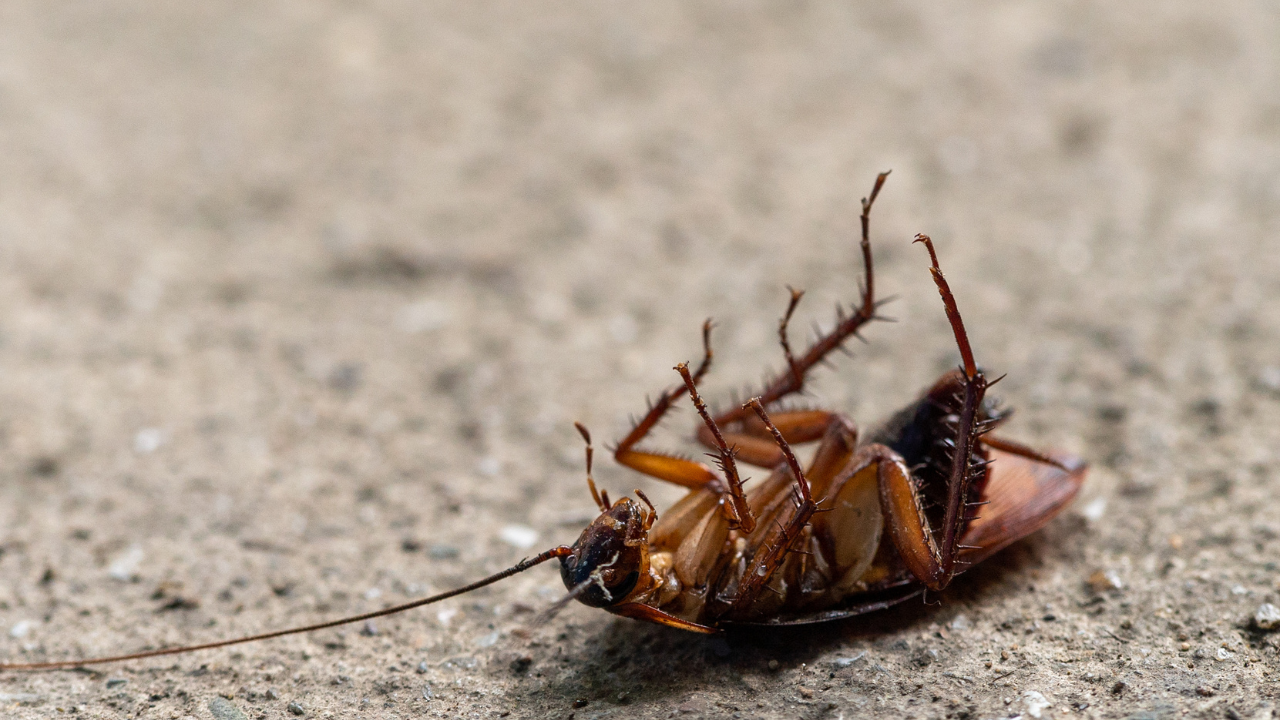
It freezes on the linoleum, a slick, brown oval glistening under the fluorescent bulb. Your stomach drops. A primal, evolutionary jolt of disgust fires through your nervous system. You reach for the nearest heavy object—a shoe, a rolled-up magazine—and bring it down with unnecessary force. CRACK.
The crisis is managed. Or so you think.
Now, change the script. Imagine you miss the body but catch the head. Or worse, consider the cold, hard biological reality that if an accident of nature were to sever the head of that American cockroach, the body left behind wouldn’t instantly drop dead. It would simply stand there. Then, it would walk away.
We have been taught that the brain is the undisputed dictator of the flesh. We assume that when the command center dies, the empire falls. But in the dim, hidden corners of our homes, a parallel universe of biology operates on an entirely different set of rules. A cockroach can lose its head and continue to exist, breathe, and wander for a up to a week.
To understand how this nightmare is scientifically possible, we have to look past our own human anatomy and understand that these insects are built like decentralized networks, not centralized kingdoms.
The Decentralized Empire
When a human experiences a severe injury resulting in decapitation, death is instantaneous. The reasons are threefold: we bleed out rapidly, our blood pressure collapses because our complex circulatory system requires a centralized pump, and our brain controls our breathing.
But a cockroach doesn't care about human logic.
Consider how they breathe. They do not have lungs. They do not force air through a mouth or nose. Instead, their sides are lined with microscopic portals called spiracles. These tiny openings pipe oxygen directly into the body's tissues through a network of tubes called tracheae. The brain doesn't need to remind the body to inhale; the air simply flows, a quiet, passive exchange of gases that carries on completely independent of whatever is happening upstairs.
Then there is the blood. Humans have a high-pressure vascular system. If a pipe breaks, the system drains. Cockroaches possess an open circulatory system. Their blood—a clear, yellowish fluid called hemolymph—sloshes around inside them under remarkably low pressure. If they lose a limb, or even their entire head, the wound doesn't gush. The clotting factors work instantly. The neck seals itself shut, creating a macabre, waterproof scab.
The body doesn't bleed out. It doesn't suffocate. It just keeps going.
The Brains in the Knees
But how does it move? Surely a headless body is just an inert lump of chitin.
This is where the true genius—and terror—of insect neurology reveals itself. If you could peel back the exoskeleton of a cockroach, you wouldn't find a massive, centralized brain directing traffic. Instead, you would find a nervous system distributed across the entire length of the creature like a chain of tiny, autonomous computers.
These are called ganglia. Each segment of the cockroach's body has its own local nerve center.
The thoracic ganglia, located in the middle section of the body, control the legs. They don't need permission from the head to walk, run, or climb. If a headless cockroach senses a puff of air against its back legs, the local ganglia process the threat and trigger the escape reflex. The legs pump. The body flees.
The head itself can even survive for a few hours on its own, waving its antennae around, trying to sense the world, until its energy reserves dry up. Meanwhile, the body walks the earth as a mindless, autonomous zombie.
It is a biological system designed for absolute redundancy. It is the ultimate survival machine, built to withstand trauma that would delete a mammal from existence in a fraction of a second.
The Invisible Clock
If they can breathe, walk, and avoid bleeding to death, why do they stop after seven days? What finally pulls the plug on the ghost in the kitchen?
The answer is painfully simple: hunger and thirst.
Without a mouth, the headless cockroach cannot drink. Without a mouth, it cannot eat. It is locked in a slow, inevitable countdown against dehydration. In a humid environment, where moisture loss through the exoskeleton is minimal, the headless body can stretch its internal reserves for a remarkably long time. But eventually, the fuel runs out. The cells dry up. The legs finally stop moving.
We look at these creatures with a mixture of horror and fascination because they violate the fundamental covenant we have with our own bodies. We believe in the supremacy of the mind. We comfort ourselves with the thought that the brain is the author of all action, all will, all life.
The cockroach scuttling across the floor without a head shatters that illusion. It reminds us that nature doesn't care about philosophy, poetry, or the sacred nature of the mind. Nature cares about what works. And sometimes, what works is a headless machine that refuses to realize it is already dead, waiting out its final days in the dark, quiet spaces beneath our feet.