The air in Tehran has a specific weight. It is a mixture of mountain chill, exhaust fumes, and a pervasive, invisible tension that settles in the lungs. To understand the legacy of Ali Khamenei, you cannot look at a spreadsheet of years served or a list of nuclear centrifuges. You have to look at the eyes of a man selling pomegranates in Tajrish Square, or the way a young woman adjusts her headscarf when a white van rounds the corner.
For nearly four decades, one man’s internal architecture became the blueprint for an entire nation’s reality.
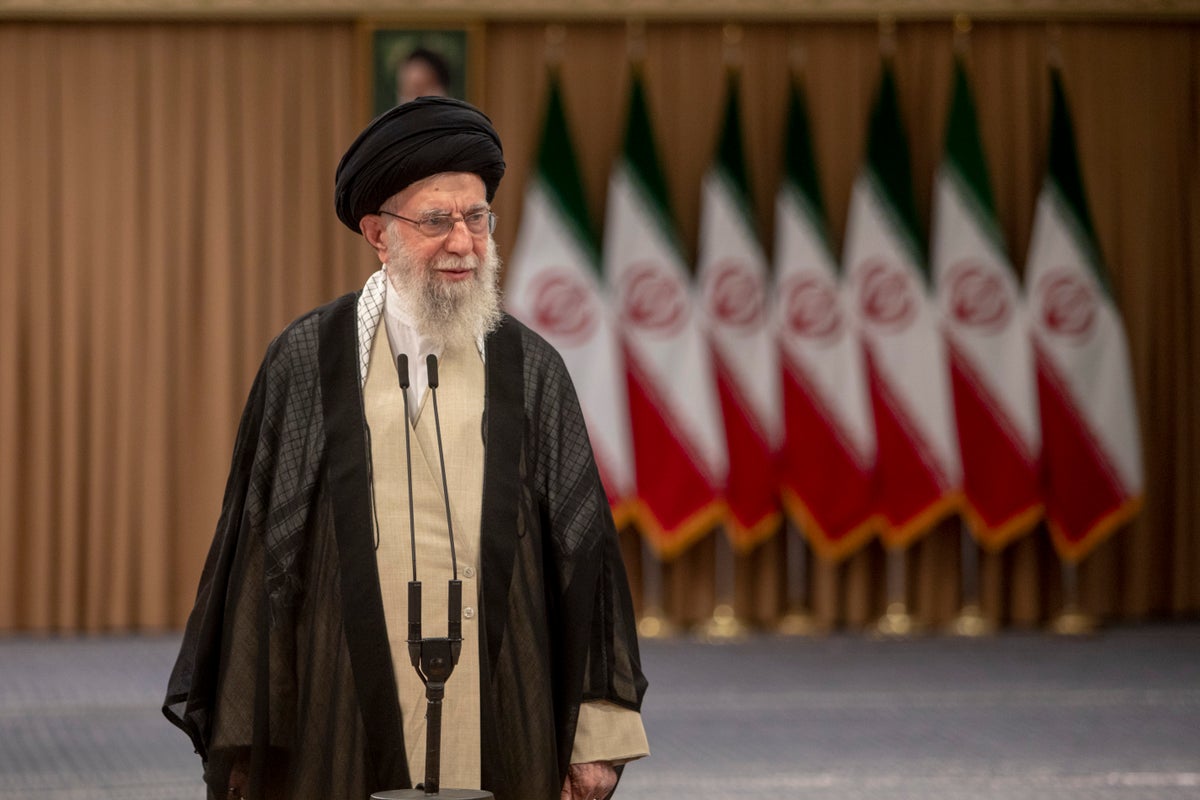
Ali Khamenei did not just lead Iran. He haunted it. He was the quiet frequency humming beneath every transaction, every protest, and every prayer. While the world watched flashy presidents like Khatami or Ahmadinejad come and go—puppets on a stage with varying degrees of charisma—the man in the black turban sat behind a desk in a modest house, holding the strings until they left deep, permanent grooves in his palms.
The Architect of the Fortress
Think of a house built not for comfort, but for a siege.
When Khamenei took the mantle of Supreme Leader in 1989, he was the compromise candidate. He wasn't the most learned cleric. He wasn't the most revolutionary firebrand. He was the man the elites thought they could control. They were wrong. He spent the next thirty-five years proving that quiet men are often the most dangerous architects.
He looked at the wreckage of the Iran-Iraq war and the chaos of the Soviet collapse and reached a singular, shivering realization: survival is the only virtue. Everything else—human rights, economic prosperity, artistic expression—was a luxury the fortress could not afford.
He built a parallel state. If the regular army was too prone to public sentiment, he empowered the Islamic Revolutionary Guard Corps (IRGC). If the economy was too tied to global whims, he moved the nation’s wealth into opaque foundations that answered only to him. He created a system where the "official" government was merely a lightning rod for public anger, while the "real" power remained untouched, shrouded in the incense of the shrines.
The Cost of a Closed Door
Hypothetically, consider a bright-eyed engineering student in Isfahan named Omid.
Omid is twenty-two. He is brilliant. He wants to build solar grids that could turn the Iranian desert into a powerhouse. But in Khamenei’s Iran, Omid faces a wall. To get the funding, he needs "connections" to the IRGC-linked firms. To speak his mind, he must navigate a digital minefield where the internet is slowed to a crawl or cut off entirely during times of unrest.
Omid’s father remembers a time when the Iranian passport meant something. Omid only knows the weight of sanctions.
This is the human face of "resistance." To the Supreme Leader, resisting the West was a matter of theological pride. To Omid, it is a matter of a stagnating bank account and a girlfriend who was detained because her hair showed a fraction too much beneath her veil.
The statistics tell us that inflation has hovered at agonizing levels for years. But the narrative tells us something worse: the death of momentum. A nation of eighty million people, possessors of one of the world's oldest and most sophisticated cultures, found themselves sprinting on a treadmill just to stay in the same place.
The Theology of No
Khamenei’s power was built on the word "No."
No to the Americans. No to the reformers. No to the "Westoxification" of Persian culture. He was the ultimate gatekeeper, convinced that if he opened the door even an inch, the wind of the outside world would blow the whole house down.
He survived the Green Movement in 2009. He survived the "Woman, Life, Freedom" protests of 2022. Each time, the world predicted a collapse. Each time, Khamenei leaned into the darkness. He understood a brutal truth that democratic leaders often forget: if you are willing to use enough force, and if you have a core group of believers who think their salvation depends on your survival, you can outlast almost any storm.
But survival is not the same as life.
By the end, his legacy was a masterclass in holding on. He transformed Iran into a regional powerhouse, a "Shiite Crescent" stretching from the Mediterranean to the Persian Gulf. He turned militias in Lebanon, Yemen, and Iraq into an external shield. He made Iran a player that no global superpower could ignore.
Yet, inside the fortress, the paint was peeling. The water was running dry. The youth, who make up the vast majority of the population, stopped listening to the sermons years ago. They were looking at their phones, seeing a world they were forbidden from joining, and feeling a resentment that moved from the dinner table to the streets with increasing frequency.
The Loneliness of the Long Run
Power on that scale is a desert.
Khamenei outlived his friends, his rivals, and even his hand-picked successors. When Ebrahim Raisi’s helicopter vanished into the mountain mist in 2024, it highlighted the terrifying hollowness of the system Khamenei created. It was a system built so specifically around one man's vision and one man's paranoia that it left no room for a clear path forward.
There is a profound, tragic irony in his story. He spent his life trying to protect the Islamic Republic from external enemies, only to realize that the greatest threat was the passage of time and the changing hearts of his own people. You can ban a book, but you cannot ban a feeling. You can't execute a demographic shift.
The shadow he cast was long and cold. It touched the families of those executed in the 1980s. It touched the scientists working in underground bunkers. It touched the millions of Iranians living in exile, carrying their culture in suitcases because they couldn't breathe under the weight of his "protection."
As the sun sets over the Alborz mountains, the lights of Tehran flicker on. They are the lights of a city that has learned to live in the gaps. People find joy in secret parties, in underground art, in the whispered jokes that puncture the gravity of the regime. They are waiting.
They are waiting for the shadow to move.
The legacy of Ali Khamenei isn't the missiles or the enrichment levels. It is the silence of a generation that has learned to wait for the inevitable, while the man at the center of the fortress continues to stare at a door he spent a lifetime bolting shut. The tragedy is that when the door finally opens, the man who held the key will no longer be there to see what happens to the house he tried so desperately to save.
The pomegranates in Tajrish Square are still red, still tart, still stained with the color of a history that refuses to be written in pencil. The mountains remain. The people remain. The shadow, however long, eventually meets the night.