The sea does not care about election cycles. In the narrow, salt-choked throat of the Strait of Hormuz, the water is a flat, deceptive blue that hides a jagged reality. Here, the world’s pulse beats at the mercy of a twenty-one-mile gap. If that pulse skips, the lights go out in cities thousands of miles away.
Last night, while much of the world slept, that pulse flickered.
To understand what happened, you have to stop looking at the map and start looking at the bridge of a VLCC—a Very Large Crude Carrier. Imagine a vessel the size of an upright Empire State Building, laden with two million barrels of oil, trying to navigate a lane barely wider than a highway. The captain isn't thinking about grand strategy or the rhetoric coming out of Mar-a-Lago. He is thinking about the radar blips. He is thinking about the speedboats that appear like gnats and sting like hornets.
The "overnight" news cycle often feels like a series of dry data points: a drone downed, a threat issued, a price spike on the Brent Crude index. But these are not just data points. They are the friction of two tectonic plates—Washington and Tehran—grinding against one another in a space where there is no room for error.
The Weight of a Word
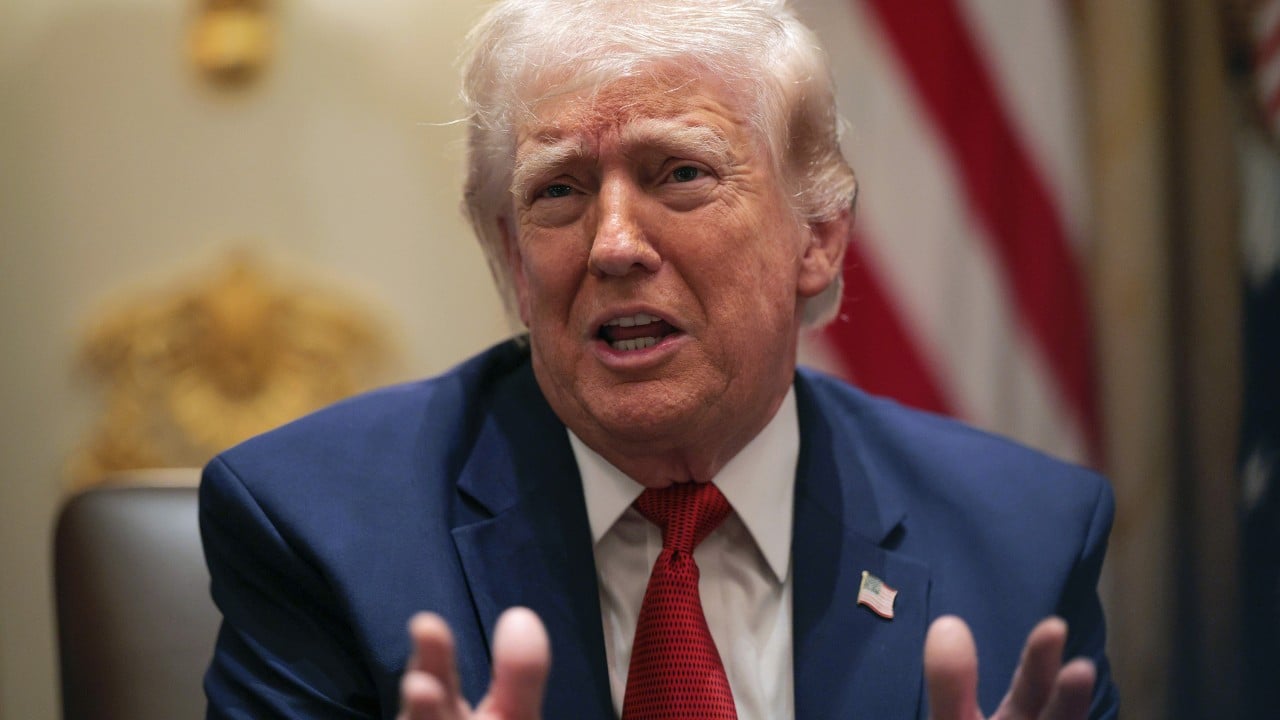
The tension began with a shift in the air. For months, the relationship between Donald Trump and the Iranian leadership has been a choreographed dance of high-stakes pressure. Trump’s strategy has always been a blunt instrument: "Maximum Pressure." It is a phrase that sounds clinical in a briefing room, but in the Persian Gulf, it translates to empty bank accounts for Iranian families and high-octane anxiety for sailors.
Last night, that pressure hit a new threshold. Reports began to surface of increased Iranian naval activity, a rhythmic flexing of muscle intended to remind the world that they hold the key to the global basement. If they turn that key, twenty percent of the world’s petroleum stops moving.
Think about your morning commute. Think about the plastic in your phone. Think about the heat in your home. All of it is tethered by a thin, invisible thread to this specific stretch of water. When Trump speaks about Iran, he isn't just talking to a regime; he is talking to the global market.
Markets are like horses. They are easily spooked. They sense fear before humans even acknowledge it. When the news broke that an American surveillance asset had been engaged—or that a tanker had been shadowed too closely—the digital ticker tapes began to bleed red.
The Ghost of 1988
History isn't a straight line. It’s a circle. To understand why a few speedboats in a strait matter so much, we have to look back at the "Tanker War" of the 1980s. Back then, the waters were literally on fire. Neutral ships were struck by mines. The U.S. Navy ended up in a direct, bloody confrontation with the Iranian fleet.
That memory haunts every decision made today. When the current administration signals a hard line, they are invoking a ghost. They are betting that the threat of overwhelming force will act as a dam against Iranian ambition. But dams can break.
Consider a hypothetical deck officer named Elias. He’s thirty-two, from a small town in Greece, and he hasn't seen his daughter in four months. As his tanker crawls through the Strait, he watches the horizon. He knows that his ship is a pawn. He knows that if a missile is launched, he won't have time to reflect on the nuances of the Joint Comprehensive Plan of Action (JCPOA) or the intricacies of U.S. sanctions law. He will only have the sound of the alarm and the smell of ozone.
This is the human element the headlines miss. We talk about "The Strait" as a geopolitical concept. We should talk about it as a workplace. It is the most dangerous office on earth.
The Strategy of the Unpredictable
Donald Trump’s approach to Iran defies the traditional playbook. Where previous administrations sought a slow, agonizingly detailed diplomatic grind, this one prefers the lightning strike. It is a philosophy of unpredictability.
The goal is to keep Tehran off balance. If they don't know what the American president will do next, they are less likely to take a fatal gamble. Or so the theory goes.
But there is a counter-theory. In Tehran, the hardliners view this unpredictability as an existential threat. To them, the "Maximum Pressure" campaign is not an invitation to negotiate; it is a slow-motion siege. When you corner a proud nation, they don't always surrender. Sometimes, they swing.
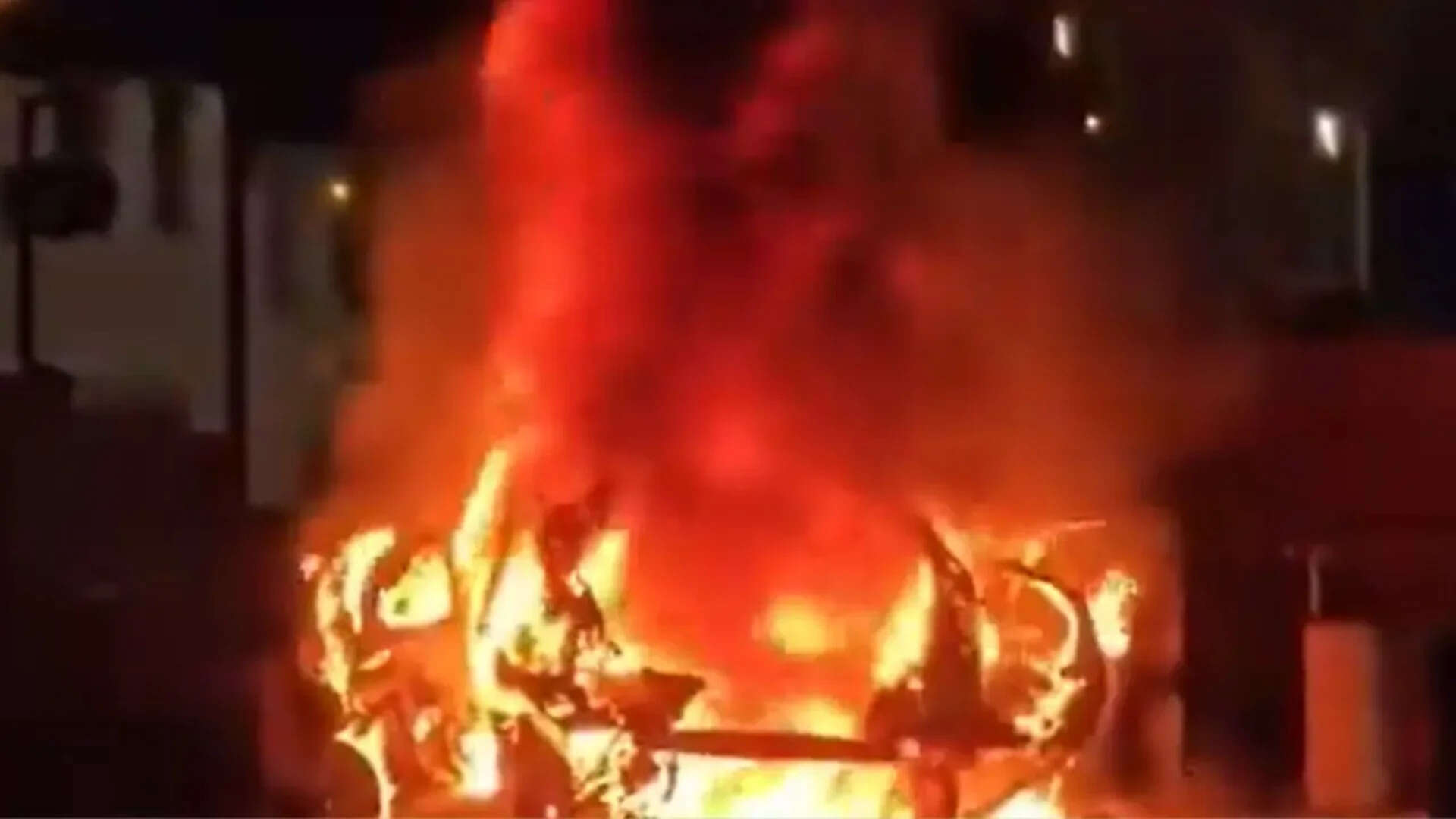
Last night’s events were a series of swings and parries. A drone hovering where it shouldn't. A radio warning that sounded more like a growl. A sudden move by the Revolutionary Guard to shadow a British vessel, followed by the quiet, menacing presence of a U.S. destroyer on the horizon.
It is a game of chicken played with billion-dollar machines and millions of lives.
The Cost of the Invisible
Why does it matter to you? You aren't in the Gulf. You aren't in the White House.
It matters because the global economy is a delicate web of trust. When that trust is shaken in the Strait of Hormuz, the cost of shipping insurance skyrockets. When insurance goes up, the price of the goods inside those ships goes up. When the price of goods goes up, your purchasing power goes down.
This is the hidden tax of geopolitical instability. You pay for it every time you fill your gas tank or buy a bag of groceries. You are paying for the tension between a president in Washington and a Supreme Leader in Tehran.
The facts of what happened overnight are simple: there were maneuvers, there were threats, and the oil price ticked upward by three percent. But the story is deeper. It is a story of a world that has built its entire civilization on a foundation of liquid energy, and then placed that foundation in a narrow, volatile hallway guarded by two people who haven't spoken in years.
The Silence Between the Shouts
The most frightening part of last night wasn't the noise. It was the silence.
The silence of the communication channels that should be open but aren't. The silence of the diplomats who have been sidelined. The silence of the international community as it watches two giants move closer to a collision that no one claims to want.
In the middle of the night, a small boat approached a massive tanker. For ten minutes, they sat in silence, watching each other. One represented the local power, desperate to prove it still matters. The other represented the global flow of commerce, desperate to just keep moving.
Eventually, the small boat turned away. The crisis was averted—for now.
But the sun rose this morning over a Strait that feels a little narrower than it did yesterday. The water is still blue, the tankers are still heavy, and the men on the bridges are still holding their breath. They know what the policy-makers often forget: in a space this tight, even a small spark looks like the end of the world.
The lights stayed on today. The tankers moved. The oil flowed. But the shadows in the Strait are growing longer, and the night is coming back.