The Knock at the Door
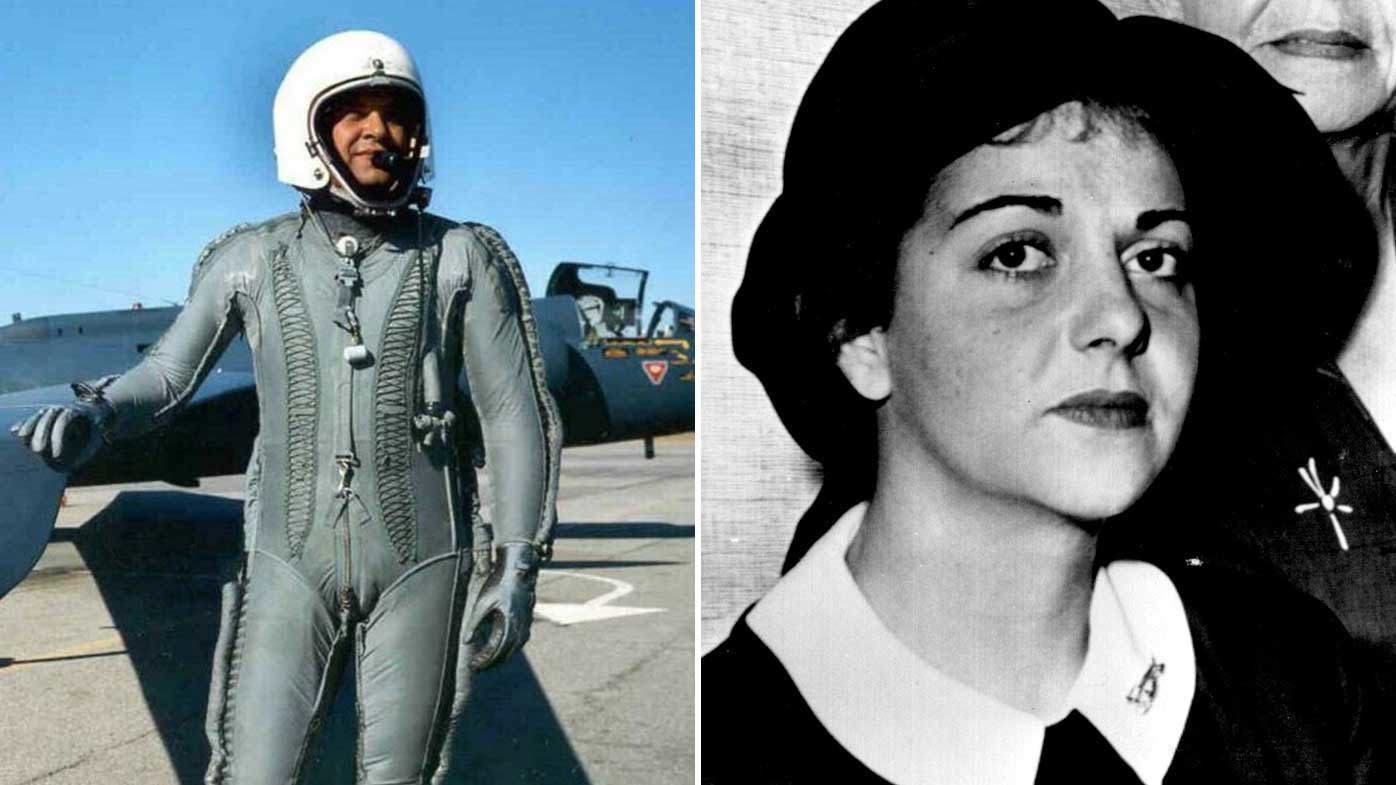
The letter was a lie. Or rather, it was a hollowed-out version of the truth, stripped of its soul to protect a machine made of secrets. Barbara Powers sat in her living room, clutching the piece of paper that told her she was a widow. Her husband, Francis Gary Powers, the ace pilot of the CIA’s most sophisticated spy plane, was gone. Dead. Crashed somewhere over the Soviet Union.
Except he wasn't.
Barbara knew the man. She knew the way he breathed when he was anxious and the way he looked at the sky as if it were a map only he could read. She knew he was alive. But when she screamed this truth to the men in dark suits who paced her hallway, they didn't offer comfort. They offered a diagnosis.
This is the story of how the most powerful intelligence agency on earth decided that a woman’s intuition was a threat to national security. It is the story of how the CIA didn't just lose a plane; they tried to delete a person.
The Ghost in the Cockpit
To understand Barbara, you have to understand the U-2. It wasn't just an aircraft. It was a spindly, black needle designed to prick the skin of the Iron Curtain at 70,000 feet. Up there, the sky turns a bruised purple. The air is too thin to support life. The pilot sits in a pressurized suit, a lonely god watching the world move in slow motion through a high-resolution lens.
On May 1, 1960, Gary Powers took off from Pakistan. His mission: fly across the USSR and land in Norway. He never made it. A Soviet surface-to-air missile exploded near his tail. The plane disintegrated. Gary didn't use the suicide pill provided by the Agency. He chose to live. He parachuted into the arms of the KGB.
Back in the United States, the CIA was in a panic. They had already told the world it was a weather plane. They had already told Barbara her husband was dead. When Nikita Khrushchev revealed he had the pilot—alive, well, and talking—the American cover story shattered.
But for Barbara, the nightmare was only beginning.
A Dangerous Grief
Grief is loud. It is messy. It demands to be seen. In the 1960s, a loud woman was a problem. A loud woman whose husband knew the deepest secrets of the Cold War was a liability.
Barbara Powers began to talk. She talked to the press. She talked to anyone who would listen. She demanded that the government bring her husband home. She refused to play the role of the stoic, grieving widow that the Agency had scripted for her.
Consider the optics: The United States was locked in a psychological chess match with a nuclear superpower. The last thing the CIA wanted was a "hysterical" wife humanizing a man they needed the public to view as either a martyr or a mistake.
They began to monitor her. They tapped her phones. They followed her car. They watched her drink, and they watched her cry. To the men behind the desks in Langley, Barbara wasn't a victim of a global conflict. She was a leak that needed to be plugged.
The Sanitarium Solution
They called it a "rest."
That is the euphemism used by those who hold the keys to the ward. When Barbara’s behavior became too erratic for the Agency’s comfort—when her drinking increased and her public outbursts threatened the delicate narrative of the U-2 incident—the CIA took action.
They didn't arrest her. They couldn't. Instead, they used the velvet glove of psychiatry. They pressured her family. They leveraged her fragility. Soon, Barbara found herself behind the locked doors of a mental institution.
This wasn't a dungeon in a spy novel. It was a clean, quiet place with white walls and soft voices. But the bars are no less real when they are made of medical advice. By labeling her "unstable," the Agency effectively neutralized her. Anything she said about Gary, about the mission, or about the way she had been treated could now be dismissed as the ramblings of a broken mind.
The Architecture of Gaslighting
Gaslighting wasn't a term in 1960, but the CIA had mastered the craft.
Imagine waking up every day and being told that your memories are symptoms. Imagine being told that your husband’s capture was your fault, or that your desire for his return was a sign of a chemical imbalance.
The Agency’s psychologists weren't just treating a patient; they were managing an asset’s wife. They needed her quiet. They needed her compliant. Most of all, they needed her to stop reminding the world that Gary Powers was a human being trapped in a Soviet prison, and not just a failed piece of hardware.
The stakes were invisible but absolute. If Barbara broke the silence, she could provoke a diplomatic incident that might lead to war. If she stayed silent, she would lose her mind.
The Long Shadow of the U-2
While Barbara sat in the sanitarium, Gary was being tried in a Moscow courtroom. He was a pawn in a game of giants. The Soviets used him to embarrass Eisenhower. The Americans used him as a scapegoat, whispering that he should have died with his plane.
When Gary was finally swapped for Soviet spy Rudolf Abel on a cold bridge in Berlin in 1962, he didn't return to a hero’s welcome. He returned to a wife who had been hollowed out by the very people he worked for.
The reunion was not a movie ending. It was a collision of two people who had been tortured in different ways. Gary had been interrogated by the KGB; Barbara had been dismantled by the CIA. The marriage, under the weight of so much state-sponsored trauma, eventually buckled.
The Cost of the Secret
We often talk about the Cold War in terms of throw-weights, megatons, and geopolitical boundaries. We talk about the "Great Game." But the game has a human cost that rarely makes it into the history books.
Barbara Powers died in 1981. To many, she remains a footnote—the "troubled" wife of a famous pilot. But she was more than that. She was a casualty of a war that didn't use bullets, but used silence and shame instead.
The CIA didn't put Barbara in an institution because they cared about her health. They did it because her pain was inconvenient. They did it because, in the world of high-stakes espionage, the truth is a luxury that the families of the fallen can rarely afford.
When you look at the photos of Gary Powers standing before the Soviet tribunal, look past him. Look at the empty space beside him where his wife should have been. She was there, in a room with white walls, fighting a war of her own against a country that had decided her sanity was an acceptable sacrifice.
The black planes still fly. The secrets are still kept. And somewhere, there is always a knock at the door, a letter that tells a half-truth, and a woman who is told that her grief is a sickness.
The machine continues to turn, indifferent to the souls it grinds into dust.