The air in a Bamako courtroom doesn't circulate; it weighs. It carries the scent of old paper, floor wax, and the collective anxiety of people who know that a single sentence can erase years of a life. On a Tuesday that should have been unremarkable, the gavel fell for Malick Konaté. Two years. That is seven hundred and thirty days. It is the time it takes for a toddler to learn to speak, or for a season’s harvest to fail twice. For Konaté, it is the price of a few paragraphs.
We often talk about "freedom of the press" as if it is an ethereal concept, a statue in a square or a line in a dusty constitution. It isn't. It is the sound of a keyboard in a cramped office at 2:00 AM. It is the vibration of a phone when a source calls with a secret. When that sound stops, the silence isn't just empty. It’s heavy.
The Geography of a Sentence
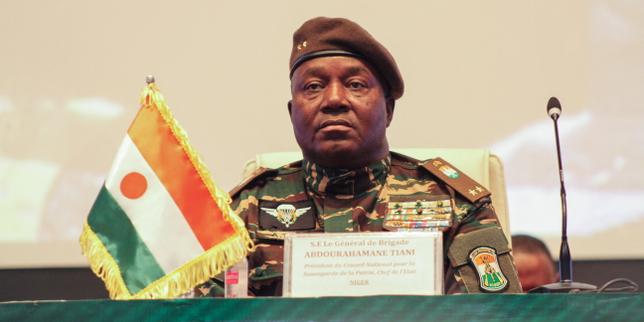
Malick Konaté did not commit a crime of violence. He did not steal. He wrote. Specifically, he wrote an article that cast a critical eye on the military junta in neighboring Niger. In the modern Sahel, borders are porous, but the sensitivities of those in power are rigid. The Malian justice system decided that criticizing the neighbors was an offense against the state. They called it "undermining the credit of the state" and "inciting revolt."
Imagine standing in a small room. You are told you can walk anywhere you like, as long as you don't touch the walls. Then, without warning, the walls begin to move inward. Suddenly, the space where you stood yesterday is now forbidden territory. That is the reality for journalists in Mali today. The "walls"—the laws, the decrees, the unspoken moods of the colonels—are shifting.
Konaté’s conviction isn't just a legal footnote. It is a signal fire. It tells every other writer, every radio host, and every blogger that the perimeter of safety has shrunk. If you look too closely at the men in uniform, or if you question the alliances they forge with their neighbors, the cell door is already unbolted.
The Invisible Stakes of a Newsroom
Behind every "condemned journalist" is a family that eats dinner in a quieter house. There is a desk that sits vacant. There are stories that will now never be told because the risk has become too high.
When a journalist is imprisoned, we lose more than their specific voice. We lose the curiosity of everyone who watched them fall. Think about the young student in a journalism school in Bamako. They see Konaté’s two-year sentence. They see the lack of international outcry that actually changes anything. They learn a lesson that isn't in the syllabus: Safety is found in silence. This is how a society loses its eyes. It doesn't happen all at once. It happens through the steady application of pressure. It happens when "incitement" becomes a catch-all term for "disagreement."
The facts of the case are stark. The tribunal in Bamako was swift. There was no long, drawn-out debate about the nuances of political commentary. The verdict was a blunt instrument. Two years in prison, plus a fine of 500,000 CFA francs. In a country where the average monthly income is a fraction of that, the fine is a secondary cage, a financial weight intended to ensure that even if the body is freed, the spirit is broke.
The Neighbor’s Shadow
Why does Mali care so much about an article regarding Niger? To understand that, you have to look at the map—not the one of mountains and rivers, but the map of shared iron. The military leaders in Mali, Burkina Faso, and Niger have formed a pact. They are the "Alliance of Sahel States." They have promised to protect one another, not just from insurgents, but from criticism.
In this new brotherhood, an insult to one is an injury to all. By sentencing Konaté for an article about Niger, the Malian authorities are practicing a form of judicial solidarity. They are showing their allies that they can control the narrative across the entire bloc. It is a regional darkening of the windows.
But the truth has a way of leaking through the cracks. Even as Konaté is led away, the questions he raised remain. Can a military government deliver the security it promised if it cannot withstand the scrutiny of a single journalist? If the foundation of a state is so fragile that an article can "undermine its credit," then how much credit did it truly have to begin with?
The Cost of the Human Element
We must stop treating these stories as "foreign news" that happens in far-off places. The mechanics of censorship are the same everywhere. It starts with the "extremists." It moves to the "troublemakers." It ends with anyone who asks "Why?"
Malick Konaté is a human being. He has friends who worry about his health in a crowded prison. He has a professional legacy that is now being rewritten as a criminal record. When we read that a journalist has been sentenced, we should feel a phantom pain in our own tongues. We should realize that our ability to know what is happening in the world depends on people like him being willing to take the risk.
Consider the courage it takes to hit "publish" when you know the men you are writing about carry rifles and keys to the cells. It is a quiet, lonely kind of bravery. It doesn't get a parade. It gets a two-year sentence in a room with no breeze.
The real tragedy is not just the two years stolen from Malick Konaté. It is the thousands of articles that will now never be written. It is the questions that will be swallowed. It is the truth that will be buried under the weight of "state credit."
Somewhere in Bamako tonight, a writer is looking at a blank screen. They have a story. They have the facts. They have the proof. But they also have the memory of a gavel hitting a wooden block. They think of their family. They think of the two-year gap in a life. They reach for the delete key.
The ink is still there, but the hand is shaking.
Would you like me to find more information about the current state of press freedom in the Alliance of Sahel States?