The Texas wind does not care about rank. It sweeps across the flat, sun-bleached expanse of the training grounds, rattling the dry brush and stirring up dust devils that dance across the tarmac before dissolving into nothing. On a routine Tuesday, that wind is just background noise to the steady, rhythmic thrum of rotor blades overhead. It is the sound of routine. The sound of preparation. The sound of life moving forward in a world that demands constant vigilance.
Until it stops.
Sudden silence is heavier than noise.
Two soldiers stepped onto the flight line hours earlier, checking dials, running through the familiar, comforting choreography of pre-flight inspections. They knew the machine. They knew the sky. They knew the risks inherent in a uniform that carries the weight of a nation. But routines have a quiet way of lulling the mind just before the margin for error vanishes entirely.
Then came the descent.
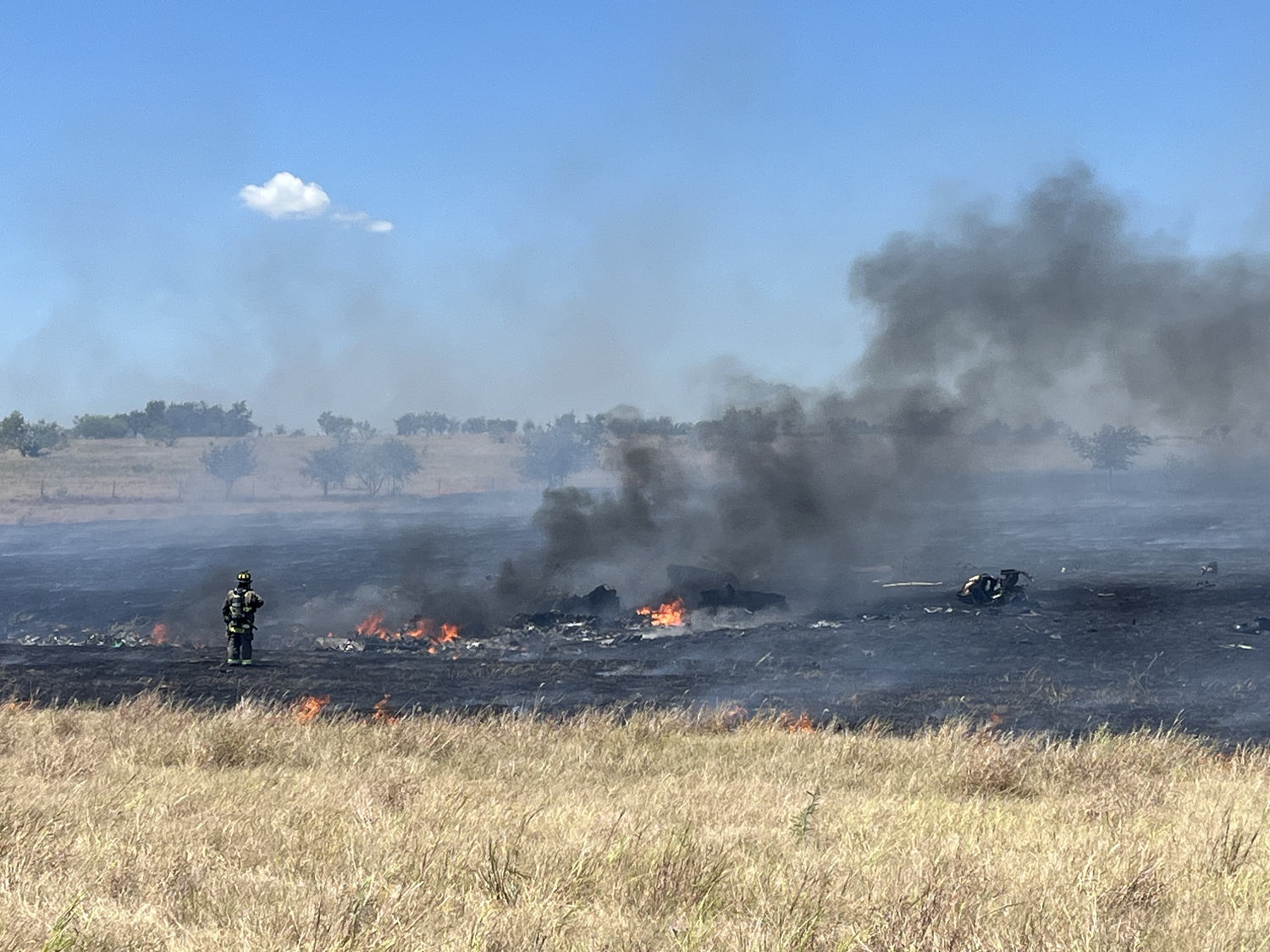
Eyewitnesses rarely process catastrophe as it happens. They see a flicker of motion out of the corner of the eye. A sharp, unnatural pitch. A sudden, violent plume of black smoke billowing against the vast, indifferent blue of a Texas afternoon. By the time the sirens began to wail, cutting through the searing heat, the reality had already settled in. A military helicopter had crashed. And the sky had taken its toll.
Military aviation is an exercise in managed gravity. Every time a multi-ton aircraft lifts off the earth, it does so through a delicate, relentless negotiation with physics. Pilots call it flying on the edge of a knife. The margins are razor-thin. A mechanical failure, a sudden drop in pressure, a microscopic fatigue in a rotor component—any of these can turn a training mission into a tragedy in the span of a heartbeat.
We read the bulletins later. Two soldiers dead. An investigation launched. A fire sparked in the dry brush that required local crews to battle alongside military responders.
The report gives you the coordinates. It gives you the model of the aircraft. It gives you the cold, hard numbers that define an incident for the evening news. But numbers have no pulse. Statistics cannot capture the precise shade of blue the sky was just before the horizon fractured. They do not tell you about the locker left uncleaned, the boots sitting by a bunk, or the quiet phone call that someone thousands of miles away is dreading.
Grief in the military is a strange, institutionalized paradox. It must be processed while the mission continues. The training grounds do not stay empty for long. Other crews must fly. Other birds must rise into the wind. Because the defense of a country does not pause just because two of its guardians fell out of the sky.
Consider what happens next in the quiet rooms far from the media glare. Investigators will sift through twisted, charred metal piece by microscopic piece. They will look for answers in flight data recorders and scorched wiring. They will ask the impossible question: Why?
Was it mechanical? Was it human error? Was it simply the cruel math of probability catching up with a high-risk profession?
The answers rarely bring comfort. They only bring closure, and even then, closure is often a polite word for learning how to live with an unanswerable void.
We live in an era that demands instant explanations. We want a neat narrative arc with a clear cause and effect. But life—and especially the military life—does not fold neatly into tidy boxes. It is messy. It is dangerous. It relies on ordinary people doing extraordinary, terrifying things while the rest of us sleep, commute, and complain about the weather.
When a helicopter goes down in the Texas desert, it is easy to view it as a distant headline. Something that happened to someone else, somewhere else. But every uniform represents a family table with an empty chair. Every callsign represents a person who laughed, worried, made plans for the weekend, and kissed someone goodbye before walking out the door.
The fire on the ground was extinguished within hours. The smoke cleared. The wind returned to its steady, indifferent sweep across the plains.
Yet the silence remains. It lingers in the empty hangar, in the unreturned text messages, and in the heavy realization that peace is paid for daily by those willing to gamble everything against the sky.