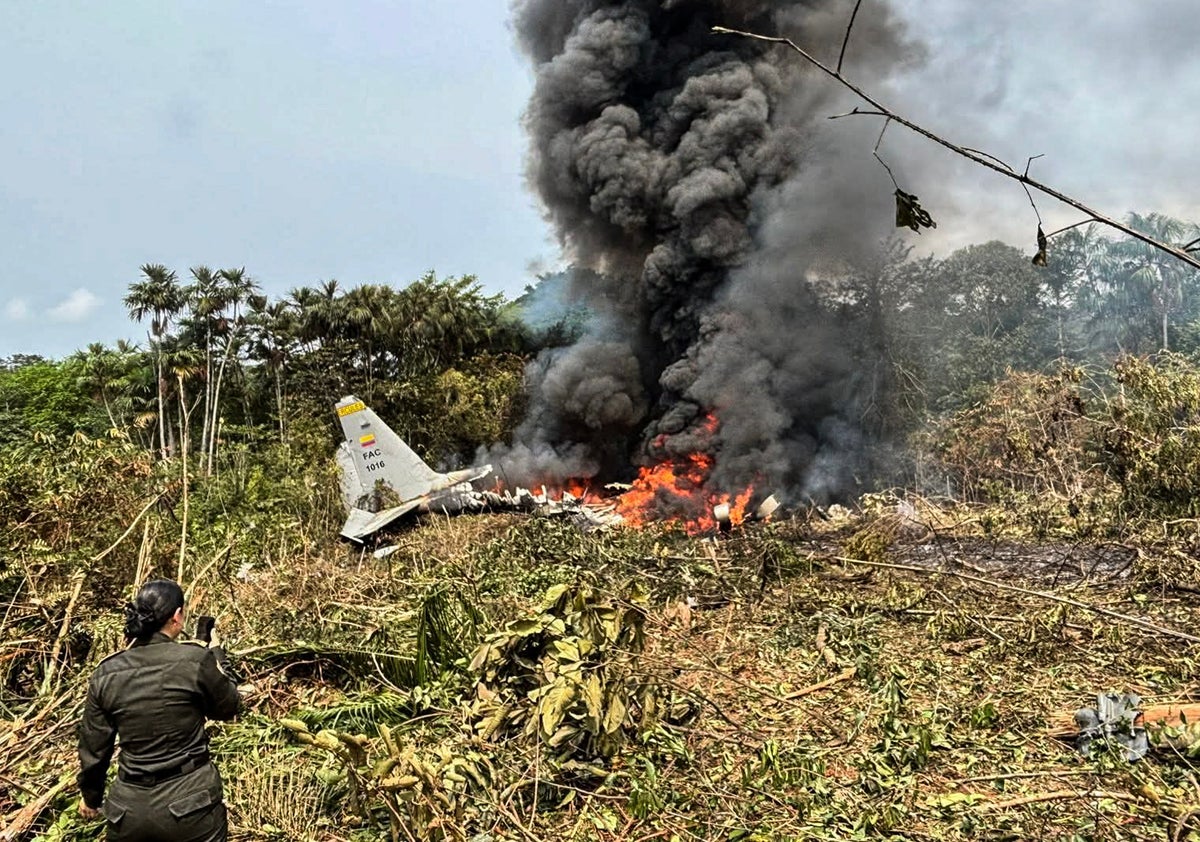
The humidity in the Amazon doesn't just sit on your skin. It carries weight. It is a physical presence that lingers in the back of your throat, smelling of damp earth and aviation fuel. At the edge of the runway, the jungle isn't just a backdrop; it is a wall of emerald indifference.
Inside the cabin of the twin-engine turboprop, the air conditioning struggled against the midday heat. Passengers were settling into the routine of a short hop. A businessman adjusted his tie, his mind already three meetings ahead. A mother shifted a restless toddler. A young couple held hands, their fingers sticky with the shared humidity of a dream vacation. These aren't just statistics in a ledger. They were sixty-two distinct universes of memory, ambition, and love.
Then the engines roared.
The takeoff was standard. The lift was clean. For a few heartbeats, the canopy of the rainforest fell away, revealing the winding silver ribbon of the river below. It is the moment when the stomach drops and the world feels briefly, dangerously small. But today, the smallness didn't pass.
The Silence of the Stall
Aerodynamics is a cold master. It doesn't care about your plans or the people waiting for you at the arrivals gate. When a plane loses the battle with gravity, the first thing to go isn't the sound. It is the logic.
Imagine the cockpit. The pilots aren't screaming. They are working. Their hands move with a frantic, practiced grace, fighting controls that have suddenly turned sluggish, like trying to stir set concrete. The warning klaxons begin their rhythmic, haunting wail. Sink rate. Pull up. Stall. These are the sounds of a machine realizing it can no longer fly.
The transition from flight to falling is an architectural collapse of the air. One moment, the wings are slicing through the atmosphere, creating the invisible lift that keeps tons of metal suspended. The next, the angle of attack becomes too steep. The air breaks. It becomes turbulent, useless, swirling away from the wing's surface like water down a drain.
The plane began to pancake.
It didn't nose-dive like a Hollywood disaster film. It flat-spun. This is a terrifying phenomenon where the aircraft rotates horizontally as it drops, a falling leaf made of aluminum and human lives. The passengers would have felt the world spinning outside the tiny, scratched windows—green, blue, green, blue—as the centrifugal force pinned them into their seats.
A Canopy of Broken Promises
The Amazon is often called the lungs of the planet, but to a falling plane, it is an anvil. The trees here are giants, some reaching two hundred feet into the air. They are ancient, unyielding, and dense.
When the impact finally came, it wasn't a single crash. It was a cacophony of shattering. The sound of metal meeting hardwood is high-pitched and violent. The wings, filled with fuel for the journey, became incendiary devices the moment they clipped the first mahogany branch.
Sixty-two people.
In the aftermath, the forest did what it has done for millennia. It began to close the gap. Smoke rose in a black pillar against the vibrant green, a smudge on the horizon that local villagers saw from miles away. They didn't need a news report to tell them what had happened. The silence that followed the explosion was louder than the engines ever were.
The Invisible Stakes of the Short Haul
We treat regional flights like bus rides. We board with our headphones on, scrolling through feeds, barely glancing at the safety briefing. We trust the maintenance cycles. We trust the pilot’s hours. We trust the physics of the "short hop."
But the Amazon is a unique theater of risk. The weather patterns are erratic, born from the heat of the forest itself. Updrafts and sudden microbursts can turn a clear afternoon into a nightmare in seconds. To fly here is to engage in a constant negotiation with an environment that never truly signed the treaty of modern travel.
Consider the logistics of the rescue. In a city, sirens arrive in minutes. In the deep Amazon, help is measured in hours, or even days. Recovery teams have to hack through undergrowth so thick you cannot see five feet in front of your face. They carry the weight of the tragedy on their backs, trekking through mud and heat to reach a site that the world has already labeled a "tragedy" on a news ticker.
The investigators will eventually find the black boxes. They will sit in sterile labs in Brasilia or Washington, listening to the final minutes of audio. They will look for mechanical failure, icing, or pilot error. They will find a "cause."
But a cause is not a reason.
A cause tells us how the metal failed. It doesn't tell us why a grandmother’s gift for her grandson was found charred in a ravine. It doesn't explain the cruelty of a flight that lasted less time than it takes to brew a pot of coffee.
The Weight of the Aftermath
There is a specific kind of grief reserved for aviation disasters. It is sudden. It is absolute. There is no hospital bed, no long goodbye, no gradual fading. There is only a departure and a void.
For the families standing in the terminal, the "delayed" status on the monitor is the first crack in the world. Then comes the "canceled" sign. Then comes the quiet room with the plastic chairs and the counselors who have no words that actually work. They are left with the impossible task of reconciling the person they hugged goodbye with the debris scattered across a remote coordinate in the jungle.
The forest eventually heals its scars. The vines will crawl over the blackened engines. The rains will wash the soot from the leaves. In a few years, from the air, you wouldn't even know that sixty-two lives ended on this specific patch of earth.
We fly because we have to. We fly because the world is wide and our time is short. We board the next plane, pushing the fear into a small corner of our minds, hoping that the air holds, that the engines hum, and that the green wall of the horizon remains exactly where it belongs—beneath us.
The toddler’s shoe lies half-buried in the red clay, miles from the nearest road, a silent witness to the moment the sky gave way.
Would you like me to research the specific flight safety records for regional airlines operating in the Amazon basin to see how they compare to global standards?