The mahogany desk in a corporate boardroom in 2026 smells exactly the same as the one hauled out of a Cuban office in 1960. Dust, beeswax, and the faint, sweet scent of tropical humidity trapped under layers of varnish.
For over six decades, American executives and exiled families have looked at maps of the Caribbean and seen a graveyard of stolen assets. Factories, docks, sugar mills, and hotels. When Fidel Castro’s government nationalized foreign-owned property without paying a dime, he didn't just seize physical buildings. He triggered a slow-burning legal war that would outlive almost everyone who witnessed its first day.
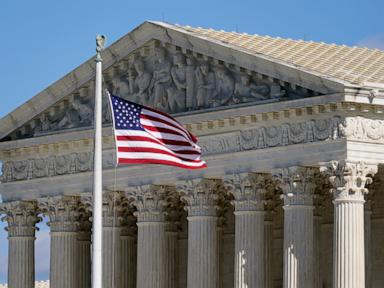
The fight just reached its climax in the highest court in the United States.
On the surface, the case looks like a dry dispute over corporate jurisdiction and maritime law. The headlines read like a textbook on international trade. But look closer. Beneath the legal jargon lies a visceral story about memory, money, and the terrifying realization that nothing you own is ever truly safe from the tides of history.
The Ghost in the Shipping Container
To understand why nine Supreme Court justices spent their morning debating events from the Eisenhower administration, you have to picture the port of Mariel.
Imagine a massive, modern shipping terminal on the northern coast of Cuba. Cranes swing giant metal containers onto ships destined for Europe, Asia, and Latin America. It is a bustling hub of 21st-century global commerce.
But beneath the fresh asphalt of that terminal lies land that used to belong to Americans.
Before the revolution, an American company held the rights to that waterfront. When the Castro regime took it, the original owners were left holding worthless paper certificates. Decades passed. The jungle grew over the old docks, and eventually, a new, state-of-the-art port rose in its place.
Now, consider a hypothetical modern executive. Let’s call him Robert. Robert’s logistics company uses the port of Mariel today. He isn't a communist revolutionary. He is just a businessman tracking supply chains on an iPad. He pays docking fees to the current Cuban port authority.
To Robert, it’s just business.
To the descendants of the original American owners, Robert is trafficking in stolen goods.
This is the core of the Helms-Burton Act, a fierce piece of American legislation passed in 1996. For years, Washington kept a crucial part of this law—Title III—locked away in a glass case. Every six months, presidents from both parties signed a waiver to freeze it. They feared that unlocking it would unleash a chaotic flood of lawsuits against America’s closest allies.
Then, the glass was broken. The waivers stopped. The lawsuits began.
The Machinery of a Sixty-Year Grudge
When the US Supreme Court stepped into this arena, they weren’t deciding whether Castro was wrong to take the property. Everyone agrees that international law was shattered in 1960. Instead, the court had to answer a much weirder, more dangerous question.
Can an American company sue a foreign entity in a US court for using property that was stolen sixty years ago?
The target of the lawsuit wasn't Cuba itself. You cannot easily extract money from a sanctioned island nation. The target was a European logistics giant that had partnered with Cuba to run the port. The American plaintiffs argued that by using the seized land, the European company was profiting from theft.
The defense was built on a wall of dry, technical arguments about jurisdiction. They argued that American courts have no business policing transactions that happen entirely on foreign soil between foreign entities. They claimed the law was being stretched far beyond its breaking point.
The courtroom became a battlefield of competing realities. On one side was the reality of global commerce, which requires predictable rules and clear borders. On the other side was the reality of historical trauma, which refuses to let a crime be forgotten just because the calendar pages turned.
The justices listened to arguments about corporate definitions and statutory construction. But the ghost in the room was the concept of sovereignty. If America can punish a European company for doing business in Cuba, what stops France from punishing an American company for doing business in a disputed territory elsewhere?
The Verdict and the Fractured Future
When the decision came down, the Supreme Court sided with the American company.
It was a narrow, sharp ruling. The court cleared the procedural hurdles that had blocked the lawsuit from moving forward, effectively signaling that the doors of American justice remain open to those chasing the ghosts of 1960.
The immediate reaction in corporate boardrooms was a quiet, collective gasp.
This ruling alters the calculus of international risk. If you are a multinational corporation, you can no longer view Cuba as a risky but potentially lucrative frontier. You have to view it as a legal minefield where a land title from the mid-20th century can suddenly detonate beneath your balance sheet.
But the victory feels heavy. It highlights a profound vulnerability in the modern world. We like to think of our global systems as solid, anchored by treaties, digital contracts, and international courts. The reality is far more fragile.
We live on a planet where the political earthquakes of the past are constantly shifting the ground beneath our current investments. A contract signed today can be rendered void by a revolution tomorrow, and resurrected by a court ruling half a century later.
The Long Memory of Capital
Walk through the streets of Old Havana today, and you will see buildings that look like beautiful, decaying teeth. The paint is peeling, the plaster is crumbling, but the grand architecture of a wealthy, pre-revolutionary era still stares out over the sea.
Those buildings belong to the Cuban state now. Or to the families crowded inside them. Or, if you ask a specific group of elderly lawyers in Miami, they still belong to the corporations whose names were scrubbed from the ledgers during the Cold War.
Money has a terrifyingly long memory.
The Supreme Court’s decision ensures that the ledger remains open. It proves that time does not wash away a claim, and that a corporate grievance can be passed down through generations like a family heirloom.
As the sun sets over the Gulf of Mexico, casting long shadows across the Florida Straits, container ships continue to glide into the port of Mariel. They move quietly through the deep water, their hulls scraping past the invisible, submerged wreckage of an empire that thought it would last forever.


