The air above Washington, D.C., carries a specific weight. It is thick with the residue of history and the constant, vibrating hum of power. Usually, that hum is bureaucratic—the sound of motorcades, the distant drone of a press briefing, or the clicking of heels on marble floors. But every so often, the frequency shifts. The air begins to throb with a physical force that you feel in your solar plexus before you hear it with your ears.
Two UH-60 Black Hawks cut through the gray morning haze. They aren’t just machines; they are symbols of American reach, eighteen tons of steel and rotor blades slicing through the restricted airspace of the capital. Inside, the usual cargo of high-ranking officials and tactical teams has been replaced by a different kind of cultural weight. Kid Rock, the self-proclaimed American Badass, and Pete Hegseth, the combat veteran turned media lightning rod, sit strapped into the jump seats.
This wasn't a standard patrol. It was a spectacle of intersectionality—where the grit of the military-industrial complex meets the high-voltage energy of modern celebrity.
The View from the Open Door
Imagine leaning out over the edge of a helicopter as the Washington Monument shrinks into a white needle below. The wind is a violent, howling presence that strips away the ability to speak. To communicate, you have to rely on hand signals and the shared adrenaline of the moment. For Hegseth, this is a return to a familiar environment. He knows the smell of hydraulic fluid and the specific, rhythmic shudder of an Army bird in flight. For him, the helicopter is a workplace, a relic of a life spent in the infantry.
For Robert Ritchie, the man behind the Kid Rock moniker, the setting is a natural extension of a career built on the aesthetics of rebellion and patriotism. He sits there in his signature glasses, watching the Pentagon rotate beneath the landing skids.
There is a strange, unspoken tension in seeing a rock star and a prospective Secretary of Defense sharing a headset in the back of a military transport. It represents a blurring of lines that has been decades in the making. We have moved past the era where the military and the arts occupied separate spheres of American life. Today, they are fused together in a narrative of shared identity.
The flight path took them over the heart of the district, a route usually reserved for the most sensitive missions or the transport of the Commander in Chief. Seeing these two figures silhouetted against the cockpit glass feels like a fever dream of the current political moment. It is loud. It is unapologetic. It is undeniably American.
The Invisible Stakes of the Flight
Why does a helicopter ride matter? On the surface, it is a photo opportunity. A way to signal alignment. But beneath the surface, the stakes are about the cultural ownership of the military image.
The Army doesn't just move people; it moves perceptions. By hosting figures who command massive, loyal audiences, the institution attempts to bridge the gap between the specialized world of the armed forces and the civilian public. There is a deep, underlying anxiety in the Pentagon about recruitment and national unity. They are looking for ways to speak to a generation that values authenticity and "realness" over traditional recruitment posters.
Hegseth represents the bridge. He is the veteran who didn't just come home and hang up the uniform, but instead used his voice to challenge the status quo of the military hierarchy. Kid Rock represents the audience. He is the proxy for millions of people who feel a visceral connection to the flag but feel disconnected from the polished, often sanitized version of government presented on nightly news cycles.
The flight was a physical manifestation of a new kind of coalition. It was a statement that the military belongs to the people who celebrate it most loudly.
Beyond the Noise
The logistics of such a flight are a nightmare of coordination. You don't just "jump on" a Black Hawk for a tour of D.C. It requires clearance from the Federal Aviation Administration, the Secret Service, and the Department of Defense. Every minute the rotors turn costs thousands of taxpayer dollars. Every gallon of fuel is a calculated investment in public relations.
Critics look at the flight and see a waste of resources or a blurring of the military’s non-partisan tradition. They see a performance. Supporters look at the same flight and see a long-overdue homecoming—a moment where the people who support the troops are finally given the keys to the kingdom.
The truth exists in the vibration of the floorboards.
When you are in the air, the partisan bickering of the ground seems small. The gridlock of the streets is just a pattern of lights and metal. But the reality of what those helicopters represent—power, protection, and the potential for kinetic force—remains absolute.
Consider the hypothetical soldier piloting that lead bird. They are trained to ignore the fame of the person in the back. Their eyes are on the gauges, their hands steady on the collective and the cyclic. To the pilot, the mission is the flight path. To the passengers, the mission is the message. To the people on the ground looking up as the shadow of the Black Hawk passes over their office building, the mission is a question mark.
The Resonance of the Rotors
As the helicopters eventually descended, returning to the tarmac, the transition back to the ground was jarring. The silence that follows a dual-engine shutdown is heavy. Your ears ring. Your balance is slightly off.
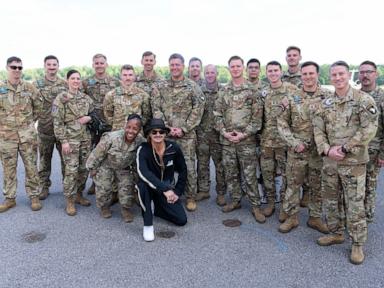
Kid Rock and Pete Hegseth stepped off the ramp, back into a world of cameras and microphones. They carried the scent of JP-8 fuel on their clothes, a lingering reminder of the altitude they had just occupied.
The story of this flight isn't found in a press release. It isn't found in the flight logs or the fuel receipts. It is found in the way we now visualize the leadership of the country. We are in an era where the stage and the battlefield are no longer distinct locations.
The thunder over the Potomac has faded, but the vibration remains. It is a reminder that in the modern age, power isn't just about who holds the office or who carries the weapon. It’s about who controls the airwaves and who can command the sky, even if only for an hour, while the rest of the world watches from below.
The blades stop spinning. The heat shimmers off the engines. The city remains, quiet for a moment, until the next storm rolls in.