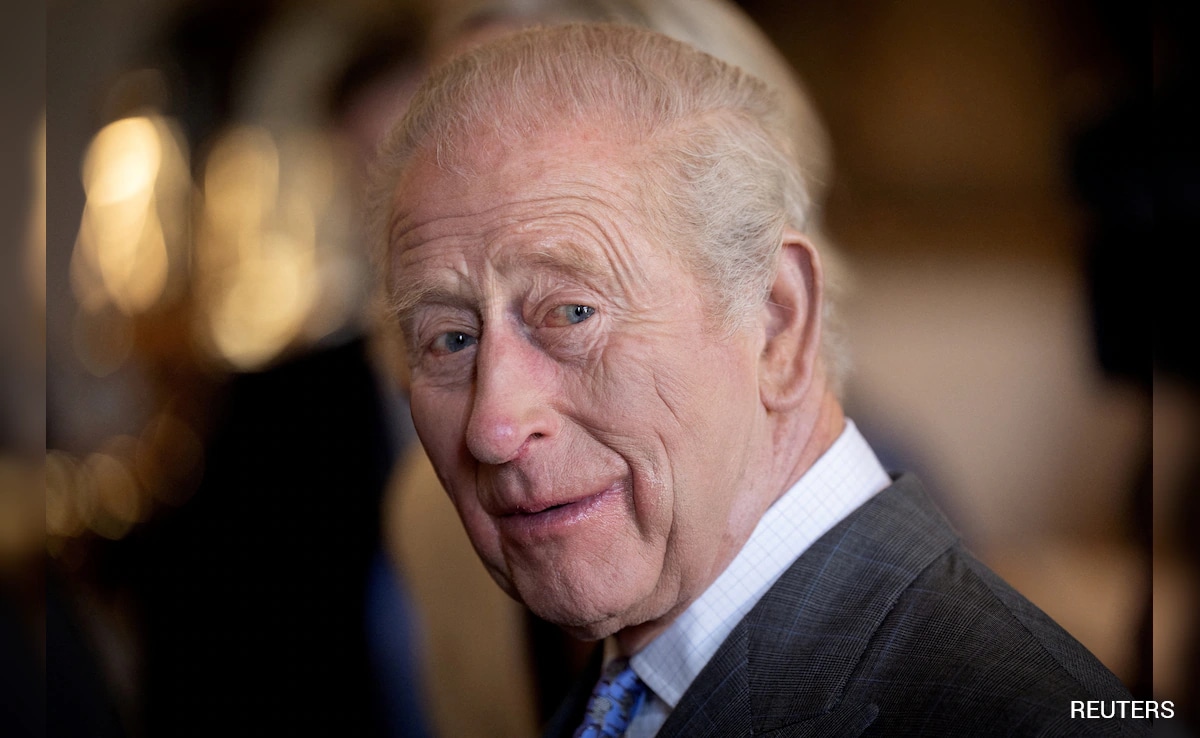
The British Monarchy operates as a non-voting equity share in a global brand conglomerate, where the primary product is historical continuity and the primary liability is political irrelevance. When King Charles III engages with the United States, he is not performing a diplomatic mission in the traditional Westphalian sense; he is managing a brand dilution crisis. The "impossible job" often cited by observers is actually a structural mismatch between the rigid protocols of a hereditary institution and the high-velocity, meritocratic expectations of American soft power. To understand the efficacy of the Crown in America, one must analyze the intersection of three specific variables: the Neutrality Paradox, the Utility Gap, and the Constitutional Ceiling.
The Neutrality Paradox as a Performance Bottleneck
The fundamental constraint of the British Monarchy is the requirement of absolute political neutrality. In a domestic UK context, this serves as a stabilizing mechanism. However, in the American media ecosystem—which is fueled by polarization and high-stakes ideological positioning—neutrality is often interpreted as a lack of substance.
This creates a structural bottleneck. While a President or a CEO can use "the bully pulpit" to drive specific policy outcomes or market shifts, the King must navigate a narrow corridor of generalized advocacy. When the Crown engages with American audiences on topics like climate change or urban planning, it encounters the Neutrality Paradox: to be influential, the message must be specific; to be constitutional, the message must be vague.
The resulting output is often high-cost, low-yield engagement. The logistical overhead of a royal visit—security cordons, diplomatic clearances, and media coordination—far exceeds the measurable policy impact. The King’s "impossible job" is essentially an attempt to maintain a high-profile presence while simultaneously ensuring that presence has zero friction with the host nation's political machinery. This leads to a situation where the Monarchy is visible but functionally inert.
The Utility Gap in Transatlantic Diplomacy
The efficacy of the British Sovereign in America is further hampered by a widening Utility Gap. Historically, the Monarchy served as the "human face" of the Special Relationship, a psychological tether between the two nations. In the 21st century, the mechanics of this relationship have shifted toward data-sharing, intelligence-led defense (Five Eyes), and integrated financial markets.
The Monarchy operates in the realm of symbolic capital, but symbolic capital requires a shared cultural currency to retain value. The decline of "Anglophilia" in younger American demographics represents a fundamental depreciation of the Crown's brand equity.
- The Demographic Disconnect: Older generations viewed the Monarchy through the lens of World War II and the Cold War. For Gen Z and Millennial cohorts, the Monarchy is viewed through the lens of post-colonial critique and social equity frameworks.
- The Media Disintermediation: The rise of social media and streaming platforms has shifted the narrative control from the Palace to individual creators. The "Crown" is now a Netflix IP as much as it is a political entity.
This creates a scenario where the King is competing for attention in a marketplace that no longer grants him a monopoly on prestige. The job is "impossible" because the King is attempting to use 19th-century tools of "majesty" to influence a 21st-century audience that prioritizes transparency and relatability—two qualities fundamentally at odds with the concept of a divinely sanctioned ruler.
The Three Pillars of Royal Brand Maintenance
To quantify the success of the Crown’s American strategy, we must look at three specific operational pillars that the institution uses to justify its continued existence on the world stage.
- The Convening Power: The King’s ability to bring high-net-worth individuals, CEOs, and heads of state into a single room without the friction of partisan politics. This is the Monarchy’s primary value proposition.
- The Continuity Premium: In a volatile political environment, the Monarchy offers a sense of long-term stability. This is particularly effective with institutional investors and established diplomatic circles who value "predictable" soft power.
- The Philanthropic Multiplier: Using the royal "brand" to provide a platform for specific charitable causes, effectively acting as a global marketing agency for underfunded sectors.
The failure of the "King Charles in America" narrative usually occurs when these pillars are ignored in favor of celebrity-style coverage. When the media focuses on the King's personal preferences or family dynamics, it erodes the Convening Power. For the Crown to remain viable in the US, it must pivot from being a "spectacle" to being a "platform."
The Cost Function of Symbolic Representation
Every royal engagement in America carries a hidden cost function. This is not merely the financial cost of the visit, but the opportunity cost of diplomatic focus.
- Variable A: Media Saturation. Does the visit crowd out actual trade negotiations or security discussions?
- Variable B: Political Liability. Does a meeting with a specific US official inadvertently signal an endorsement, violating the neutrality requirement?
- Variable C: Brand Cannibalization. Does the King’s presence in the US highlight the growing republican movements within the Commonwealth (e.g., Jamaica or Canada), thereby weakening the institution elsewhere?
The "impossibility" of the job stems from the fact that Variable C is currently trending upward. As the King moves through American cities, he is shadowed by the historical legacies of the British Empire. In the UK, these legacies are managed through tradition; in America, they are litigated in the court of public opinion.
Logical Fallacies in Modern Royal Critique
Critics often argue that the King is "out of touch" with American values. This is a logical category error. The King’s job is not to be in touch with American values; it is to be a distinct alternative to them. If the King becomes too "American"—too accessible, too populist, too political—he loses the very scarcity value that makes the Monarchy a unique diplomatic asset.
The "impossible" nature of the task is actually a requirement for survival. If the job were easy, it would mean the institution had become mundane. The tension between the King's ancient status and the modern American environment is precisely what generates interest. The moment that tension is resolved, the Monarchy becomes a historical footnote.
Measuring Soft Power ROI
Traditional metrics for diplomatic success (trade deals signed, treaties ratified) do not apply to the Sovereign. Instead, we must utilize a Soft Power ROI (Return on Investment) framework:
- Sentiment Analysis: Measuring the shift in public perception of the UK as a destination for tourism and investment following a royal visit.
- Engagement Depth: Analyzing the level of access granted to the King by US power brokers compared to other foreign dignitaries.
- Narrative Dominance: The ability of the Crown to inject specific themes (e.g., The Prince’s Trust, The Earthshot Prize) into the American news cycle.
Data suggests that while "pomp and circumstance" still drive high engagement, the narrative dominance is increasingly fractured. The King is no longer the sole protagonist of the British story in America; he is one actor in a crowded field that includes the Duke and Duchess of Sussex, the British government, and various cultural icons.
The Sovereign Constraint as a Strategic Advantage
The "impossible job" narrative assumes that the King is failing because he cannot please everyone. From a strategic perspective, this is a misunderstanding of his function. The King’s goal is not universal popularity; it is the maintenance of institutional legitimacy.
By operating within the Sovereign Constraint—accepting the limits of his power and the awkwardness of his position—the King reinforces the idea that the Monarchy is a permanent fixture that exists above the fray of temporary cultural trends. The "impossibility" is the proof of the institution's durability.
Operational Recommendations for the Crown's US Strategy
The current trajectory of royal engagement in America is unsustainable if it relies on 20th-century models of deference. A data-driven pivot would involve:
- Niche-Specific Engagement: Instead of general "tours," the King should focus on high-density intellectual corridors (e.g., Silicon Valley for tech-ethics or Boston for climate science), leveraging his Convening Power where it adds tangible value to global discourse.
- Digital-First Protocol: The Palace must accept that the "American King" exists primarily on mobile screens. Protocol must evolve to allow for controlled, authentic digital interactions that bypass traditional media filters without sacrificing the dignity of the office.
- The Commonwealth Pivot: The King should use his American platform to highlight the modern, diverse Commonwealth of Nations. This addresses the post-colonial critique by demonstrating that the Monarchy is the head of a voluntary, forward-looking association of equals, rather than a remnant of empire.
The survival of the British Monarchy’s influence in the United States depends on its ability to transition from a symbol of "The Past" to a catalyst for "The Long Term." The job is only impossible if the King attempts to be a politician or a celebrity. As a sovereign, his only path forward is to double down on the very constraints that make his position unique, transforming the "impossible job" into a specialized, high-leverage diplomatic function.