Asphalt is indifferent. It does not care what happens on top of it. It takes the weight of semi-trucks, the hurried soles of morning commuters, the spilled oil, the dropped coins, and the heavy iron of parked cars without so much as a tremor of complaint.
On a Tuesday afternoon in a crowded municipal carpark, the asphalt became something else. It became the final thing a young girl felt against her skin.
A dispute. That is what the police reports call it. A dry, clinical word designed to file away jagged edges. Two parties, a narrow lane of concrete, a patch of grey space meant for a vehicle. Words escalated. Tempers frayed like old rope under a sudden strain. Someone pulled a trigger. The noise cracked across the open lot, sharp enough to startle the pigeons into flight, and then there was silence. Not the quiet of peace, but the heavy, ringing silence that follows a catastrophe.
A girl was dead. Not a statistic. Not a placeholder in a nightly news broadcast. A child caught in the crossfire of an utterly meaningless territorial war over a few square yards of painted lines.
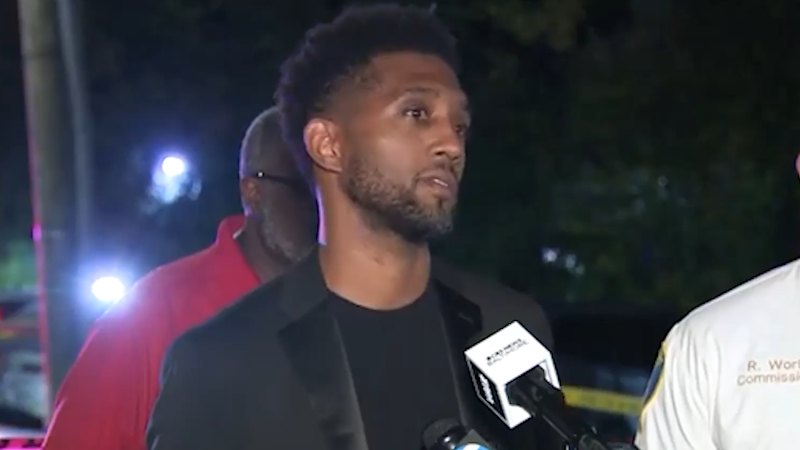
Hours later, the mayor stood before the cameras. The footage shows a man who has aged a decade in the span of an afternoon. His shoulders are pulled inward, as if trying to protect his chest from a physical blow. He speaks, and his voice carries the hollow, cracking timbre of a profound helplessness. He expresses sadness.
Sadness.
It is the word we use when our hands are empty. It is what remains when we have exhausted anger, terror, and disbelief. The mayor talks about community safety, about a tragedy that cuts to the core of who we are, about senseless violence. But behind his carefully chosen syllables, you can hear the quiet panic of a person realizing that the social contract has frayed to a single, snapping thread.
We have built cities that breed hostility.
Consider the modern carpark. It is a monument to impatience. We circle them in our sedans and SUVs, gripping the steering wheel until our knuckles turn white, hunting for the closest stall. Every empty space is a minor victory; every taken spot is a personal affront. We live in a culture of hyper-acceleration, where convenience is treated as a fundamental human right, and any delay—even a thirty-second wait for someone to back out—is experienced as an intolerable assault on our time.
We are stressed. We are overextended. We are breathing air choked with exhaust and living lives dictated by the relentless ticking of digital clocks. And then we funnel ourselves into tight, concrete bottlenecks where anonymity reigns and consequences feel theoretical.
Anonymous anger is a dangerous thing. Inside a metal cage with tinted windows, a human being ceases to be a neighbor. They are an obstacle. They are the jerk who cut you off. They are the barrier between you and the grocery store, the home, the quiet.
When you strip away community, when you isolate people inside their own bubbles of anxiety and entitlement, small grievances stop being small. They become existential.
A parking space. Think of the absurdity. A rectangle of pavement measuring roughly eight by sixteen feet. Is there anything on this earth less worthy of a human life? Is there any piece of real estate, no matter how prime, that justifies the permanent extinguishing of a laugh, a future, a memory yet to be made?
Yet we know, with a sickening certainty, that it could happen again tomorrow. In another lot. Outside another store. Over another petty slight.
Because the gun was just the instrument. The underlying disease is something far more pervasive. It is the steady, corrosive erosion of empathy in public spaces. We no longer see the people around us as fellow travelers in a difficult world. We see them as competitors for scarce resources. Space. Time. Attention. Survival.
The mayor’s sadness is real, but it is also an admission of defeat. It is the language of a leadership class that has realized governance cannot legislate away a collective moral rot. You cannot pass an ordinance against bitterness. You cannot ticket a bad attitude.
When the news cameras packed up and drove away, the carpark was washed down. The broken glass was swept into a dustpan. The police tape was ripped from the chain-link fence and tossed into a bin. Cars returned the next morning, their drivers inching slowly down the lanes, peering into the rows, looking for a place to leave their vehicles while they bought milk or picked up dry cleaning.
They parked on the exact same spot.
They stepped out onto the asphalt. They locked their doors, checked their watches, and walked away without looking down. Life resumed its terrifying, frictionless momentum. But somewhere, in a quiet house with drawn curtains, a family stared at an empty chair and wondered how the entire world could change forever over something as trivial as where to put a car.