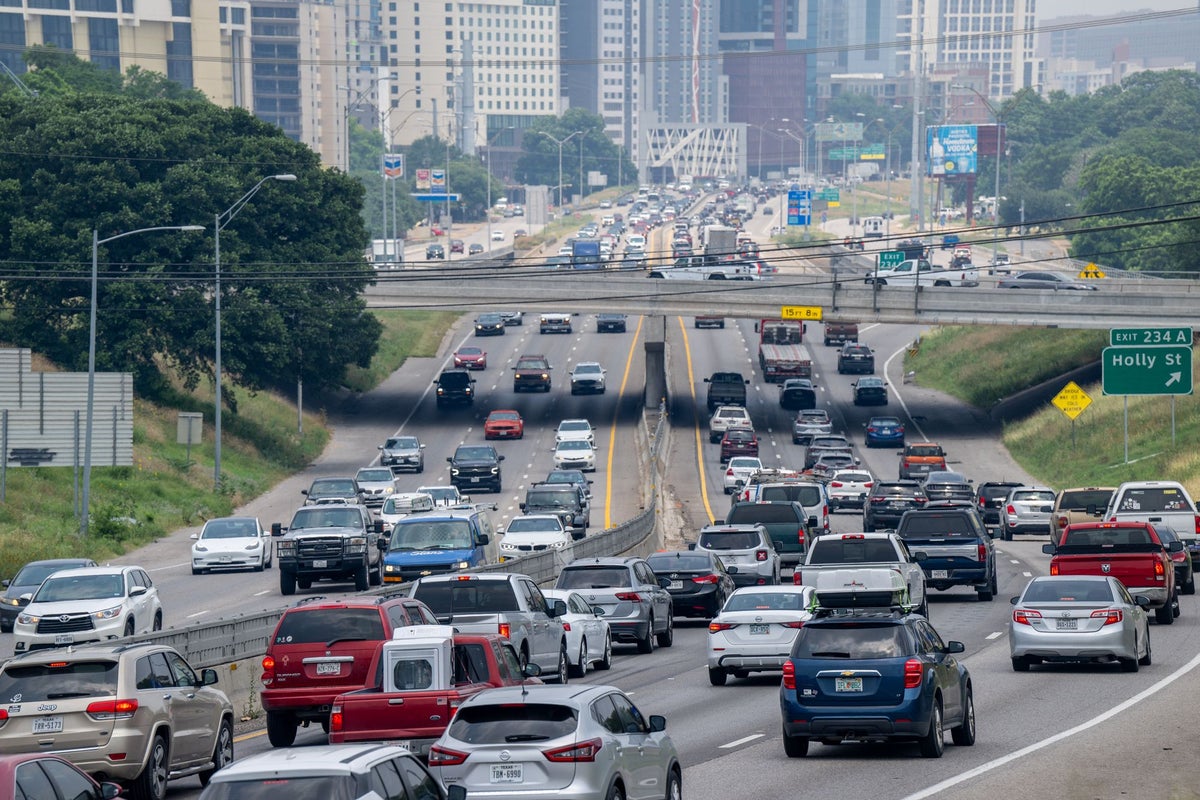
The modern commute is not a failure of transportation engineering but a byproduct of distorted real estate markets. When the cost of residential floor area in economic hubs exceeds the marginal utility of proximity for the workforce, the resulting geographic displacement creates a massive, hidden tax on the economy. This phenomenon, known as the Spatial Mismatch, forces a trade-off between housing affordability and time-poverty. To understand why your commute is long and expensive, one must look past the traffic jams and analyze the structural failure of zoning, the subsidy of sprawl, and the decaying efficiency of the urban labor market.
The Trilemma of Urban Density
Every metropolitan area operates under a strict trilemma. A city can prioritize two of the following three variables, but never all three simultaneously:
- Low Housing Prices
- High Proximity to Employment Centers
- Restrictive Land-Use Regulation (Zoning)
Current urban policy in most high-productivity cities attempts to maintain high proximity and restrictive zoning, which mathematically necessitates a surge in housing prices. When workers can no longer clear the price hurdle to live near their jobs, they "drive until they qualify" for a mortgage or rental agreement. This shift moves the financial burden from the monthly rent check to the transportation ledger, yet the total economic cost—factoring in fuel, vehicle depreciation, and the opportunity cost of lost time—frequently exceeds what the worker would have paid for more expensive central housing.
The Cost Function of Geometric Inefficiency
The fiscal impact of the commute is best understood through the lens of the marginal cost of distance. Standard economic models often fail to account for the non-linear nature of these costs.
The Direct Monetary Drain
A commute is a recurring operational expense. If a worker moves 20 miles further away to save $500 on monthly rent, the calculation is often a net loss. At the 2026 standard mileage rate, the wear and tear on a vehicle plus fuel costs quickly erode the rent savings. Furthermore, the infrastructure required to support this distance—highways, interchanges, and parking—is subsidized by tax bases that are increasingly strained by the low-density nature of sprawl.
The Opportunity Cost of Chronos
Time is the only non-renewable resource in the labor equation. A two-hour daily round-trip commute represents 500 hours per year. For a professional earning $50 per hour, this is a $25,000 annual loss in productive or leisure capacity. When multiplied across a regional workforce, this "time tax" represents a massive drain on Gross Domestic Product (GDP).
The Agglomeration Penalty
Cities thrive because of agglomeration effects: the increased productivity that occurs when diverse human capital is concentrated in a small area. Long commutes act as a friction coefficient on these effects. When workers are physically exhausted or tethered to rigid transit schedules, the "accidental" networking and late-hour collaboration that drive innovation in sectors like technology and finance evaporate.
Structural Bottlenecks in the Housing Supply Chain
The reason affordable housing remains distant from jobs is not a lack of land, but a regulatory stranglehold on Floor Area Ratio (FAR) and density.
The supply chain of housing is interrupted by two primary barriers:
- Exclusionary Zoning: Large swaths of urban land are restricted to single-family detached homes. This prevents the market from responding to demand through "missing middle" housing—townhomes, duplexes, and low-rise apartments—which could provide affordability without requiring 50-mile commutes.
- The Transit-Density Disconnect: Mass transit systems require a specific threshold of residents per square mile to be fiscally viable. When housing policy forbids density near transit hubs, the "last mile" problem becomes unsolvable, forcing workers into cars and onto congested arterial roads.
This mismatch creates an artificial scarcity. The value of the land is high because of the jobs nearby, but the law forbids building enough units to house the people working those jobs. The result is a forced outward migration of the labor force.
The Feedback Loop of Infrastructure Failure
Investment in road expansion often produces the Induced Demand trap. Adding lanes to a highway reduces travel time in the short term, which makes distant, "affordable" housing look more attractive. This encourages more people to move further out, which fills the new lanes with more cars, eventually returning the commute time to its original equilibrium—or worse.
This creates a cycle of capital misallocation. Billions are spent on highway widening to solve a problem that could be solved more cheaply by changing a zoning map to allow an apartment building three miles from a business district. The highway is a reactive, high-maintenance solution to a land-use problem.
Quantifying the Workforce Displacement
The severity of the commute-housing crisis can be measured through the Housing + Transportation (H+T) Affordability Index. Traditional metrics suggest housing is "affordable" if it costs 30% of income. However, if a worker spends 25% of their income on a car and fuel to live in that "affordable" house, they are effectively spending 55% of their income on basic survival.
The most impacted demographic is the "essential workforce"—teachers, nurses, and service staff. When these roles cannot afford to live within a 30-minute radius of their workplace, the system faces Operational Fragility. High turnover, increased sick leave, and labor shortages in central business districts are the direct result of the commute-housing gap.
Strategic Reconfiguration of the Urban Model
Solving the commute crisis requires a pivot from transportation-centric solutions to land-use-centric solutions. The most effective levers are not found in the Department of Transportation, but in the Planning Commission.
- Elimination of Minimum Parking Requirements: Mandated parking increases the cost of housing construction by up to 20% and forces buildings to be spread further apart, increasing walking distances and discouraging non-car transit.
- Upzoning Transit Corridors: Legally mandating high-density residential development within a half-mile radius of all heavy and light rail stations. This internalizes the workforce, removing them from the highway system entirely.
- Value Capture Financing: Using the increase in land value generated by infrastructure projects to fund affordable housing directly adjacent to those projects.
The current trajectory—subsidizing sprawl while neglecting density—is a recipe for regional insolvency. The cost of the commute is not just a personal grievance; it is a signal of a broken spatial economy.
The most viable path forward for municipal leaders and developers is the aggressive implementation of Infill Development. By reclaiming underutilized urban land—brownfields, defunct shopping centers, and surface parking lots—for high-density residential use, cities can shorten the physical distance between labor and capital. This reduces the strain on aging infrastructure and recaptures the lost hours of the workforce. The priority must shift from moving vehicles more quickly across long distances to moving people more efficiently over short ones. Markets that fail to make this transition will find themselves unable to compete for talent as the "commute tax" becomes an insurmountable barrier to entry for the next generation of the global workforce.