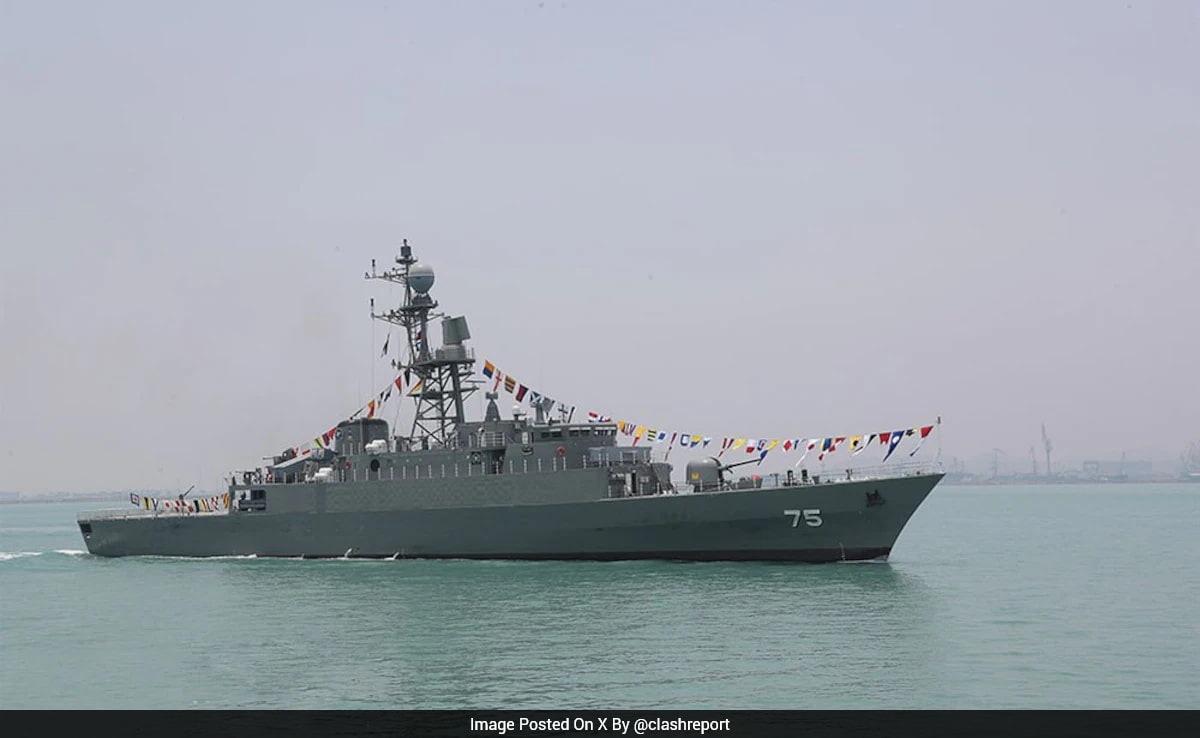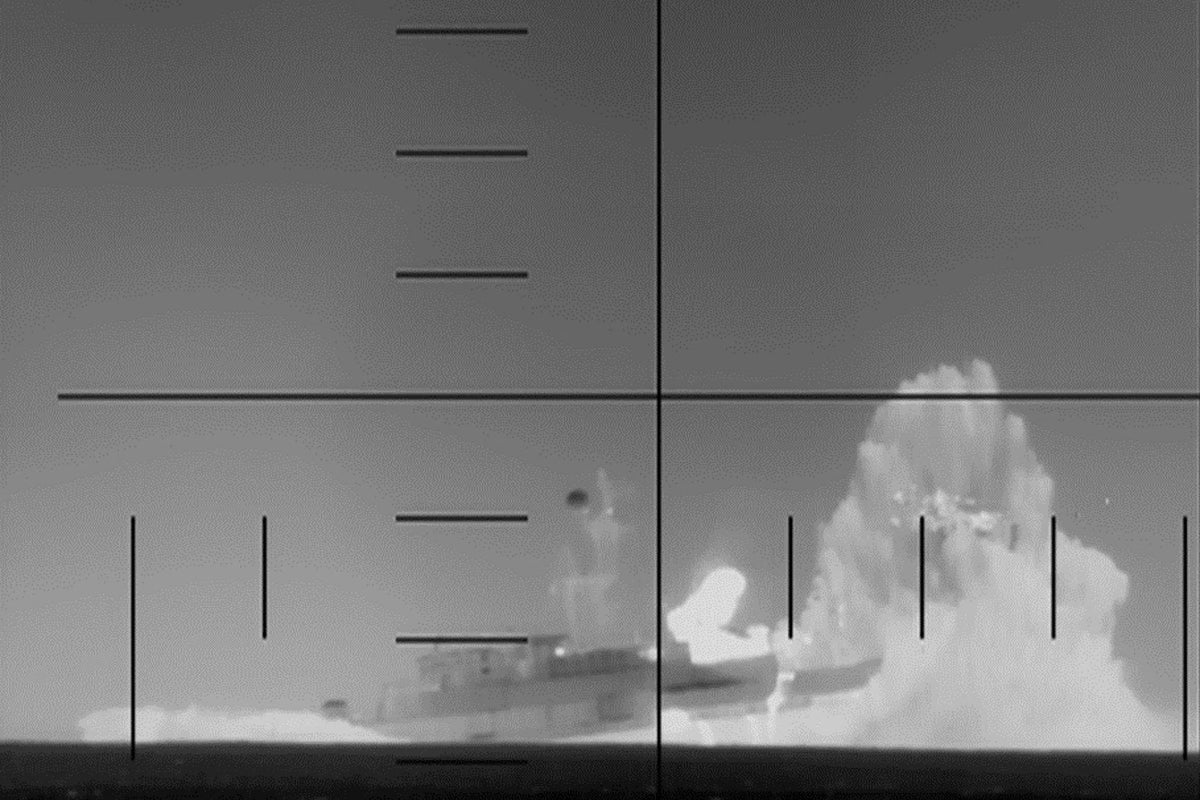
The headlines are screaming about a "decisive blow." Tabloids are salivating over grainy footage of a US Virginia-class submarine purportedly neutralizing an Iranian vessel off the coast of Sri Lanka. They want you to believe this is a masterstroke of power projection. They are wrong.
In reality, using a multi-billion dollar stealth asset to sink a surface ship in a secondary theater isn't a victory. It’s a tactical failure masquerading as a PR win. If you’re cheering for the "moment of impact," you’re missing the catastrophic erosion of strategic deterrence happening in the background.
The Stealth Suicide of Modern Naval Warfare
A submarine’s primary weapon isn’t the Mark 48 torpedo or the Tomahawk missile. It is anonymity.
The moment a submarine launches a strike, it ceases to be a ghost and becomes a target. Sound travels four times faster in water than in air. The acoustic signature of a tube launch or the cavitation from a high-speed egress tells every hydrophone in the Indian Ocean exactly where that $4 billion asset is sitting.
I have watched defense analysts ignore the "counter-detection" math for a decade. They treat submarines like underwater snipers. They aren't. They are more like landmines. Once a landmine goes off, the enemy knows exactly where the minefield is. By engaging an Iranian warship—a vessel likely worth less than the cost of the submarine’s training cycle—the US Navy has traded its most valuable commodity for a headline.
The Sri Lanka Geometry Problem
Why Sri Lanka? The armchair generals point to the "choke points" of the Indian Ocean. They cite the proximity to the 8-Degree Channel and the maritime Silk Road.
This is the "lazy consensus."
Sri Lanka is not a tactical firing range; it is a diplomatic minefield. The Indian Ocean floor is cluttered with acoustic sensors and a messy network of Chinese-operated port infrastructure. To fire a shot here is to hand over a massive data set of acoustic signatures to every "research vessel" (read: spy ship) docked in nearby Hambantota.
If you are the commander of a Virginia-class sub, your job is to stay hidden so the enemy fears you are there. Once you fire, the mystery is gone. You’ve revealed your depth, your speed of engagement, and your acoustic profile during a launch sequence. You’ve given the Chinese PLAN (People's Liberation Army Navy) exactly what they need to calibrate their sonar arrays for the next twenty years.
The Asymmetric Math is Rotting
Let’s talk about the cold, hard ledger of war.
- US Virginia-Class Submarine: Roughly $4.3 billion.
- Iranian Corvette/Frigate: Roughly $150 million to $250 million.
- The Result: A 17:1 loss ratio in terms of capital risk.
When you use a high-end stealth platform to kill a low-end surface combatant, you aren't winning. You are being baited. The Iranians know they cannot win a blue-water engagement. Their entire naval philosophy is built on "expendable friction." They want the US to use expensive, limited-stock munitions and reveal elite positions to eliminate cheap hulls.
People ask: "Shouldn't we defend the sea lanes at any cost?"
The answer is no. Not if the cost is the structural integrity of your silent service. Using a sub for this is like using a surgical scalpel to chop wood. You’ll get through the wood, but you’ve ruined the tool for the actual surgery that’s coming later.
Dismantling the Missile Defense Delusion
The competitor article claims the strike was necessary because the Iranian ship posed a "threat to global commerce."
This is a fundamental misunderstanding of how modern maritime interception works. If a surface ship is the threat, you send an Arleigh Burke-class destroyer or a carrier-based F/A-18. You use platforms that are meant to be seen. Presence is a deterrent. A submarine is a hidden threat that only works as long as it remains hidden.
Furthermore, the "precision" of these strikes is often overstated. While the torpedo hits its mark, the collateral damage to the regional "acoustic environment" is permanent. We are entering an era where AI-driven sonar processing can isolate submarine movements from background noise with terrifying accuracy. Every time we "show off" a strike like this, we feed the machine learning models of our adversaries.
The Intelligence Breach Nobody is Discussing
Every launch sequence involves a series of mechanical gates. Flood the tubes. Equalize pressure. Open outer doors. Launch.
These steps create a specific rhythmic "melody" in the water. In the shallow, warm, and highly saline waters off the coast of South Asia, sound behaves erratically. It bounces. It refracts. This creates "multipath" signals that, if captured by a sophisticated sensor array (like those the Chinese have been planting under the guise of "oceanographic research"), allow an adversary to build a 3D model of our launch capabilities.
We just gave away the keys to the kingdom for a 30-second clip on the evening news.
Stop Asking if the Strike Succeeded
The question isn't whether the Iranian ship is at the bottom of the ocean. It is. The question is: what did we lose to put it there?
- Strategic Ambiguity: Gone. The adversary knows we are willing to use high-value assets for low-value targets.
- Acoustic Superiority: Compromised. The signature of that launch is now sitting on a server in Beijing.
- Diplomatic Leverage: Eroded. We’ve turned a neutral shipping lane into a hot zone, justifying further militarization by regional rivals.
I’ve seen military bureaucracies do this before. They get bored. They want to prove their relevance in a specific theater. They choose a flashy kinetic action over the boring, difficult work of sustained, invisible deterrence.
The Hard Truth About Sub-Surface Warfare
Submarines are meant for the "Big Fight." They are meant to sit off the coast of a peer competitor and wait for the signal to disable an entire nuclear triad. They are not maritime police cars.
When you see a video of a sub-launched strike, don't feel a sense of security. Feel a sense of dread. It means the commanders have lost the script. It means they are prioritizing "moments" over decades of tactical advantage.
If we keep using our silent hunters to swat flies, we shouldn't be surprised when the enemy learns exactly how to catch the hunter. The ocean is becoming transparent. We just turned the lights on and waved.
Log off the news feeds. Stop celebrating the explosion. Start worrying about the silence that followed—because it’s a silence we no longer own.
Go look at the naval procurement budgets for the next five years. Notice how many billions are being poured into "Acoustic Rapid COTS Insertion." We are frantically trying to change our signatures because we keep revealing them in vanity strikes.
Stop treating the Indian Ocean like a playground. It’s a classroom, and we just gave the most important lesson of the century for free.