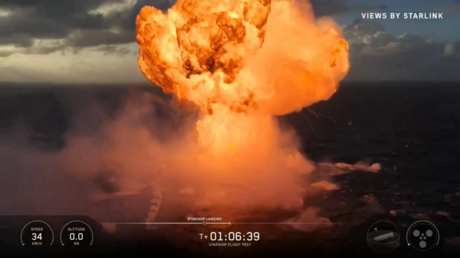
SpaceX successfully launched its first third-generation Starship V3 megarocket from its Starbase facility in South Texas on Friday, marking the 12th integrated test flight for the program. The 408-foot-tall vehicle lifted off from a newly operational second launch pad, successfully sending the upper stage into a planned suborbital trajectory that ended with a fiery splashdown in the Indian Ocean. While mainstream headlines treat this Flight 12 milestone as another routine victory for Elon Musk’s engineering teams, the true narrative behind this launch has very little to do with abstract dreams of Mars. The frantic push to get the overhauled V3 platform into the air is driven by immediate, cutthroat economic pressures: a looming, high-stakes $1.75 trillion initial public offering (IPO) and a desperate need to rescue a bottlenecked Starlink business model.
For years, the aerospace industry treated the Texas explosions and rapid iterations as a fascinating engineering spectacle. Now, the luxury of slow development has expired. The debut of Starship V3 represents a hard pivot from experimental prototype to an operational commercial workhorse, because SpaceX has quietly realized that its current workhorse, the Falcon 9, can no longer sustain the company's financial weight. Learn more on a related topic: this related article.
The Hidden Financial Bottleneck of the Falcon 9
The Falcon 9 is the undisputed king of modern rocketry, flying 165 times last year alone. Yet, it has become a victim of its own success.
The growth engine of SpaceX is not commercial launch services; it is Starlink. The satellite internet segment brought in $11.4 billion in revenue in 2025, accounting for a massive share of the company's valuation. To keep that revenue growing, SpaceX must continuously replenish and expand its orbital constellation with larger, heavier next-generation hardware. Additional analysis by Gizmodo explores similar perspectives on this issue.
The problem is physical size. The Falcon 9 fairing simply cannot hold the massive, high-throughput Starlink V3 satellites in meaningful quantities. Engineers have squeezed every ounce of performance out of the Falcon line. Relying on it to build out a global broadband network means launching constantly, which eats into profit margins through repeated recovery operations, fuel costs, and pad maintenance.
Starship V3 changes the math entirely. The giant vehicle is designed to carry up to 60 full-scale satellites at a time. During Friday’s test flight, the vehicle carried 20 mock satellites to simulate these deployment stresses. By transitioning to a rocket that can deploy triple the payload volume in a single launch, SpaceX aims to radically drop its cost per kilogram to orbit. If Starship fails to transition into daily, rapid operational reuse by the second half of this year, the Starlink network's growth curve will flatten. Investors looking at the upcoming IPO filings know this.
Inside the Structural Redesign of V3
Mainstream reports briefly noted that the latest rocket is slightly taller than its predecessors. The reality is a total internal overhaul.
SpaceX moved to the V3 block after a brutal 2025 development cycle where four consecutive Block 2 upper stages suffered catastrophic structural or thermal failures during re-entry and testing. The company had to fix fundamental design flaws.
Enhanced Fuel and Propulsion Integration
The main propellant transfer line running through the center of the V3 booster is now the physical size of a Falcon 9 rocket core. This massive architecture is required to feed the 33 upgraded Raptor engines with cryogenic liquid oxygen and methane at unprecedented flow rates.
Aerodynamic and Control Overhauls
On the outside, the massive grid fins used to steer the Super Heavy booster back to Earth have been completely redesigned. They are fewer in number but significantly larger and structurally reinforced. This change reduces mechanical complexity while providing higher control authority during supersonic descent through the atmosphere.
Lunar Hardware Foundations
For the first time, the stainless steel upper stage features integrated docking cones. These are not for show. They are the initial physical blueprints for the Human Landing System (HLS) variant that NASA is purchasing for its Artemis lunar program.
The Pressure from NASA and Wall Street
SpaceX is playing a dangerous game with its timelines. NASA has committed billions of dollars to Starship for the Artemis III and IV missions, which aim to land astronauts on the moon. Artemis III is officially scheduled for 2027, with the crewed landing set for 2028.
The schedule is deeply unrealistic. Before a single human steps on board, SpaceX must prove it can launch a Starship, orbit it, and then launch an entire fleet of "tanker" Starships to refuel it in low Earth orbit. Some internal estimates suggest it will take anywhere from 8 to 15 refueling launches just to send one Starship to the moon.
Friday's launch skipped recovery entirely. Both the booster and the ship were intentionally ditched into the ocean to gather pure thermal and structural data on the V3 frame. While this protects the launch site from catastrophic debris, it means SpaceX is still a long way from the rapid, multi-launch-per-day cadence required to make orbital refueling viable.
Meanwhile, Jeff Bezos’ Blue Origin is lurking. Their Blue Moon lunar lander is moving through development, with a prototype scheduled for a major test later this year. If SpaceX continues to experience grounding orders or structural failures, NASA has an alternative.
Why the IPO Changes Everything
Elon Musk has long insisted that he would not take SpaceX public until missions to Mars were regular occurrences. The reality of the market has forced his hand. The capital required to build out factories, construct orbital launch pads in Florida, and manufacture hundreds of single-use engines is burning through cash at an unsustainable rate.
The $1.75 trillion IPO scheduled for next month is the ultimate endgame. It provides the massive injection of liquidity needed to scale Starship production from an artisanal engineering project into an automotive-style assembly line.
But public markets demand predictability. Wall Street will not tolerate the "fail forward" philosophy that characterized the early days of Starship development. A single explosion that grounds the fleet for six months could wipe out tens of billions of dollars in shareholder value overnight. Friday’s clean flight path was a calculated demonstration to institutional investors that the V3 platform is stable, predictable, and ready for commercialization.
SpaceX has proved it can build the biggest rocket in history, and it has proved that the rocket can fly. Now, it has to prove that the machine can actually make money before the patience of its new investors runs out.