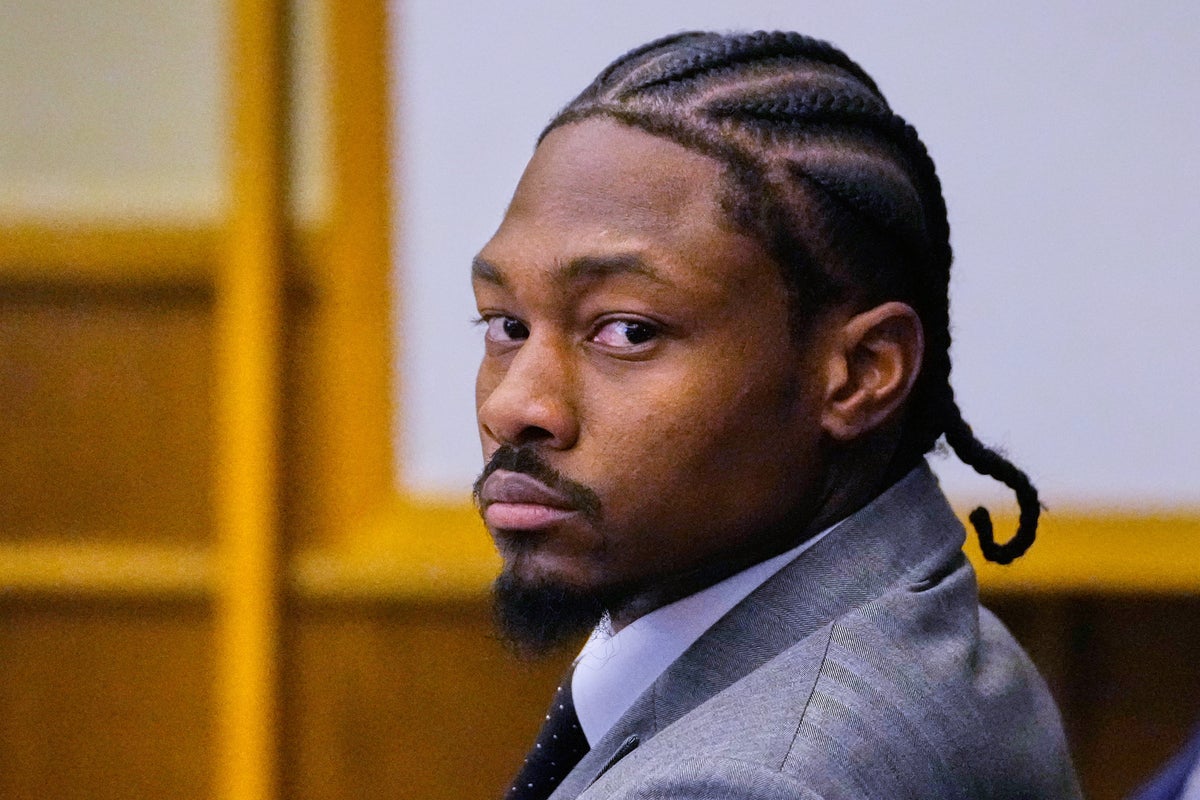
The headlines are bleeding the same tired narrative. Stefon Diggs, the mercurial wide receiver who has spent more time in the trade rumor mill than the end zone lately, was found not guilty of assaulting his personal chef. The mainstream sports desk response? A collective sigh of relief for his team’s salary cap and a shallow recap of courtroom testimonies.
They are missing the forest for the trees.
This wasn’t just a win for a star athlete. It was a masterclass in the structural immunity granted to the NFL’s elite. While the public fixates on the "he-said, chef-said" drama of a kitchen confrontation, they ignore the reality that the legal system isn't designed to find "truth" in high-profile cases—it’s designed to reward the side with the most efficient defense machine.
The Myth of the Level Playing Field
The common consensus suggests that "justice was served." That’s a lazy take. Justice implies an equitable search for facts. What we actually witnessed was the inevitable collision between a private citizen and the fortress of a multi-million-dollar brand.
When a personal chef—or any service worker—accuses a Tier-1 athlete of physical intimidation or assault, they aren't just fighting a man. They are fighting a legal war chest. In the Stefon Diggs case, the defense didn't need to prove Diggs was a saint; they only needed to weaponize the inherent chaos of high-pressure environments.
The defense strategy was classic: characterize the victim as an opportunist and the athlete as a victim of his own celebrity. It works every time because the public wants it to work. We have a psychological sunk cost in these players. We want them on the field on Sundays, not in a deposition chair.
The NFL’s Shadow Judiciary
Why do we keep seeing these "not guilty" or "charges dropped" outcomes for star players? It isn’t because NFL players are uniquely innocent. It’s because the league has perfected a parallel track of crisis management that starts the moment a 911 call is placed.
- Immediate Narrative Control: Before the first tweet goes live, the "fixers" are already at work.
- The Credibility Shredder: Defense attorneys don't just defend their client; they systematically dismantle the life of the accuser until the prosecution realizes a conviction is a statistical impossibility.
- The Financial Out-Execution: A personal chef has a budget. Stefon Diggs has a contract that pays him more in one game than most chefs earn in a decade.
Imagine a scenario where the roles were reversed. If a chef allegedly lunged at a star wide receiver in his own home, the "threat to the franchise" narrative would have him behind bars before the appetizers were cold. The asymmetry is the point.
Why the Prosecution Usually Fails
Most people ask: "If there was evidence, why didn't they win?"
That’s the wrong question. You should be asking: "How much evidence is enough to overcome the halo effect of a Pro Bowl jersey?"
In criminal law, the burden is "beyond a reasonable doubt." For a celebrity athlete, that "doubt" is incredibly easy to manufacture. All a defense attorney has to do is point to a single inconsistent text message or a witness who might be looking for a payday. Once that seed is planted, the elite athlete’s status acts as a fertilizer.
The "lazy consensus" says that being found not guilty means the event didn't happen. In the real world, "not guilty" often just means "too expensive and complicated to prove." We confuse legal exoneration with moral innocence. Diggs walks free not because he’s a choir boy, but because the machinery behind him is too heavy to move.
The Service Worker Trap
The Diggs case highlights a brutal reality for the "invisible" staff that keeps the NFL elite running. Personal chefs, trainers, and assistants live in a legal gray zone. They work in private residences without HR departments or OSHA oversight.
When a conflict arises, they are told to "keep it in the family." When they go public, they are branded as "clout-chasers." This verdict sends a chilling signal to every service provider in the industry: if you get into a scuffle with the golden goose, the goose is going to win. Every. Single. Time.
The Performance of Innocence
Look at the optics. Diggs’ team didn't just aim for a "not guilty." They aimed for a narrative of total vindication. They wanted you to feel foolish for even doubting him.
This is the "celebrity shield" in action. By the time the verdict is read, the public has been conditioned to see the accuser as a nuisance. The trial becomes a formality—a performance piece meant to scrub the brand clean for the next season.
I have seen this script play out across every major league. The names change, but the mechanics remain identical. You hire the best, you lean on the community’s desire to see the team win, and you wait for the "reasonable doubt" to do its job.
Stop Asking if He Did It
Whether Stefon Diggs actually assaulted his chef is, at this point, irrelevant to the cultural balance sheet. The real takeaway is that we operate in a society where "innocence" is a commodity that can be purchased with the right legal team and enough social capital.
The "not guilty" verdict isn't a sign that the system works. It’s a sign that the system is functioning exactly as intended—to protect the assets of the billion-dollar sports industrial complex.
The chef lost the moment he filed the complaint. Diggs didn't just win a court case; he reaffirmed the untouchable status of the modern gladiator.
If you’re still looking for "the truth" in a courtroom involving a superstar, you’re not paying attention. You’re just watching the scoreboard. And the house always wins.
Next time a star athlete gets cleared, don’t talk to me about justice. Talk to me about the billable hours.
The jersey stays clean. The brand stays intact. The show goes on.