The air in Luanda doesn’t just sit; it clings. It carries the salt of the Atlantic and the heavy, invisible weight of five centuries. When Pope Leo XIV stepped onto the red earth of Angola this week, he wasn’t just a dignitary on a state visit. He was a man walking into a graveyard that has no headstones, only echoes.
He stood at the site of the former slave port, a place where the beauty of the coastline feels like a cruel joke. To look at the shimmering blue water today is to see a horizon of hope. But for the millions who were marched here in chains, that same horizon was the edge of the world. It was the point where their humanity was systematically stripped away, replaced by a serial number and a price tag.
The Pope did not offer a polished, clinical speech. He spoke of "great suffering," but the words felt different when whispered in the shadow of the Fortress of São Miguel. He looked at the stones. He looked at the descendants of those who survived. And for a moment, the vast, bureaucratic machinery of history stopped turning to acknowledge a wound that has never truly closed.
The Geography of Ghost Traces
To understand why a religious leader would travel thousands of miles to stand in the heat of a West African afternoon, you have to look at the numbers. They are staggering. They are numbing. Between the 16th and 19th centuries, nearly six million people were taken from the shores of Angola alone. That is not a statistic. It is a hollowed-out nation.
Imagine a village. Not a hypothetical one, but a real collection of huts in the Angolan highlands, perhaps near the Kwanza River. Let’s call a young man there Zola. One afternoon, Zola is tending to cattle. By evening, he is in the grip of raiders. He begins a forced march that lasts weeks. He sees his neighbors collapse from exhaustion. He sees the elderly left behind.
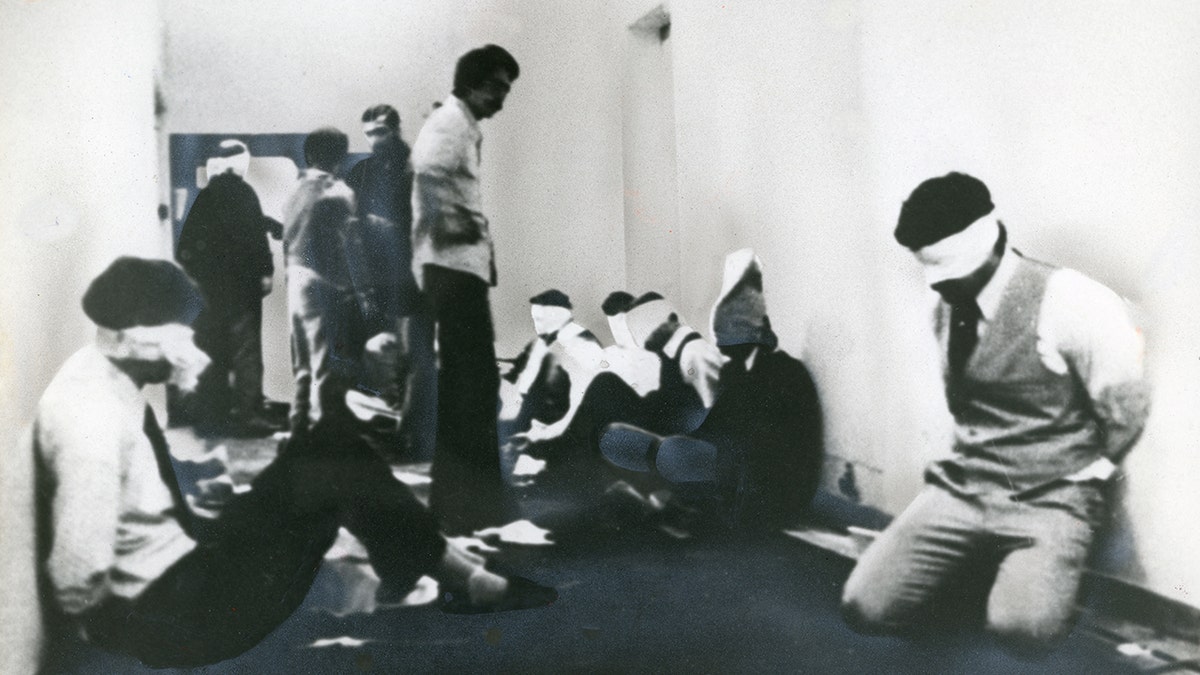
When Zola reaches the coast, he is shoved into a "barracoon"—a holding pen. This is where the Pope stood. This is where the air feels thickest. In these pens, the captives waited. They were branded with hot irons, the smell of searing flesh mingling with the salt spray. The Church, in a dark irony of history, was often present, baptizing the enslaved in mass ceremonies before they were pushed onto ships. They were given Christian names they didn't want, for a journey they wouldn't survive.
Pope Leo XIV’s presence here was an act of reckoning with that specific shadow. He wasn’t just mourning the victims; he was acknowledging the complicity of the structures that allowed the trade to flourish. The "great suffering" he recalled wasn't a freak accident of nature. It was a calculated, industrial process.
The Architecture of Memory
History has a way of smoothing over the jagged edges of the past. We turn tragedies into museums. We turn battlefields into parks. But at the slave trade shrines in Angola, the jagged edges remain.
The Pope’s visit highlights a tension that exists in every post-colonial society: how do you move forward without betraying the memory of those who were lost? If you forget, you lose your soul. If you dwell only on the pain, you lose your future.
Angola is a country of vibrant energy, oil wealth, and a burgeoning youth population. In the markets of Luanda, the music is loud, and the commerce is fast. Yet, just a few miles away, the quiet of the slave ports remains absolute. It is a silence that demands an answer.
When the Pope touched the walls of the historic shrine, he was engaging in a ritual of re-humanization. For centuries, the narrative of the slave trade was written by the victors, the shippers, and the bookkeepers. They wrote about "cargo" and "inventory." By focusing on the "great suffering," Leo XIV was insisting on the use of human vocabulary. He was calling Zola by his name, even if that name has been lost to time.
The Invisible Stakes of a Modern World
It is tempting to view this visit as a purely symbolic gesture, a bit of historical housekeeping. That would be a mistake. The stakes are not confined to the past. The legacy of the slave trade created the blueprints for how we value—or devalue—human life today.
Consider the way global labor markets function. Consider the "invisible" workers who pick the fruit, mine the cobalt, and sew the clothes that sustain a comfortable modern life. The Pope’s message wasn't just about 1724; it was about the persistent temptation to treat people as tools.
He spoke to a crowd that included some of the poorest people on the planet and some of the most powerful leaders in Africa. The contrast was sharp. Angola is a land of extreme wealth and extreme lack. By standing at the shrine, Leo XIV was pointing a finger at the greed that fueled the ships. He was suggesting that the same greed hasn't disappeared; it has only changed its wardrobe.
The "shrine" is more than a building. It is a mirror. When we look at it, we are forced to ask: who are we willing to sacrifice for our own progress?
The Weight of the Unspoken
There is a specific kind of grief that comes from a lack of closure. Most of the millions taken from Angola died without a grave. Their bones form a hidden mountain range on the floor of the Atlantic. Their families back home never knew where they went. They simply vanished into the blue.
This is the "great suffering" that transcends physical pain. It is the trauma of the unknown. During his visit, the Pope spent time in silent prayer. Silence is often the only appropriate response to a tragedy of this magnitude. You cannot "explain" the slave trade. You cannot justify it with economic arguments of the era. You can only witness it.
The people of Luanda watched the Pope with a mix of reverence and scrutiny. They have heard many words from leaders over the decades. They have seen many promises of "never again." But there was something in the way Leo XIV moved—a slowness, a visible heaviness—that suggested he felt the gravity of the ground beneath his feet.
A Path Through the Red Earth
The visit concluded not with a grand proclamation, but with a simple gesture of solidarity. The Pope met with the youth of Angola, the generation that carries the scars of a long civil war alongside the ancestral memory of the slave trade.
He didn't tell them to forget. He told them to build a house that has room for the truth.
The red earth of Angola is stained with more than just iron oxide. It is saturated with the sweat and blood of those who were told they were nothing, but who proved, through their endurance, that they were everything. As the Pope’s motorcade pulled away from the coast, the Atlantic continued its rhythmic pulse against the shore.
The waves bring in the tide, and they pull it back out. They are the only witnesses who remember every face that passed through the gates of the Fortress. The Pope came to listen to those waves. He came to acknowledge that the "great suffering" is not a chapter in a book, but a living, breathing part of the human story.
He left behind a bouquet of flowers at the water’s edge. They were small, fragile things against the vastness of the ocean. But for a few hours, the world stopped to look at the spot where the flowers landed, remembering that every soul lost to the sea had a name, a home, and a heartbreak that the world is finally learning to hear.
The sun set over Luanda, turning the water into a sheet of hammered gold, hiding the ghosts once more beneath the surface of the deep.