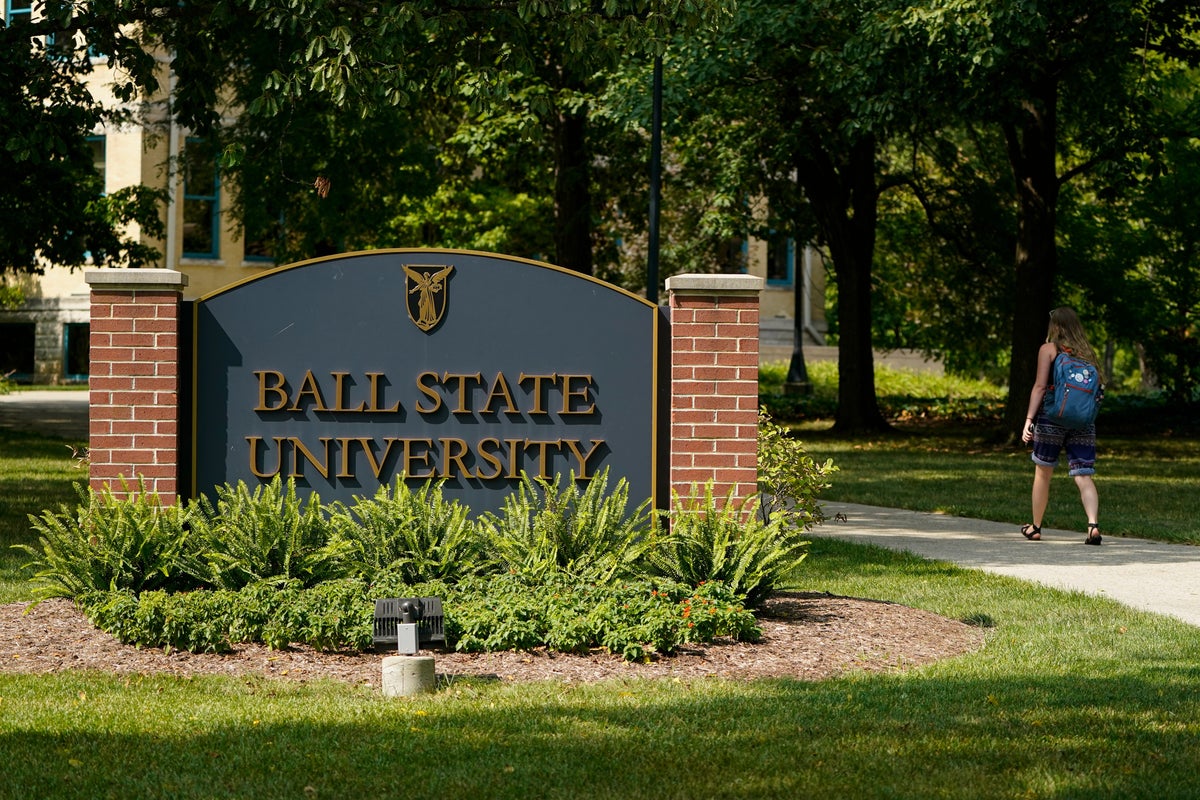
The collective sigh of relief from the civil liberties crowd over Ball State University's $225,000 payment to its former director of health promotion and advocacy, Suzanne Swierc, is as short-sighted as it is naive.
The internet is flooded with the same lazy consensus: a public university broke the First Amendment by firing an employee over a private Facebook post criticizing conservative activist Charlie Kirk after his assassination, the ACLU stepped in, and the system worked. Activists are high-fiving. Legal commentators are treating this as a massive win for free expression on campus. Meanwhile, you can explore other events here: The Mechanics of Escalation Forces driving Israel's Expanded Ground Operations in Lebanon.
They are entirely misreading the board.
This settlement isn’t a victory for free speech. It is a corporate transactional receipt. By cutting a $225,000 check, Ball State didn't learn a lesson about constitutional rights; they simply calculated the cost of doing business in a highly polarized environment and decided that firing an employee to appease donors and protect enrollment numbers was worth a quarter-million dollars. If you think a six-figure payout from a taxpayer-funded institution will stop public universities from retaliating against controversial speech, you don’t understand institutional mechanics. To explore the complete picture, check out the excellent report by The Washington Post.
The Illusion of the Financial Deterrent
The fundamental flaw in the mainstream analysis of the Swierc case is the belief that $225,000 is a painful punishment for a mid-sized public university. It isn't. Ball State's annual operating budget sits comfortably in the hundreds of millions.
University President Geoffrey Mearns explicitly stated that the payout was "substantially less" than the anticipated cost of defending a prolonged federal lawsuit. He didn't blink. He didn't apologize. The university didn't admit a single shred of wrongdoing. Instead, leadership ran a basic cost-benefit analysis.
Imagine a scenario where an institution faces two choices:
- Retain the employee: Keep a director whose leaked private comments have triggered a torrent of threatening calls, tanked institutional reputation, and caused parents to threaten to withdraw their students or withhold donations. The long-term loss in tuition and philanthropy easily numbers in the millions.
- Fire the employee and settle: Terminate the worker immediately to stop the bleeding, restore donor confidence, appease political heavyweights like Indiana Attorney General Todd Rokita—who amplified the post—and write a check for $225,000 eight months later using general legal defense funds.
From a pure business perspective, firing Swierc was the most logical financial move the university could make. The payout wasn't a penalty; it was a severance package wrapped in a non-disclosure bow.
The Pickering Balance Test Is a Broken Shield
Mainstream legal observers point to Pickering v. Board of Education (1968) as the ultimate protection for public workers. The Supreme Court established that the state cannot terminate an employee for speaking as a private citizen on matters of public concern. But the lazy consensus forgets the second half of that test: the court must balance the employee's speech rights against the government's interest in an efficient, disruption-free workplace.
By caving to settlements rather than letting these cases go to a definitive judicial ruling, universities are effectively weaponizing the "disruption" clause.
I have watched public institutions and corporate entities navigate public relations crises for over a decade. When a digital mob hits an organization, administrators do not read the Constitution; they look at their dashboards. If a post by a public university employee triggers massive, systemic disruption—even if that disruption is entirely manufactured by outside political actors or accounts like Libs of TikTok—the institution will claim its operational capacity was compromised.
By settling before a judge can rule on whether the university or the outraged mob created the disruption, institutions leave the door wide open to do the exact same thing to the next employee.
The Payout Disparity and the Risk Mitigation Trap
The Swierc settlement isn't an isolated incident, but looking at the broader landscape exposes a dangerous pattern. Earlier this year, a Florida state agency paid $485,000 to settle a lawsuit with a biologist fired over a Charlie Kirk meme. Austin Peay State University in Tennessee paid $500,000 to reinstate a professor under similar circumstances. Clemson University had to rescind a termination and pay out an assistant professor through the end of his contract.
+-----------------------------------+--------------------+------------------------+
| Institution                       | Payout Amount      | Outcome                |
+-----------------------------------+--------------------+------------------------+
| Austin Peay State University      | $500,000           | Reinstatement / Settled|
| Florida State Agency              | $485,000           | Settled                |
| Ball State University             | $225,000           | Settled / No Return    |
+-----------------------------------+--------------------+------------------------+
When you look at these numbers side by side, Ball State actually got a bargain. They managed to remove an employee they deemed an operational liability for half the price of their peers, and Swierc isn't returning to campus. Her supervisors just have to provide a neutral-to-positive professional reference for her next job hunt.
This creates a terrifying precedent for public employees. It signals to university boards across the country that the First Amendment does not mean "you cannot fire your staff for their speech." It means "you must budget roughly $200,000 to $500,000 in risk-mitigation funds if you choose to fire them."
For an institution looking to protect tens of millions in state funding or private endowments, that is a rounding error.
Stop Asking if It's Legal (Ask Who Pays)
The public constantly asks the wrong question: "Can they legally do this?"
The answer is that they will do it, and they will use your money to pay for the fallout. Public universities are funded by state allocations and student tuition. When an administrator breaches constitutional boundaries to protect the school's brand, the financial consequence does not come out of the administrator's pocket. President Mearns doesn't owe Swierc a dime of his personal wealth. The financial hit is absorbed by the public system.
The harsh reality of the modern public sector workplace is that your constitutional rights are only as secure as your employer's risk tolerance. If an employee's speech makes them a lightning rod, the institution will cut them loose, issue a boilerplate statement about "minimizing litigation costs," and move on.
If you are a public employee relying on a Facebook privacy setting or the ACLU to protect your livelihood, you are playing a losing hand. The playbook for institutional survival has been updated. They know the cost of the fine, and they are completely willing to pay it.
The Ball State settlement didn't vindicate the First Amendment; it priced it. Until university presidents face personal liability or direct budgetary penalties for retaliatory firings, the calculation will remain exactly the same. They will fire you to save the brand, write the check, and call it a successful day of crisis management.