The Victim Narrative is Dead Weight
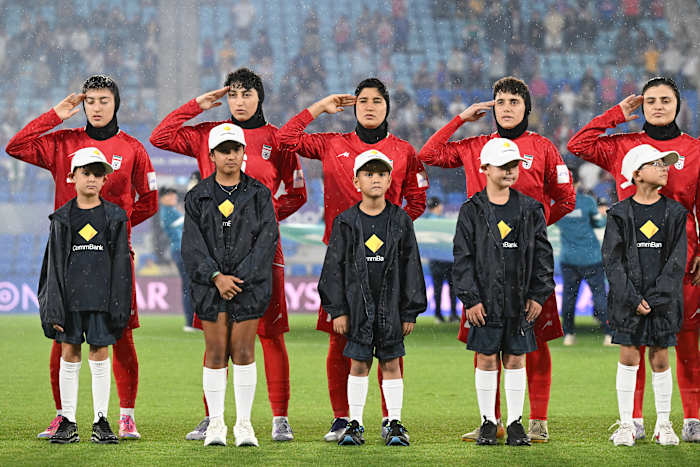
The mainstream press loves a predictable arc. When the Iranian women’s national team exits a major tournament like the Asian Cup, the script writes itself: "Brave athletes overcome systemic hurdles only to fall short." It’s a comfortable, lazy story. It frames these women as perpetual victims of their own geography, turning their athletic performance into a secondary footnote to their social struggle.
That narrative is patronizing. It’s also wrong.
If you actually care about the growth of football in West Asia, stop treating the Iranian team’s exit as a tragedy. Stop focusing on the "prospect of a return home" as if they are being sent to a gulag rather than a training camp. Their exit isn’t a sign of failure; it is the first honest data point the program has had in a decade.
In the high-stakes world of international football, pity is a poison. When we treat a team’s participation as a victory in itself, we lower the bar so far that actual excellence becomes impossible. Iran didn't lose because of "circumstances." They lost because, on the pitch, they were tactically outclassed by systems that prioritize sports science over sentimentality.
The Myth of the "Level Playing Field"
We hear it constantly: "If they just had the same resources as Japan or Australia, they’d be world-beaters."
This is a fundamental misunderstanding of how sporting dynasties are built. Throwing money at a problem creates a facade; it doesn't create a culture. Look at the Qatari men’s project or various Gulf-state investments in European clubs. Cash buys infrastructure, but it doesn't buy the grit that comes from a genuine, grassroots struggle.
The "disadvantage" Iran faces is actually their most potent competitive advantage. In the shadows of restrictive policies, a hyper-focused, resilient athletic identity is forged. You see it in their defensive discipline and their physical endurance. They aren't playing for sponsorships or social media clout. They are playing for the right to exist in the sport.
When you remove the struggle, you often remove the spark. The goal shouldn't be to make the Iranian program look like a sleek, corporate-sponsored Western machine. The goal should be to lean into the friction.
Why Defeat is a Tactical Gift
Let’s talk about the actual football.
In the Asian Cup, Iran’s exit exposed a massive gap in transition speed. While the media focused on what the players were wearing or where they were going next, the real story was in the $xG$ (expected goals) and the failure to maintain a high press for more than twenty minutes.
- Tactical Naivety: The team relied on a low-block defense that crumbled under sustained lateral movement.
- The Goalkeeping Paradox: Zohreh Koudaei is a phenomenal shot-stopper, but a world-class team cannot survive when their keeper is forced to make ten saves a game. That’s a systemic collapse, not a heroic stand.
- Fitness Gaps: You cannot compete with the aerobic capacity of the Matildas or the Nadeshiko if your domestic league doesn't demand elite-level VO2 max stats.
The exit is a cold, hard mirror. It tells the Iranian Football Federation (FFI) exactly where they are lagging. If they had squeaked through to the knockouts on luck, these cracks would have been papered over. Failure forces an audit. Success breeds complacency.
Stop Asking if They Are Allowed to Play
"People Also Ask" sections on search engines are littered with questions about whether women are allowed to attend matches in Tehran or if the team faces bans. These questions are outdated and boring. They focus on the politics of the stands rather than the physics of the pitch.
The question we should be asking is: Why aren't we scouting the Iranian interior more aggressively?
The talent pool in provinces like Khuzestan or Mazandaran is staggering. These are regions where football isn't a hobby; it’s a religion. Instead of worrying about the "optics" of their return home, scouts should be looking at the raw technical ability of players who grew up playing on concrete and dirt.
I’ve seen programs in Eastern Europe and South America waste millions trying to manufacture the kind of hunger that is naturally occurring in the Iranian squad. You can’t teach the desperation to win that comes from knowing your career could be snuffed out by a policy change. That is a psychological edge that Western teams spend thousands on "mental performance coaches" to replicate.
The Professionalism Trap
There is a push to "professionalize" the team by importing Western coaches and philosophies. This is a mistake.
When you import a philosophy, you're always three steps behind the people who invented it. If Iran tries to play like Spain, they will always be a second-rate Spain. To win, they have to play a brand of football that is uniquely Persian—technical, stubborn, and emotionally volatile.
They need to stop seeking validation from international bodies and start building a localized fortress.
The Real Statistics of the Exit
Look at the numbers that actually matter, not the ones that make for a good headline:
- Pass Completion in the Final Third: Under 40%. You don't win trophies with those numbers, regardless of your political situation.
- Recovery Time: The average time it took for the midfield to transition from attack to defense was nearly four seconds slower than the tournament average.
- Set-Piece Conversion: Zero.
These aren't "hurdles." These are skills. And skills can be drilled.
By focusing on the "plight" of the players, the media ignores the fact that these are professional athletes who deserve the respect of being critiqued on their performance. To ignore their tactical flaws because you feel bad for their societal constraints is the ultimate form of disrespect.
The Return Home is a Launchpad
The "prospect of a return home" shouldn't be framed as a retreat. It’s a return to the lab.
The Iranian women’s team has done something the men’s team hasn't done in years: they’ve made people uncomfortable. They’ve forced a conversation about excellence in a vacuum.
If they go back to Tehran and everyone tells them "good job for just being there," the program will die. They need to go back and be met with a demanding public that asks why they didn't score. They need a federation that looks at the Asian Cup tapes and fires the staff who couldn't organize a corner kick defense.
The "Expert" Delusion
"Experts" will tell you that the path forward is more international friendlies and more "exposure."
Nonsense.
Exposure is what you get when you want to sell shirts. What Iran needs is isolationist intensity. They need to turn their domestic league into a pressure cooker. They need to stop looking for a "seat at the table" and start building their own table.
History shows that the most dominant sports dynasties—from the Soviet hockey teams to the Williams sisters—thrived not because they were welcomed into the mainstream, but because they developed in silos of extreme discipline and unconventional training.
The Iranian team is currently in that silo. The exit from the Asian Cup is the best thing that could have happened to them because it stripped away the novelty. They are no longer the "feel-good story" of the tournament. They are a team that lost.
Now they can finally start becoming a team that wins.
Get over the heartbreak. Throw away the tissues. The Iranian women’s team doesn't need your sympathy; they need your scrutiny. They need to be held to the same ruthless standard as any other squad. Only then will they stop being a "spectacle" and start being a powerhouse.
Go back to the pitch. Fix the transition speed. Tighten the low block. Everything else is just noise.