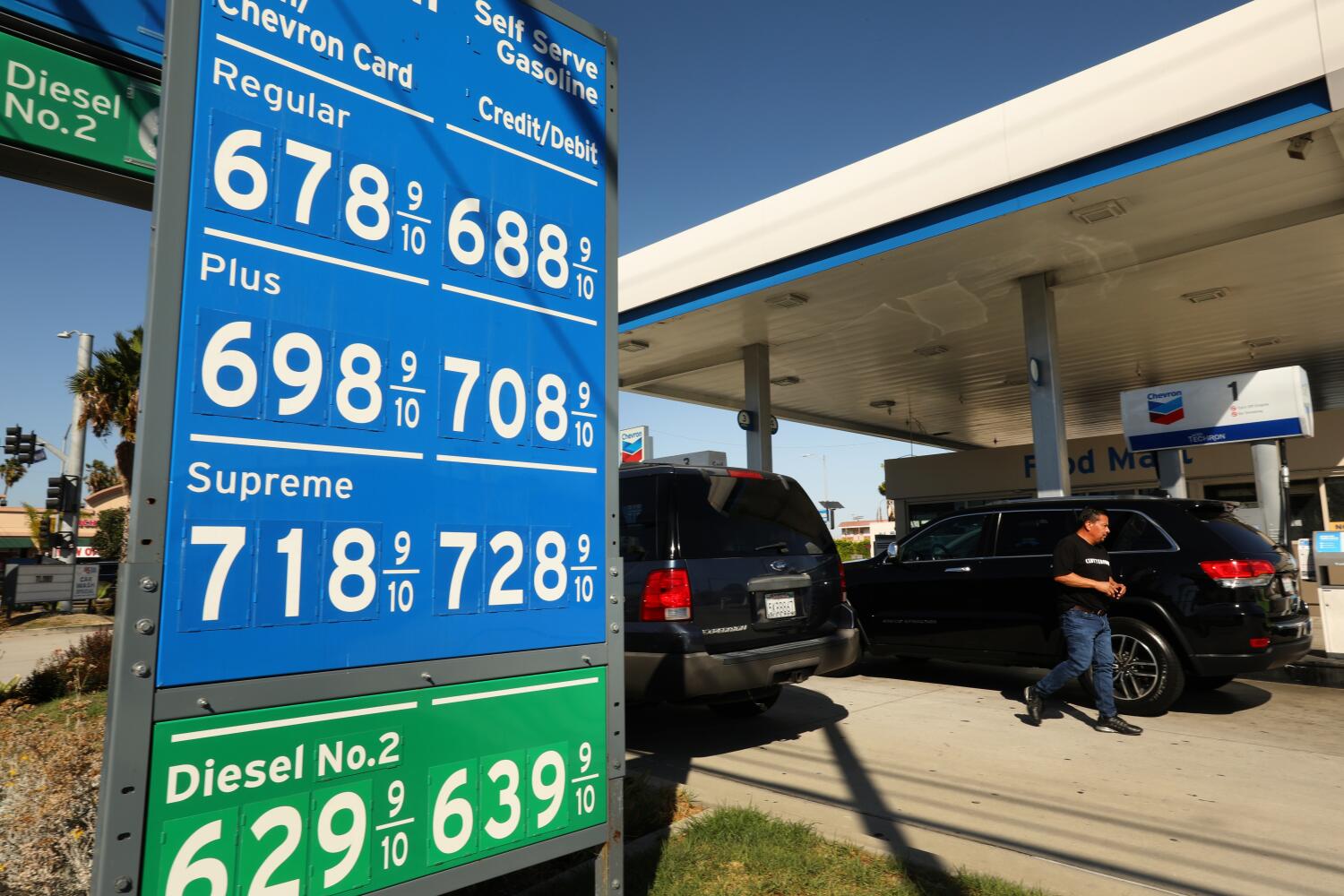
The sight of a queue at a petrol forecourt is the ultimate monument to human irrationality.
Every time a headline mentions "Iran," "Middle East," or "Supply Crunch," a specific type of collective amnesia takes hold. Drivers rush to the pumps to top up a tank that’s already three-quarters full, burning more fuel idling in line than they’ll save in a month of price fluctuations. They think they are beating the market. They are actually the ones creating the volatility they claim to fear.
The media loves the "misery at the pumps" narrative. It’s easy. It’s relatable. It’s also fundamentally wrong about how energy economics works. While you’re worried about whether a litre of unleaded costs £1.45 or £1.62, you are missing the structural shifts in global energy that make these daily price swings irrelevant in the long run.
The Myth of the Local Price Hike
Let’s dismantle the first lie: that your local petrol station owner is rubbing their hands together in glee as tensions rise in the Persian Gulf.
Retail fuel margins are notoriously razor-thin. When Brent Crude spikes on the back of geopolitical instability, the "lag" in pricing usually hurts the retailer first. They buy at tomorrow's projected prices and sell at yesterday’s inventory rates. If they hike prices too fast, they lose volume to the supermarket across the street. If they hike too slow, they can’t afford to refill their own tanks.
The real money isn't made at the pump. It’s made in the refining spreads—the "crack spread"—and the futures contracts traded in London and New York by people who couldn't tell you the price of a gallon of milk.
If you are queuing because you want to save £4 on a full tank, you are valuing your time at less than minimum wage. Stop it.
Geopolitics is a Distraction
The common consensus says that if Iran closes the Strait of Hormuz, the world ends.
This is a 1970s mindset applied to a 2026 reality. Yes, the Strait is a choke point. Yes, roughly 20% of the world’s petroleum liquids pass through it. But the global energy map has been redrawn. The United States is now a massive net exporter of crude and liquefied natural gas. The Strategic Petroleum Reserve (SPR), while depleted compared to historical highs, remains a potent psychological and physical buffer.
Furthermore, the "war surge" narrative ignores the massive demand destruction happening in China. You can't have a sustained, record-breaking price rally when the world’s second-largest economy is aggressively pivoting toward a decentralized electrical grid.
The fear isn't about supply; it’s about the uncertainty of supply. Markets price in the worst-case scenario instantly. Usually, the "surge" happens before a single shot is fired. By the time you see the news on your phone and drive to the station, the peak has likely already passed. You are buying the top.
The Real Cost of "Cheap" Fuel
People ask: "When will petrol prices go back to normal?"
The brutal honesty? They won't. And they shouldn't.
The "normal" you’re looking for was a historical anomaly fueled by over-leveraged shale fracking and a global pandemic that killed demand. We are entering an era of "Energy Realism." This means higher base costs because the easy-to-get oil is gone. What’s left requires complex offshore drilling, expensive fracking, or navigating high-risk political zones.
If you are complaining about the price of petrol, you are actually complaining about your own dependency.
Why Your Vehicle Choice is a Bad Investment
I have seen people drive 15 miles out of their way to save 2p per litre in a vehicle that gets 22 miles per gallon. The math is offensive.
- The Sunk Cost: You paid £40,000 for a heavy SUV.
- The Operational Fail: You are worried about a £10 weekly increase in fuel costs.
- The Reality: The depreciation on that vehicle in the time you spent queuing at the forecourt is likely higher than the fuel savings you "locked in."
If you want to hedge against oil price spikes, don’t watch the news. Change your consumption. Buy a more efficient vehicle, advocate for nuclear energy, or invest in the very energy companies you love to hate. Owning the stock is the only way to get your fuel money back.
Dismantling the Supermarket Monopoly
The "People Also Ask" sections of the internet are obsessed with whether supermarket fuel is "lower quality" than branded fuel from Shell or BP.
It’s the wrong question. The base fuel often comes from the same refineries. The difference is in the additive packages—the detergents that keep your engine clean. But here is the contrarian truth: the supermarkets aren't using fuel to make money. They are using it as a "loss leader" to get you into the store to buy overpriced sourdough and pre-washed spinach.
When you queue at a supermarket forecourt during a "war surge," you are falling for the oldest trick in the retail book. They lure you in with a "low" price that is still 15% higher than it was last week, and you reward them by doing your weekly shop there.
The Logistics of the Panic
Imagine a scenario where every driver in the UK decides to keep their tank at least half-full at all times. The "shortages" we see during crises would vanish.
The British fuel delivery system is a "just-in-time" miracle. It relies on a constant, predictable flow of tankers. When the media triggers a panic, demand spikes by 200% to 300% in a single afternoon. No logistics chain on earth can handle that.
The shortage isn't in the ground. It’s not in the refineries. It’s in the local storage tanks that get sucked dry by people who don't actually need the fuel yet.
The Actionable Truth
Stop checking the price of oil every morning. It is a macro variable you cannot control.
Instead, focus on the micro.
- Stop Idling: You’re burning money to keep the radio on while you wait for your kids or your coffee.
- Check Your Tyres: Under-inflated tyres can drop your fuel efficiency by 3%. That’s a bigger hit than most "war surges."
- Ignore the "Peak": Fuel prices are cyclical. They rise in the summer when people travel and during geopolitical friction. They fall when the hype dies down.
The "Iran war surge" is a volatility event, not a permanent shift in the cost of living. If you can’t afford a 10% swing in fuel costs, your problem isn't the price of petrol; it’s your personal cash flow.
Energy is the master resource. It is supposed to be expensive. It represents the concentrated power of millions of years of decomposed organic matter. Treating it like a cheap right is why the market punishes you every time there’s a hiccup in the Middle East.
If you want to stop being a victim of the pump, stop acting like a commodity. Diversify your life so that the cost of a dead dinosaur in a tank doesn't dictate your emotional state for the week.
Move on. There are bigger things to worry about than a queue at a forecourt.