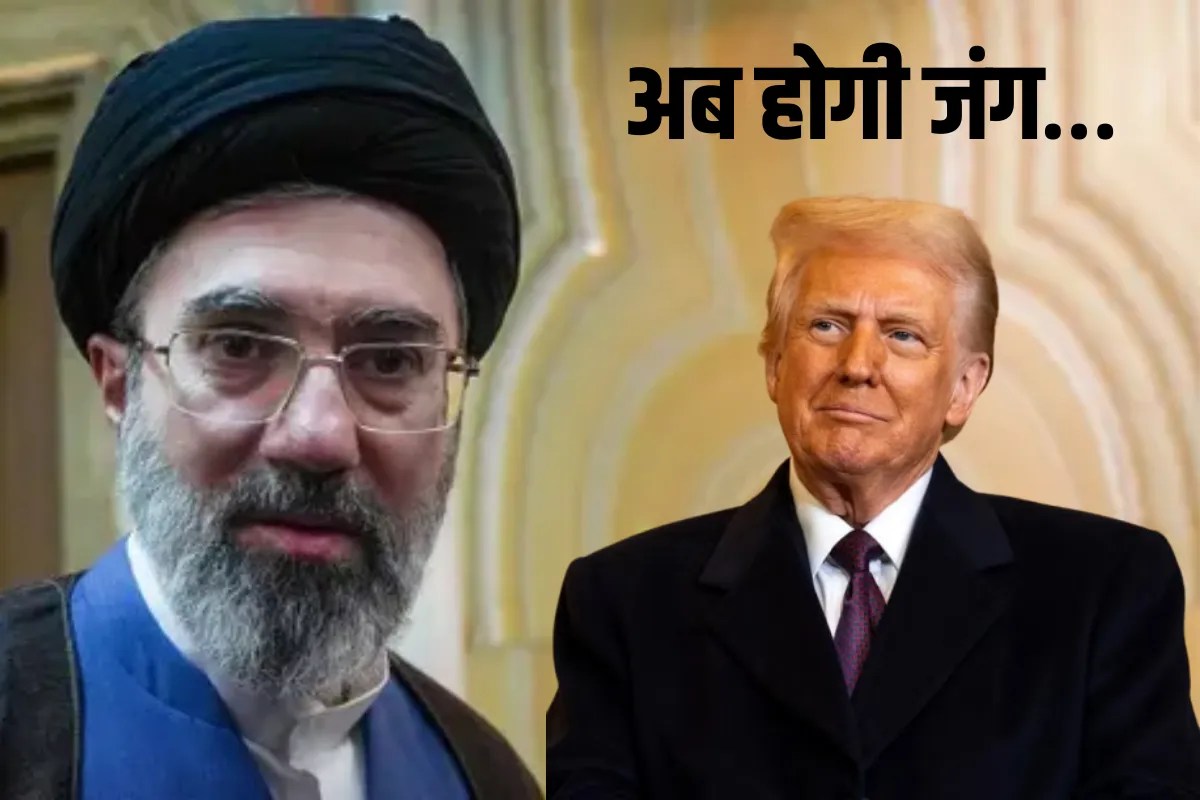
The United States ultimatum regarding the Strait of Hormuz represents a calculated shift from passive deterrence to active escalation management, rather than a mere rhetorical warning. The geopolitical stability of the Persian Gulf hinges on a specific operational equilibrium: the uninterrupted flow of maritime energy versus Iran's asymmetric interdiction capabilities. Analyzing this friction point requires stripping away political posture and evaluating the hard strategic mechanisms driving the conflict.
When the US issues a definitive warning to Tehran over the Strait, it is calculating risk across three distinct vectors: maritime choke-point economics, tactical naval asymmetric warfare, and the psychological thresholds of deterrence. Understanding the current escalation requires breaking down these components to see exactly how a localized naval flashpoint threatens global market stability.
The Strategic Triad of the Hormuz Choke Point
The vulnerability of the Strait of Hormuz is dictated by geography and commodity reliance. It cannot be bypassed at scale, making it a unique bottleneck in global logistics. The strategic value of this maritime passageway rests on three structural pillars.
Volume Inelasticity
Approximately one-fifth of the world’s petroleum liquids pass through the Strait daily. Unlike containerized freight, which can be rerouted via alternative rail or longer maritime tracks at a predictable financial penalty, the infrastructure for oil export is fixed. The East-West Pipeline in Saudi Arabia and the Habshan–Fujairah pipeline in the UAE possess combined redundant capacities that can handle only a fraction of the daily volume passing through the marine transit lanes. The remaining volume has no immediate alternative route. This creates a state of extreme price inelasticity; even a minor, temporary reduction in transit volume triggers an exponential surge in global crude prices.
Operational Topography
The Strait is remarkably narrow, with the shipping lanes consisting of just a two-mile-wide inbound channel, a two-mile-wide outbound channel, and a two-mile-wide separation buffer. Because these lanes lie within the territorial waters of Oman and Iran, transit is governed by the transit passage regime under the United Nations Convention on the Law of the Sea (UNCLOS). From an operational standpoint, this narrow corridor compresses the reaction time for naval escorts and concentrates commercial vessels into predictable, easily targeted pathways.
The Asymmetric Cost Function
The fundamental military calculus in the Strait favors low-cost disruption over high-cost defense. Iran’s Islamic Revolutionary Guard Corps Navy (IRGCN) does not attempt to match the US Navy in blue-water displacement or conventional firepower. Instead, they leverage an asymmetric cost function. A single sea mine costing a few thousand dollars, or a swarm of fast attack crafts (FACs) armed with anti-ship guided missiles, can disable a commercial supertanker worth over a hundred million dollars carrying a cargo of equal value. The financial and military energy required by western coalitions to clear mines, escort commercial hulls, and maintain air superiority is orders of magnitude higher than the capital Iran expends to jeopardize the passage.
Tactical Mechanics of Iranian Interdiction
Iran's leverage relies on its capacity to threaten a total or partial blockade without triggering an immediate, regime-ending conventional response from the West. This threshold management is executed through specific tactical mechanisms.
The primary tool is the deployment of fast-attack craft operating in swarm formations. These vessels utilize speed and radar-cross-section minimizing profiles to saturate the defensive systems of larger, conventional warships. By launching coordinated strikes from multiple vectors, they aim to overwhelm the target's Close-In Weapon Systems (CIWS) and command-and-control nodes.
[IRGCN Coastal Radar/Drones]
       │
       ▼ (Target Acquisition Data)
[Swarm Formation: Fast Attack Craft] ───► [Saturates Warship Aegis/CIWS]
       ▲
       │ (Layered Vector)
[Mobile Anti-Ship Missile Batteries]
Compounding the swarm threat is the integration of land-based anti-ship cruise missiles (ASCMs) hidden along the mountainous, rugged coastline of the Musandam Peninsula and Qeshm Island. These mobile launchers utilize terrain masking, making them difficult to target via pre-emptive air strikes. Consequently, commercial shipping must navigate a gauntlet where the threat originates simultaneously from the water's surface and the adjacent shorelines.
The second limitation facing Western maritime security forces is the threat of smart and unanchored drifting sea mines. Sweeping a channel for mines is a slow, methodical process that requires specialized vessels. While mine countermeasures (MCM) are deployed, the mere suspicion of mine laying forces insurance underwriters to declare the area a war-risk zone. This action effectively halts commercial traffic through legal and financial mechanisms long before any physical damage occurs.
The US Deterrence Framework and the Escalation Ladder
The US ultimatum alters the calculus by establishing an explicit, non-negotiable threshold for military intervention. To understand why this shift occurred, one must analyze the failure of ambient deterrence.
Historically, the US maintained freedom of navigation through a persistent naval presence. However, when Iranian forces transitioned from harassment to the physical seizure of commercial tankers and drone strikes on shipping, the ambiguity of Western red lines became a liability. Iran interpreted the lack of kinetic retaliation as a green light to incrementally raise the pressure, using shipping disruptions as leverage in broader diplomatic negotiations.
The US response strips away this ambiguity by shifting to a doctrine of immediate kinetic response. The ultimatum serves to re-establish deterrence by clarifying the escalation ladder:
- Harassment/Intercept: Met with electronic warfare, non-lethal deflection, and localized defensive maneuvering.
- Kinetic Attack or Vessel Seizure: Triggers immediate, proportional strikes against the originating asset, whether it is an IRGCN fast craft or a coastal missile site.
- Attempted Closure of the Strait: Results in a theater-wide degradation campaign targeting western Iranian military infrastructure, command hubs, and port facilities.
By removing the intermediate steps of diplomatic protest and economic sanctions from the immediate tactical loop, the US aims to force Iranian command to realize that any disruption to shipping will incur an immediate, localized military cost that outweighs the geopolitical leverage gained.
Systemic Market Consequences and Insurance Realities
The primary metric of success for an ultimatum in this region is not military hardware destroyed, but the stabilization of maritime logistics metrics. The shipping industry responds to risk through quantifiable economic indicators.
The most sensitive indicator is the War Risk Additional Premium (WRAP). Standard hull and machinery insurance policies exclude damage sustained from hostilities. To enter the Persian Gulf during periods of heightened tension, ship owners must purchase specialized war risk coverage. When an escalation occurs, these premiums can skyrocket from a nominal percentage of the vessel's value to several percentage points per voyage. For a Very Large Crude Carrier (VLCC), this translates into millions of dollars in additional operating costs per transit, a burden passed directly to the global energy consumer.
Furthermore, a protracted standoff creates a structural bottleneck in global shipping availability. Tankers forced to wait outside the Gulf of Oman for security escorts or clear transit windows are effectively removed from the global supply chain. This reduction in effective fleet capacity drives up Baltic Clean and Dirty Tanker Indices globally, disrupting shipping routes far removed from the Middle East.
Tactical Realignment and Strategic Forecast
The resolution of this crisis will not be achieved through a grand diplomatic bargain, but through a calculated stabilization of tactical capabilities. Moving forward, the operational reality dictates a dual-track strategic play.
First, Western maritime coalitions must shift from a reactionary escort posture to a predictive interdiction model. This requires the deployment of persistent, unmanned surface and aerial surveillance assets throughout the Gulf of Oman and the Persian Gulf to map Iranian mine-laying and fast-craft staging activities in real time. By establishing a continuous, unblinking track on asymmetric assets, the coalition strips Iran of the element of surprise required to execute low-cost disruptions.
Second, regional energy exporters must rapidly maximize the utilization of alternative pipeline networks, regardless of the immediate tariff inefficiencies. Shifting volume to the Red Sea or East-West corridors lowers the economic stakes of the Strait of Hormuz, diminishing Iran's primary geopolitical lever.
The US ultimatum is a high-stakes mechanism designed to freeze Iranian escalation by guaranteeing that any future disruption will result in immediate, localized military costs rather than diplomatic debate. The stability of global energy markets over the coming quarters depends entirely on the willingness of Western forces to execute kinetic strikes the moment that defined line is crossed, proving to Tehran that the cost function of asymmetry has permanently shifted against them.