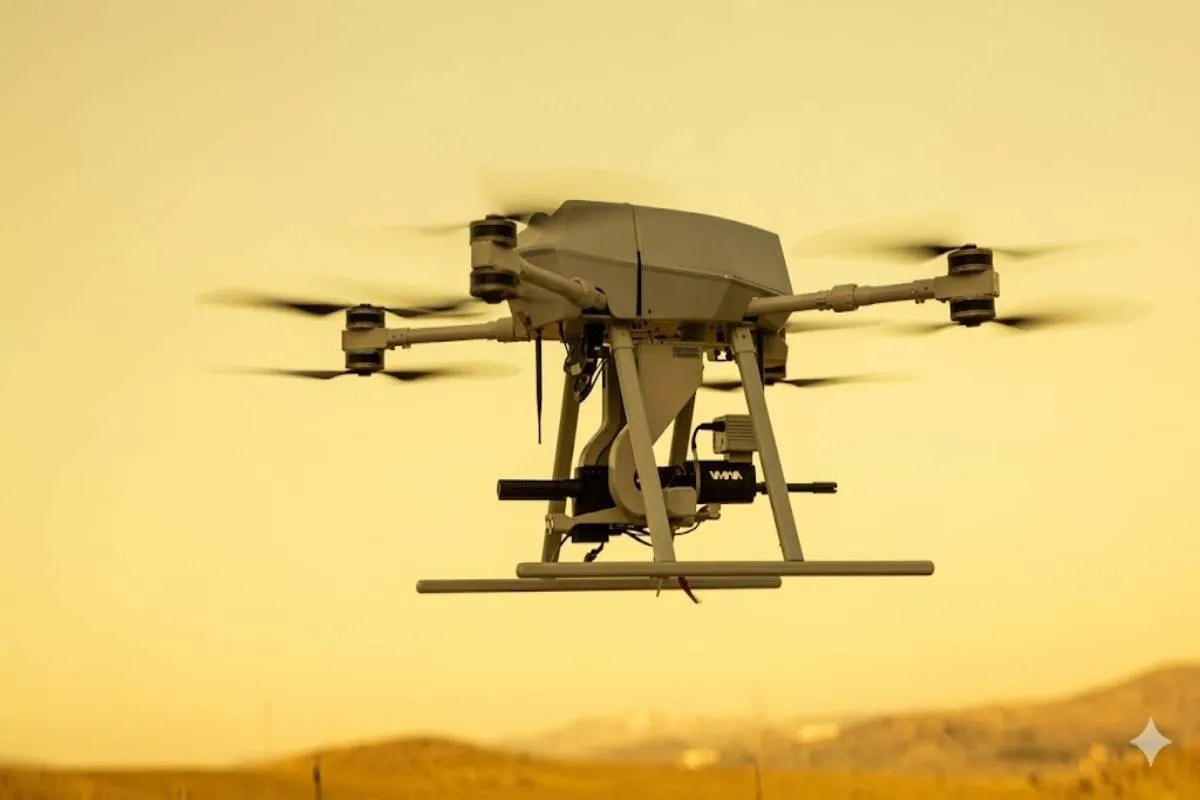
The penetration of the Islamabad Capital Territory (ICT) by unidentified unmanned aerial vehicles (UAVs) on March 13, 2026, represents a critical failure in the tiered defense architecture of Pakistan’s administrative heart. While initial reporting focused on the immediate disruption to civil aviation, the technical reality suggests a sophisticated testing of the "Red Zone" electronic envelope. The incident, centered on the Faizabad interchange and the I-8 sector, highlights a specific vulnerability: the intersection of high-density civilian transit corridors and restricted government airspace.
The Triad of Airspace Violation
The disruption of the Islamabad airspace can be categorized into three distinct operational failures. Each layer reflects a breakdown in the detection-to-neutralization pipeline.
- Detection Latency: The drones remained operational within the I-8 and Faizabad sectors long enough to trigger a full diversion of commercial flights. This suggests the craft either possessed a low Radar Cross-Section (RCS) or utilized "ground-clutter" navigation, flying at altitudes where traditional primary surveillance radars struggle to distinguish between bird activity and metallic signatures.
- Kinetic Hesitation: The proximity of the sightings to densely populated residential blocks (I-8) and a major traffic artery (Faizabad) created a "collateral constraint." Security forces cannot deploy traditional kinetic interceptors—such as small arms fire or high-velocity projectiles—in these zones without risking significant civilian casualties or infrastructure damage from falling debris.
- Signal Contention: The failure to immediately "soft-kill" the drones via electronic jamming indicates either the use of pre-programmed waypoint navigation (which does not require a live radio link) or a frequency-hopping spread spectrum (FHSS) that bypassed local localized jammers.
The Aviation Diversion Cost Function
The decision to divert multiple flights from Islamabad International Airport (IIA) is not merely a safety precaution; it is a calculated economic and logistical burden. The impact of such a diversion is calculated through the sum of three primary variables:
- Fuel Burn and Rerouting: Diverting a long-haul carrier to Lahore or Karachi involves not just the extra flight time but the high-consumption descent and ascent phases.
- The Turnaround Bottleneck: A diverted aircraft disrupts the "tail-number" schedule. When an aircraft is out of position, the subsequent four to six flights in its rotation are delayed, leading to a compounding loss of gate efficiency.
- Passenger Indemnity: International carriers face massive overheads in hotel vouchers, rebooking fees, and missed connections, making Islamabad a "high-risk" destination for insurance premiums if these incursions become a pattern.
Mapping the Geographic Vulnerability: Faizabad and I-8
The selection of Faizabad and I-8 as the primary theater for this incursion was likely intentional rather than incidental. These locations serve as the gateway to the city’s core.
The Faizabad interchange is a massive concrete knot connecting Rawalpindi and Islamabad. From a tactical perspective, it provides a high-noise environment. The massive volume of cellular traffic, vehicle electronics, and power lines in this area creates a "dirty" electromagnetic environment. For a drone operator, this provides a natural shield against broad-spectrum electronic countermeasures (ECM). If a security agency attempts to jam a drone over Faizabad, they risk knocking out the communications of thousands of civilians and emergency services.
The I-8 sector acts as a buffer zone. It sits directly adjacent to the commercial hubs and the highway. By hovering in this sector, the UAVs maintained a position that was visually prominent—ensuring maximum psychological impact—while remaining just outside the most heavily fortified "Red Zone" blocks where automated point-defense systems are rumored to be active.
Technical Hypotheses of Drone Origin and Capability
Without physical wreckage, the capabilities of these drones must be inferred from their flight behavior. Two primary profiles emerge:
Profile A: The Commercial Proxy
This involves off-the-shelf high-end consumer drones modified for extended range. These are easily obtainable but limited by battery life (usually 30–40 minutes). The fact that these drones caused "harkamp" (chaos) and led to flight diversions suggests a sustained presence, which would require either very efficient power management or multiple units being cycled.
Profile B: The Purpose-Built Loiterer
A more concerning possibility is the use of fixed-wing or VTOL (Vertical Take-Off and Landing) kits designed for surveillance. These units can stay airborne for hours. If the drones utilized GPS-independent navigation—such as Optical Flow or Terrain Contour Matching (TERCOM)—standard jamming would be ineffective. This would explain why the drones were not immediately dropped by the Electronic Warfare (EW) units stationed near the capital.
The Feedback Loop of Urban Panic
The reporting of "harkamp" (chaos/panic) serves as a force multiplier for the perpetrator. In unconventional warfare, the goal of a drone incursion is rarely the delivery of a kinetic payload; it is the demonstration of impunity. By forcing the Civil Aviation Authority (CAA) to divert flights, the operator successfully hijacked the city's operational rhythm.
The psychological impact is driven by the "Asymmetry of Visibility." A small, $2,000 device can ground a $200 million Boeing 777. This creates a perception of state fragility. The public sees the military and police as unable to control the very sky above the capital, which degrades trust in the "Safe City" infrastructure—a massive network of cameras and sensors that evidently failed to prevent the entry of these aerial assets.
Strategic Limitations of the Current Response
The current response strategy relies on "reactive exclusion"—clearing the air and waiting for the threat to dissipate. This is a losing strategy in the long term. The primary limitations include:
- Line-of-Sight Dependency: Most portable anti-drone "guns" require the operator to see the target. In the hazy or smog-filled conditions often found in the ICT region, visual acquisition is delayed until the drone is already in a sensitive area.
- Frequency Lag: Jamming technology often targets 2.4GHz or 5.8GHz bands. Modern hostile actors are moving toward non-standard frequencies or encrypted SATCOM links, rendering standard-issue jammers obsolete.
- Legal Gray Zones: There is currently a lack of clear protocol for "downing" drones over private residential property. The risk of the drone falling onto a house or a crowded street often leads to a "monitor and follow" approach rather than an active neutralization.
Structural Requirements for Capital Defense
To prevent a recurrence of the Faizabad/I-8 breach, the security apparatus must move from a reactive posture to a "Geofenced Saturation" model.
First, the implementation of a mandatory Remote ID broadcast for all legal UAVs within a 50km radius of IIA is required. This allows security forces to instantly differentiate between a hobbyist and a hostile actor. Any signal not broadcasting a valid ID becomes an automatic target for neutralization.
Second, the deployment of "Directed Energy" (DEW) or high-intensity microwave systems is necessary. Unlike jamming, which disrupts the signal, these systems fry the internal circuitry of the drone. To mitigate the risk to civilians, these must be mounted on elevated platforms (hills or high-rise buildings) to ensure the beam path is angled away from ground-level populations.
Third, the integration of acoustic sensors across the I-8 and Faizabad corridors would solve the detection gap. Drones have a specific sonic signature. A network of microphones can triangulate the position of a drone based on the "whine" of its motors, even if it is painted with anti-radar coating or flying in "dark mode" without lights.
The Islamabad incident is a diagnostic test of Pakistan's internal security readiness. The vulnerability is not the drone itself, but the lack of a coordinated, multi-layered response that can act within the "collateral-heavy" environment of a modern city.
The immediate tactical requirement is the establishment of a Permanent No-Fly Zone (PNFZ) enforced by automated signal-interdiction arrays at all entry points to the capital, specifically targeting the Rawalpindi-Islamabad transit axes. Failure to secure these corridors will lead to more frequent "soft-target" disruptions, eventually escalating from flight diversions to targeted surveillance or payload delivery within the city's sensitive core.