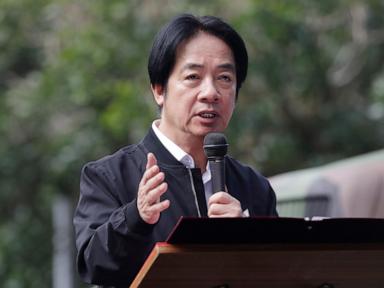
The assertion of "basic rights" in international diplomacy is rarely a legal claim; it is a signaling mechanism designed to test the elasticity of an adversary’s red lines. When a Taiwanese leader frames a state visit as a fundamental entitlement, they are attempting to shift the status quo from a concession-based permission structure to a sovereignty-based norm. This strategic pivot aims to de-risk future transit by establishing a precedent of normalcy, thereby increasing the diplomatic and reputational cost for any actor attempting to block such movements.
The Triad of Diplomatic Legitimacy
To understand the friction surrounding Taiwanese state visits, one must analyze the three distinct layers of legitimacy that these trips seek to solidify.
- Domestic Consolidation: The visit serves as a visual proof of concept for the electorate, demonstrating that the administration can maintain international space despite external pressure. It validates the "status quo" policy by showing it is not a state of isolation.
- External Validation: By securing meetings with high-ranking officials in host or transit countries (typically the United States), the administration reinforces the "unofficial" security guarantees that underpin its defense strategy.
- Institutional Precedent: Every successful trip reduces the "novelty" of the event. In the logic of international relations, a repeated action eventually becomes a standard expectation, making it progressively harder for Beijing to justify escalating a military or economic response to a routine occurrence.
The Mechanics of Calculated Friction
The tension surrounding these visits is not an accidental byproduct; it is a calculated friction used by both Taipei and Beijing to measure the other's resolve. This can be viewed through the lens of a Cumulative Provocation Model.
Beijing views these visits as a "salami-slicing" tactic—a series of small, incremental steps that, while individually manageable, collectively lead to a formal declaration of independence. Their response functions as a counter-friction, designed to make the "cost" of the trip (in terms of military drills, trade restrictions, or diplomatic poaching of remaining allies) outweigh the perceived "benefit" of the international exposure.
The Transit Logic
Taiwanese leaders rarely fly directly to their final destinations in the Pacific or Caribbean. The "transit" through U.S. soil is the actual theater of operations. The "quality" of the transit is measured by three variables:
- The Duration: The length of time spent on U.S. soil.
- The Access: The seniority of the officials or lawmakers met during the stopover.
- The Visibility: Whether the events are private (low friction) or public/media-facing (high friction).
This creates a variable-geometry diplomacy where the U.S. can dial the intensity up or down based on the current state of its broader relationship with China.
Economic and Security Feedbacks
State visits trigger a specific feedback loop in the regional security architecture. When a visit is announced, the subsequent military signaling—usually in the form of People's Liberation Army (PLA) sorties into the Air Defense Identification Zone (ADIZ)—serves a dual purpose.
First, it attempts to "normalize" a high-intensity military presence closer to Taiwan’s coast. Second, it serves as an economic deterrent, signaling to global shipping and insurance markets that the Taiwan Strait is a high-risk corridor. The strategic goal for Beijing is to create an environment where the international community views Taiwanese diplomatic activity as the primary driver of regional instability, rather than the military response itself.
However, this strategy faces a diminishing marginal return. As military drills become more frequent, the global market's "shock response" desensitizes. This forces Beijing to either escalate to more disruptive measures or accept the "new normal" of the visit.
The Sovereignty Paradox
The framing of a visit as a "basic right" exposes the core paradox of the Taiwan Strait. If Taipei acts like a sovereign state, it risks a kinetic response. If it stops acting like a sovereign state, it loses the international visibility required to deter a kinetic response.
The current administration manages this paradox through Strategic Ambiguity of Intent. While the language used ("basic rights") is firm, the actions taken during the visits are often carefully calibrated to remain just below the threshold that would trigger a total breakdown in communications between the U.S. and China. This allows Taiwan to claim a moral and legal victory domestically while maintaining the pragmatic safety net provided by the U.S. Taiwan Relations Act.
The Cost of Blocking
Beijing’s attempts to block these visits often create a "Streisand Effect" in international diplomacy. The more effort expended to prevent a leader from traveling, the more attention is drawn to the constraints placed upon them. This often results in:
- Increased Congressional Support: In the U.S., Chinese pressure often triggers a bipartisan counter-response, leading to more robust legislative support for Taiwan.
- European Re-evaluation: Seeing a democratic leader blocked from travel often pushes European nations to deepen their "non-political" cooperation with Taiwan as a matter of democratic solidarity.
Structural Vulnerabilities in the Current Strategy
Despite the tactical success of recent visits, the strategy relies on a stable U.S.-China-Taiwan triangle that is increasingly brittle. The primary vulnerability is The Credibility Gap. If a Taiwanese president asserts a "right" to travel but is forced to accept significant limitations by the host country to appease Beijing, the "right" is revealed as a "privilege" granted by the U.S.
This creates an internal pressure within Taiwan to push for even higher-profile visits, which in turn increases the risk of a miscalculation. The strategy's success depends entirely on the U.S. government’s willingness to absorb the friction generated by these stops. Should the U.S. executive branch decide that the cost of these transits interferes too heavily with other global priorities (such as trade negotiations or climate cooperation), the "basic right" would effectively vanish.
Quantifying the Geopolitical Response
The reaction to these visits can be categorized by the Ladder of Escalation:
- Level 1: Rhetorical Condemnation: Standard diplomatic protests and "red line" warnings.
- Level 2: Targetted Economic Sanctions: Bans on specific Taiwanese agricultural products or small-scale trade restrictions.
- Level 3: Positional Military Signaling: Increased ADIZ incursions and naval patrols.
- Level 4: Kinetic Demonstrations: Live-fire exercises, missile tests over the island, or simulated blockades.
Most state visits aim to keep the response at Level 2 or 3. A move to Level 4 represents a failure of the visit’s "quiet diplomacy" component, as the resulting instability could alienate the very international partners the trip was meant to court.
The Long-Term Play: Normalization through Attrition
The ultimate objective of the Taiwanese administration is not the single trip, but the normalization of the pattern of trips. By consistently asserting that these visits are a "basic right," the government is attempting to move the baseline.
In a decade, if a Taiwanese president transits through the U.S. and it is treated with the same media boredom as a flight from London to Paris, the strategy will have succeeded. The friction will have been exhausted, and the precedent will have become a pillar of the international order. Until then, every mile flown by the presidential aircraft is a data point in a high-stakes experiment in sovereignty and survival.
The strategic imperative for the administration is to decouple these visits from the "independence" narrative and re-attach them to the "democratic participation" narrative. This shift in framing makes it harder for adversaries to attack the trips without appearing to attack the concept of democratic representation itself.
The immediate tactical move for regional players is to monitor the specific nature of the meetings held on U.S. soil. The transition from meeting with local mayors or business leaders to meeting with the Speaker of the House or high-ranking Executive Branch officials marks the actual boundary of the current conflict. Any permanent shift in the seniority of these meetings will dictate the intensity of the next cross-strait crisis.