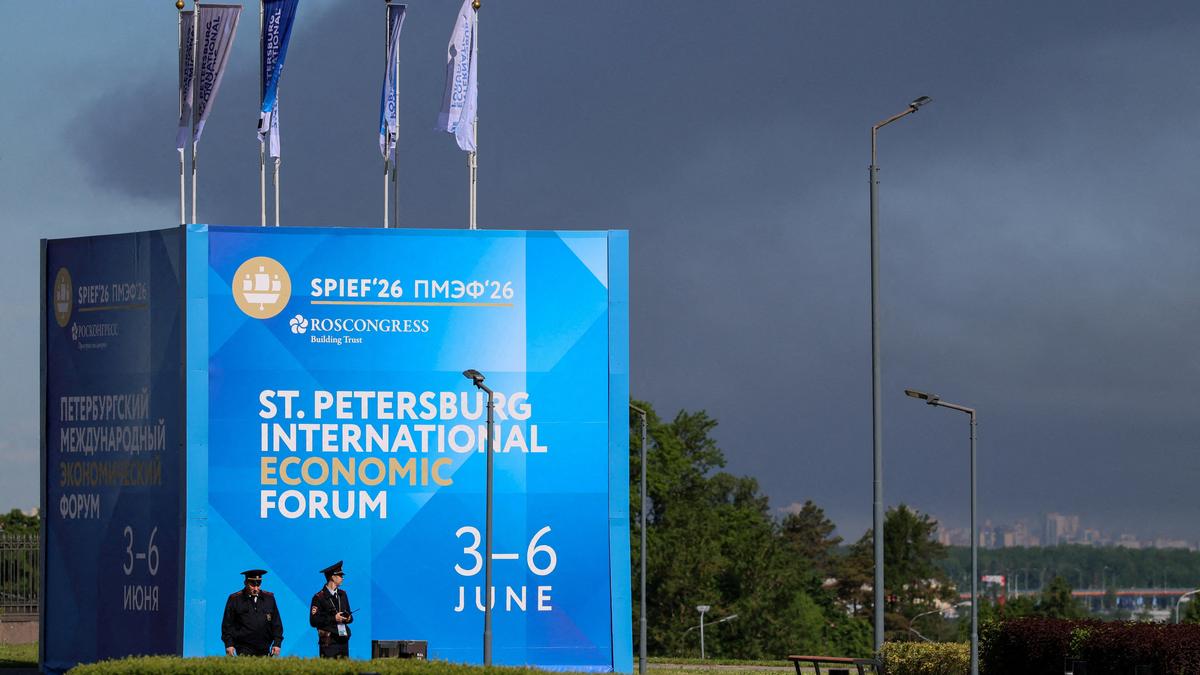
The headlines practically wrote themselves. A long-range Ukrainian drone travels hundreds of miles, evades layers of air defenses, and strikes an oil terminal in St. Petersburg. The timing is framed as a psychological masterstroke, executed right before a high-profile visit from Vladimir Putin. Media analysts rushed to declare this the beginning of the end for Russia's economic lifeline. They called it a strategic breakthrough.
They are wrong. In similar developments, take a look at: The Geopolitical Architecture of India Nepal Relations Quantification of the Neighbourhood First Paradigm.
The lazy consensus in modern military and economic analysis loves a David versus Goliath narrative. It conflates tactical novelty with strategic efficacy. Striking a fixed, highly flammable target makes for spectacular video footage and excellent wartime propaganda. But as an economic or military strategy designed to halt a war machine, the current fixation on localized drone strikes against downstream energy infrastructure is an exercise in diminishing returns.
We are looking at the wrong metrics. We measure success by the height of the flames and the audacity of the penetration, rather than the cold, hard mathematics of global supply chains and structural redundancy. Reuters has also covered this critical subject in great detail.
The Myth of the Vulnerable Chokepoint
To understand why a burning oil terminal in St. Petersburg doesn't achieve what the armchair generals think it does, you have to understand how energy logistics actually operate.
The immediate reaction to the St. Petersburg strike was that it would choke off Russian export capacity and starve the Kremlin of revenue. This assumes that a modern energy hub is a fragile, single-point-of-failure system. It isn't.
Hydrocarbon logistics are inherently fungible and resilient. When a downstream asset like a storage tank or a loading jetty is damaged, the product does not simply vanish from the global market, nor does the revenue stream dry up permanently.
- Rerouting Capability: Russia's pipeline network and rail logistics allow for rapid redirection of crude and refined products to alternative ports, such as Novorossiysk on the Black Sea or Primorsk on the Baltic.
- Storage Redundancy: Major terminals operate with significant operational slack. Damaging two or three storage tanks reduces immediate throughput but rarely shuts down the entire facility for more than a few days.
- Repair Velocity: Replacing damaged steel tanks and basic pumping equipment requires low-tech engineering. It is not the same as destroying a high-tech semiconductor fabrication plant or a complex catalytic cracking unit at a refinery.
I have spent years analyzing corporate logistics and industrial infrastructure supply chains. When a critical node is hit, the immediate corporate response is not panic; it is optimization. Software algorithms instantly recalculate routes, adjust blending ratios, and utilize floating storage to minimize financial impact. The state-backed entities managing Russian oil exports operate with the same corporate coldness, backed by unlimited state resources.
Smashing Pumping Stations vs. Burning Storage Tanks
If the goal is genuine economic disruption, the current targeting philosophy is fundamentally flawed. Striking a storage tank results in a massive fireball because refined products burn easily. It looks devastating on social media.
But a storage tank is just a bucket. It holds the product. It does not create it, nor does it move it.
If you want to paralyze an energy export network, you do not waste expensive guidance systems on steel cylinders filled with oil. You target the unglamorous, highly specialized machinery that makes the system function: the heavy-duty pump houses, the electrical substations, and the specialized additive injection systems.
The Anatomy of an Industrial Chokepoint
| Target Type | Visual Impact | Operational Repair Time | Strategic Value |
|---|---|---|---|
| Storage Tank | High (Fireballs) | 2 to 4 Weeks | Low |
| Main Pump House | Low (Smoldering debris) | 6 to 12 Months | Critical |
| Substation/Transformers | Medium (Arcing sparks) | 3 to 6 Months | High |
| Loading Arms/Jetties | Medium (Waterfront damage) | 1 to 2 Months | Medium |
A massive industrial pump designed to push thousands of barrels of heavy crude per hour through a pipeline is not an off-the-shelf item. These are custom-engineered, precision-machined pieces of heavy equipment. Thanks to Western sanctions, replacing a western-manufactured Siemens or Sulzer pump unit is an absolute nightmare for Russian engineers.
Yet, we repeatedly see drones directed at the open-air storage parks. Why? Because hitting a massive tank is easy, and the resulting smoke plume satisfies the hunger for a public relations victory. It is tactical vanity masquerading as strategic warfare.
The Economic Counter-Effect Nobody Talks About
There is a deeper, more troubling paradox at play here. When the market perceives that major oil infrastructure is under threat, global energy markets react exactly how you would expect: prices spike.
Russia does not sell its oil in a vacuum. Despite price caps and sanctions, a massive shadow fleet of tankers ensures that Russian crude finds its way to markets in India, China, and the Middle East. When drone strikes cause a temporary panic in the energy sector, Brent crude prices tick upward.
Consider the mathematics of this failure:
- A drone strike successfully destroys $5 million worth of infrastructure and burns 50,000 barrels of oil.
- The global market panics, raising the price of oil by $2 a barrel for the next three weeks.
- Russia, which exports roughly 4 to 5 million barrels of crude and refined products per day, captures that price premium on every single unimpacted barrel it sells.
The net financial result? The Kremlin actually makes more money in the weeks following a non-catastrophic disruption than it would have if the market had remained calm. The premium generated by market anxiety offsets the localized physical loss. Unless an attack can completely sever the export capacity for months at a time, localized harassment acts as an involuntary price-support mechanism for the target.
Dismantling the Flawed Assumptions
Let us address the common arguments that fill the opinion columns after every successful drone strike.
"The psychological impact on the Russian leadership is invaluable."
This is wishful thinking. Autocratic regimes do not alter geopolitical strategy because an oil terminal goes up in flames or because a visiting schedule is disrupted. They adapt. They redeploy air defense assets, tighten internal security, and pass the financial costs down to the civilian population or the industrial workforce. Psychological warfare only works if it leads to systemic paralysis or a collapse in morale at the decision-making level. A burning tank in St. Petersburg achieves neither.
"It forces Russia to pull air defense systems away from the front line."
This is partially true, but it overlooks the scale of the Russian domestic defense network. Russia possesses thousands of legacy short-range air defense systems (Pantsir, Tor, Buk) that are perfectly capable of defending point targets against slow-moving, low-altitude drones. While some systems are redeployed, it does not create the gaping, undefended voids on the front lines that optimistic commentators suggest. Furthermore, it accelerates Russia’s development of electronic warfare networks, making future strikes increasingly difficult.
The Hard Truth About Attrition Warfare
The harsh reality of industrial warfare is that attrition is a game of math, not optics.
To win an asymmetric war using drones against industrial targets, the cost of the attack must be significantly lower than the cost of the defense and the subsequent repair combined. Currently, long-range drones capable of carrying significant payloads hundreds of miles are not cheap hobbyist quadcopters. They require advanced guidance, satellite connectivity, and reliable propulsion.
When a multi-thousand-dollar drone destroys a storage tank that can be patched up with a few sheets of steel and a welding crew in a fortnight, the economic calculus favors the defender, not the attacker.
To shift the needle, the targeting philosophy must abandon the pursuit of viral videos. It must focus entirely on the unglamorous, high-tech vulnerabilities deep inside the industrial process. Stop hitting the oil. Hit the custom-made, Western-restricted machinery that allows the oil to move. Until that shift happens, these drone strikes will remain a spectacular, high-stakes distraction from the grim realities of a prolonged war of attrition.
Stop celebrating the fireballs. Start looking at the shipping manifests.