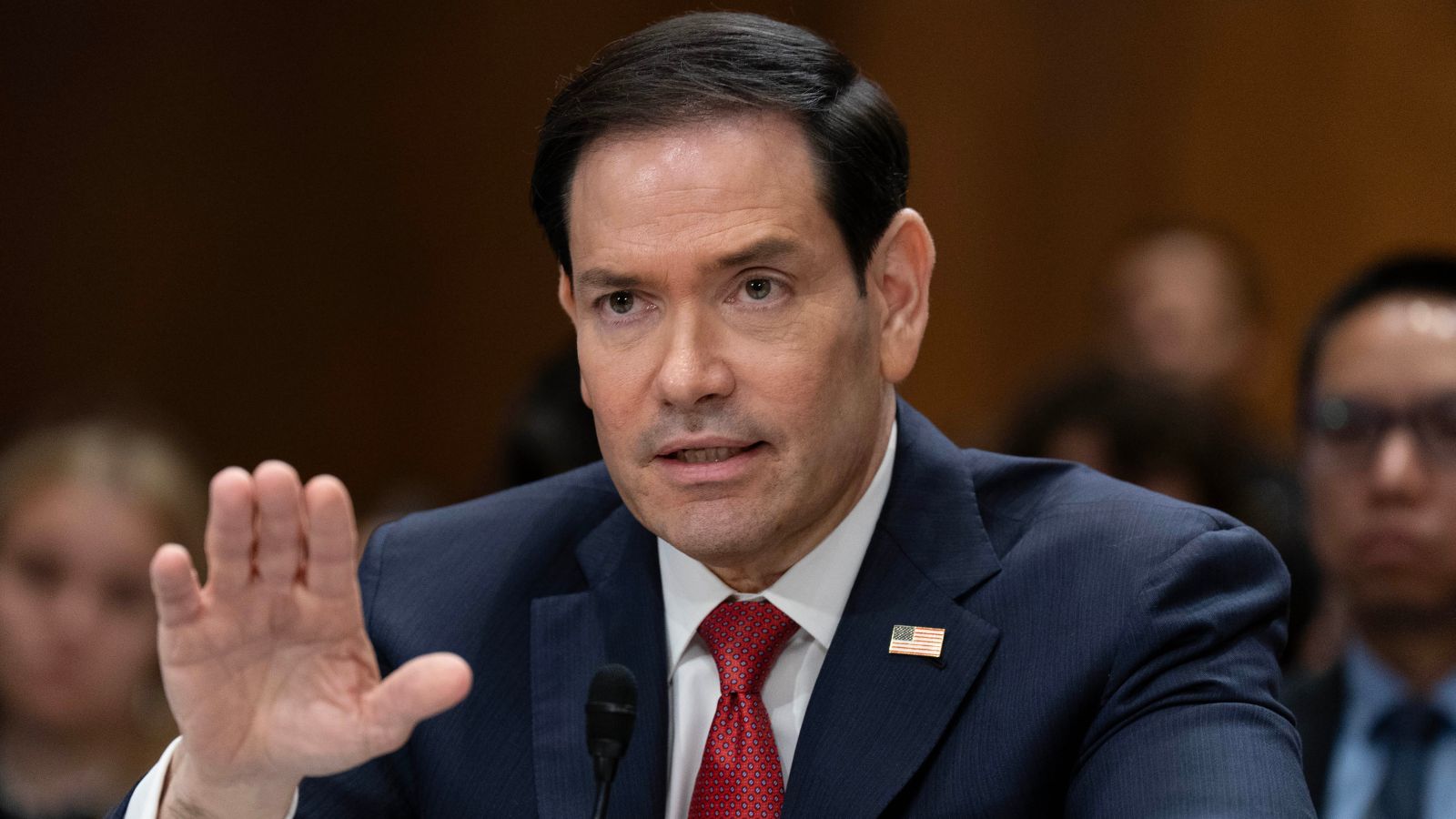
Western foreign policy circles are comfortably trapped in a time warp. The standard playbook dictates that whenever tensions spike in the Middle East, a chorus of officials sounds the alarm on the Strait of Hormuz, while predicting that economic isolation will inevitably force Tehran to surrender its nuclear ambitions. Senator Marco Rubio’s recent assertions follow this exact, tired script: Iran will be forced to reopen the strait, and they will crawl back to the negotiating table to trade away their nuclear program.
It is a comforting narrative for Washington. It is also entirely wrong.
The assumption that Iran views the Strait of Hormuz as a simple on-off switch for global energy liquidity betrays a fundamental misunderstanding of asymmetric warfare. Furthermore, the belief that Tehran will negotiate away the "aspects" of its nuclear capabilities under economic duress ignores two decades of geopolitical reality. Washington is playing checkers against a regime that has spent forty years mastering regional chess.
The Myth of the Hormuz Chokepoint
Every time a headline screams about Iran threatening the Strait of Hormuz, oil markets spike, and defense analysts dust off their old maps. The conventional wisdom states that Iran’s ultimate weapon is the total blockade of the 21-mile-wide transit route that carries roughly a fifth of the world's petroleum.
Here is the reality from anyone who has actually analyzed Persian Gulf naval deployments: Iran has absolutely no intention of completely closing the Strait of Hormuz.
Why? Because closing the strait entirely is a suicide pill, not a strategic victory. Iran’s own economy relies heavily on the illicit and licit maritime trade flowing through those very waters. Completely choking off the strait would alienate Beijing—Tehran’s primary economic lifeline and top oil customer.
Instead, Iran uses a strategy of calibrated friction.
They do not need to lock the gates; they just need to raise the cost of entry. By utilizing fast attack craft, sea mines, and shore-to-ship missiles to selectively harass Western-flagged tankers, Tehran achieves its goals without triggering a full-scale conventional war with the US Fifth Fleet. They control the thermostat of regional tension. Assuming that a Western mandate will "force Iran to reopen" a strait that they never fully closed is a fundamental misreading of the situation.
The Broken Logic of Nuclear Concessions
The second lazy consensus dominating the current discourse is that crippling sanctions and diplomatic pressure will force Iran to negotiate "aspects of its nuclear programme."
Let us look at the historical data, rather than political wishful thinking.
When the US exited the Joint Comprehensive Plan of Action (JCPOA) in 2018 and instituted the "Maximum Pressure" campaign, the predicted outcome was a humbled Iranian regime returning to negotiate a broader, stricter deal. The actual outcome? Iran accelerated its uranium enrichment to 60% purity—calculatedly close to weapons-grade—installed advanced IR-6 centrifuges, and restricted IAEA oversight.
A Lesson in Geopolitical Leverage: You cannot negotiate away an asset that an adversary views as their sole guarantee of regime survival.
Look at the modern history of state survival. Muammar Gaddafi surrendered his nuclear program in 2003; he was overthrown and killed less than a decade later. Kim Jong Un retained his nuclear arsenal; his regime remains untouched despite total economic isolation. The clerical establishment in Tehran has watched this play out in real time. They know that a latent or active nuclear capability is the ultimate insurance policy against foreign-imposed regime change.
To believe that Marco Rubio or any Western diplomat can pressure Iran into meaningful nuclear rollbacks without offering total, irreversible sanctions relief and ironclad security guarantees is sheer fantasy. Iran does not negotiate out of weakness; they negotiate to formalize the leverage they have already built on the ground.
The Flawed Questions Dominating the Debate
If you read mainstream foreign policy op-eds, you will constantly see variations of the same flawed questions:
- How can the West force Iran back to the 2015 JCPOA framework?
- What level of sanctions will finally break Tehran's resolve?
These questions are fundamentally broken because they assume the 2015 status quo is still achievable. It isn't. The JCPOA is dead, and the regional balance of power has shifted permanently.
Instead of asking how to force a return to an outdated treaty, analysts should be asking: What does a regional containment strategy look like when Iran possesses permanent nuclear breakout capacity?
The hard, uncomfortable truth that no one in Washington wants to admit is that Iran has already won the technological battle. The knowledge cannot be unlearned. The infrastructure cannot be entirely destroyed by airstrikes without triggering a catastrophic regional conflagration that would make the Iraq war look like a minor skirmish.
The Cost of Washington's Blindspot
I have watched successive administrations apply the same boilerplate economic sanctions while expecting different results. It is a textbook definition of policy insanity. We slap sanctions on the Iranian central bank, target their shipping companies, and blacklist their military commanders.
The result? Iran builds a highly sophisticated, shadow banking network spanning from Dubai to Istanbul to Beijing. They master the art of ship-to-ship oil transfers in the South China Sea, bypassing Western surveillance entirely.
The downside of acknowledging this reality is clear: it means admitting that the Western toolkit is severely limited. It means acknowledging that our economic leverage is decaying as a multipolar world order takes shape. It means accepting that Iran’s regional alignment with Russia and China provides them with a diplomatic buffer that simply did not exist a decade ago.
But continuing to repeat the mantra that "all options are on the table" while expecting Iran to fold its tent is not a strategy—it is a security theater designed for domestic consumption.
The Reality of the Escalation Ladder
Imagine a scenario where the West attempts a naval blockade to force Iranian compliance in the Gulf.
The assumption is that Iran backs down. The reality is that Iran activates its regional network. Within hours, asymmetric retaliatory strikes hit energy infrastructure across the Arabian Peninsula. Cyberattacks target Western financial systems. Drone swarms complicate traffic through the Bab el-Mandeb strait.
Iran's military doctrine is explicitly designed to ensure that if they suffer, the entire global economy suffers with them. They do not need to win a conventional fleet engagement against the US Navy to achieve victory; they just need to make the cost of Western intervention too high for democratic electorates to bear.
Stop analyzing Iranian foreign policy through the lens of Western economic rationality. The regime survived an eight-year war with Iraq that cost hundreds of thousands of lives. They survived decades of isolation. They are not going to trade away their strategic crown jewels for temporary economic breathing room, no matter what pronouncements come out of Washington.
The West needs to stop planning for the Iran it wants to negotiate with, and start dealing with the Iran that actually exists.