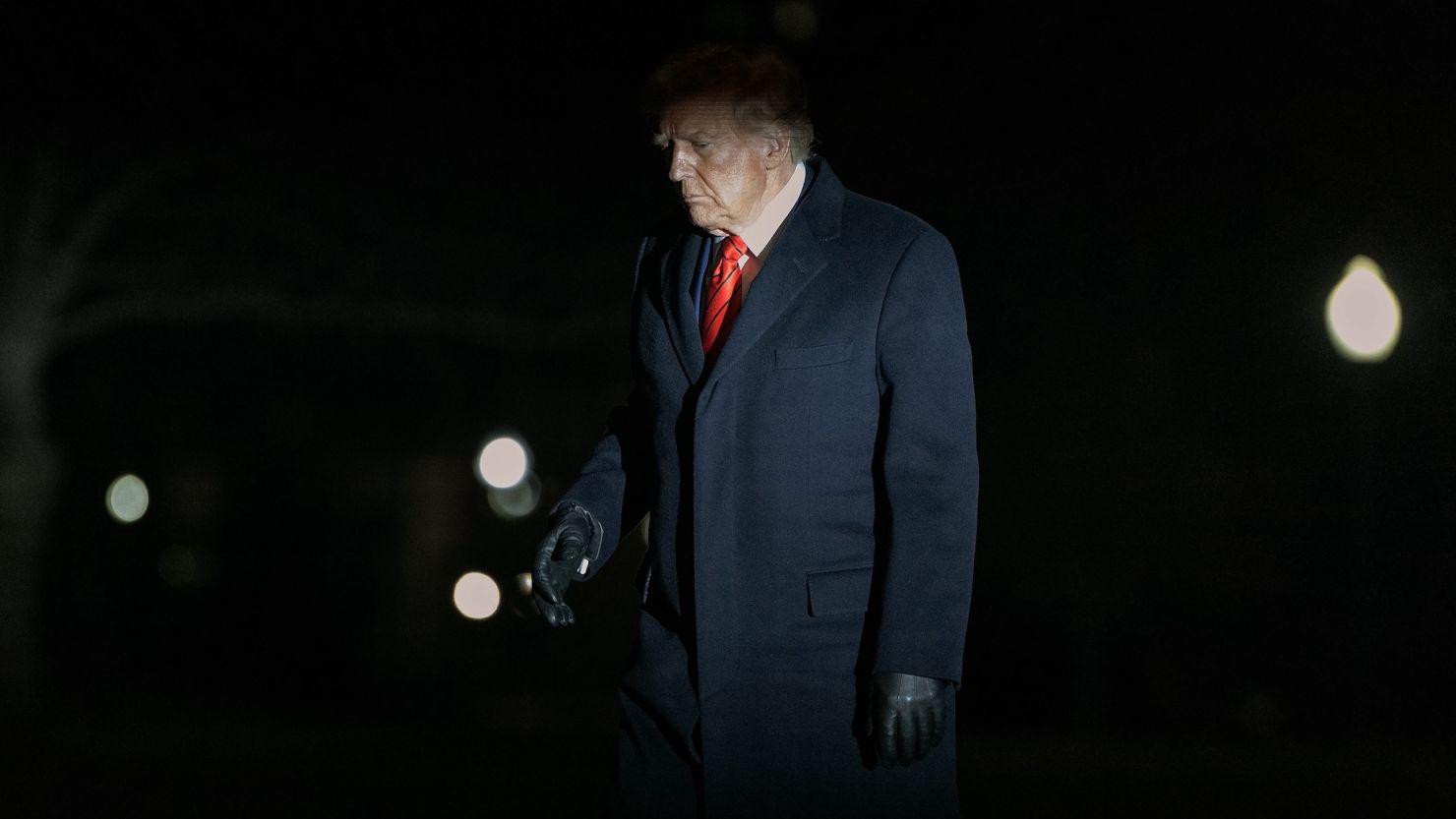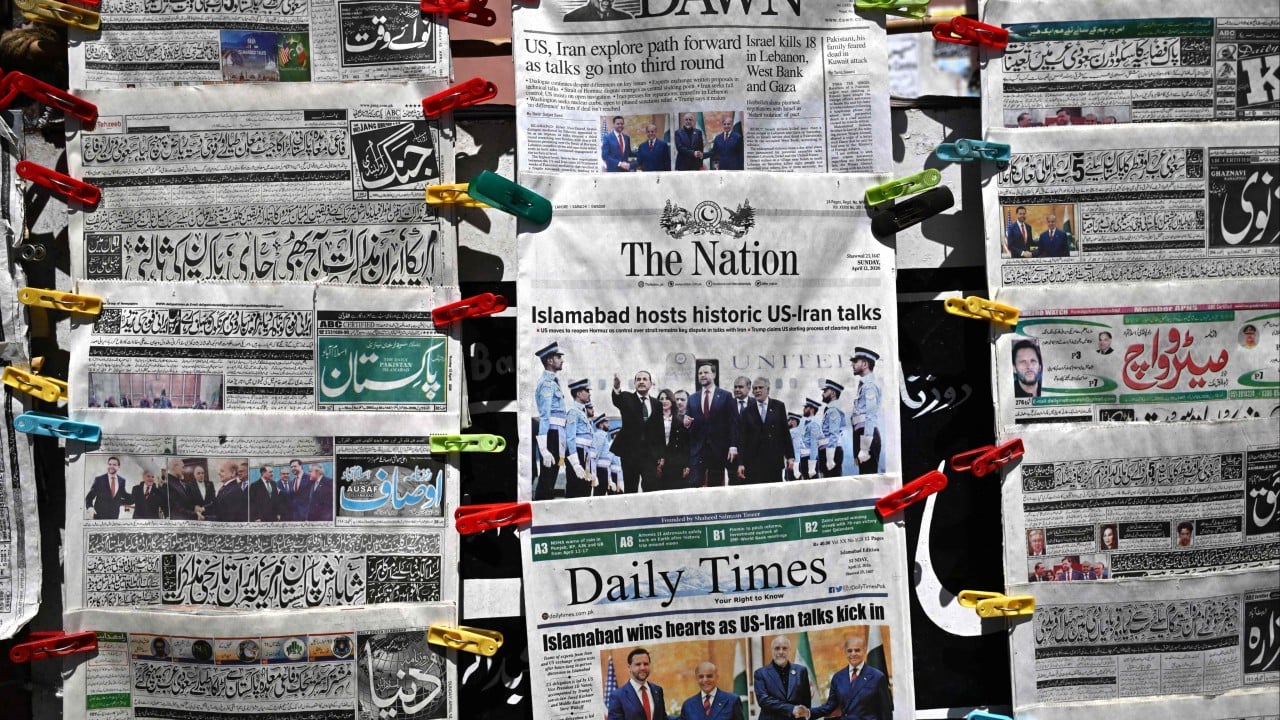
The failure of recent US-Iran peace negotiations creates a strategic vacuum that forces the Trump administration into a choice between two equally volatile paths: maximum pressure escalation or a tactical retreat toward isolationism. While traditional diplomatic reporting focuses on personalities and rhetoric, the actual drivers of this impasse reside in three structural friction points: the divergence of internal political incentives, the mismatch of security guarantees, and the secondary-sanctions exhaustion of regional partners.
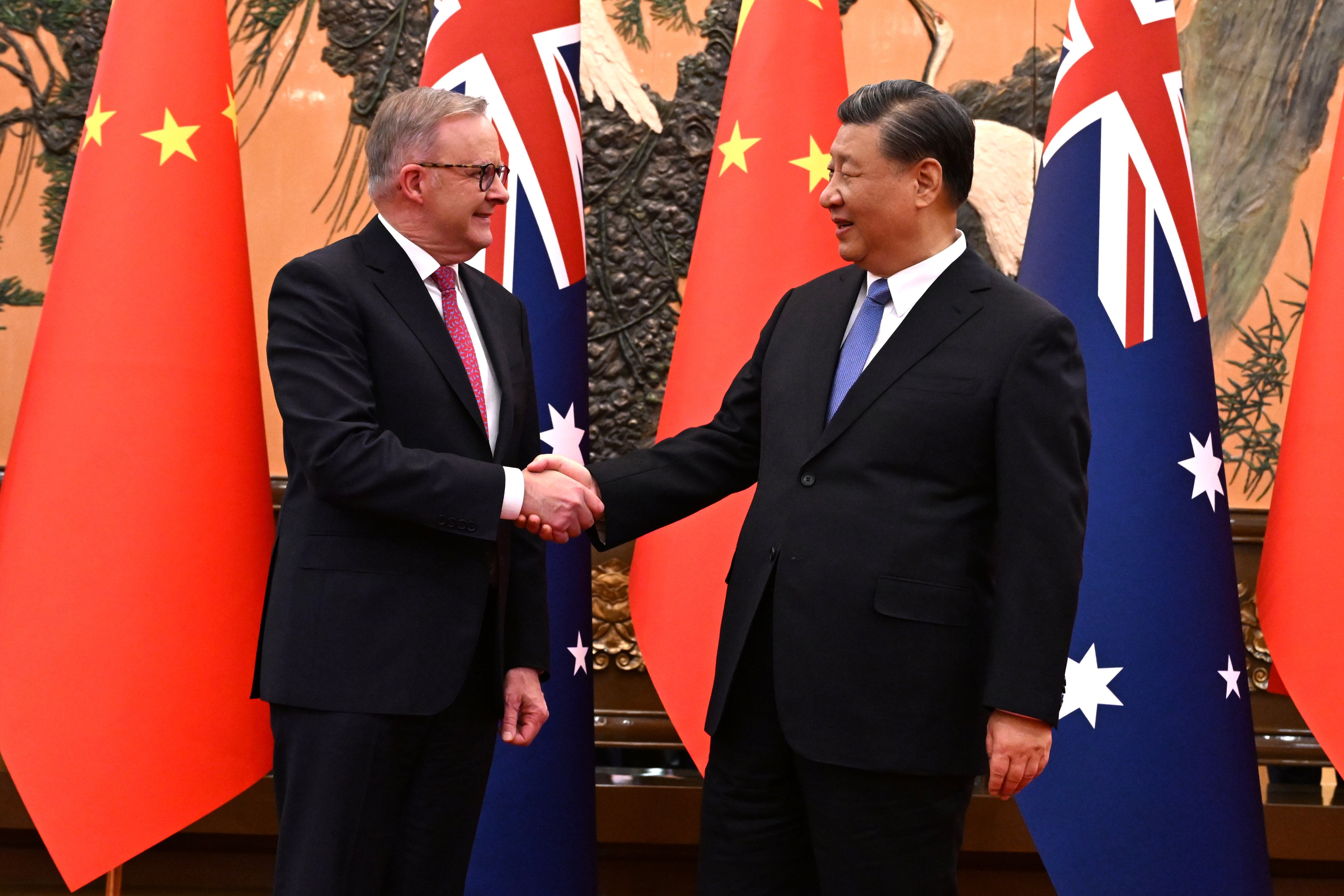
Chinese analytical circles view this failure not as a temporary setback but as an inevitable outcome of a trilateral misalignment between Washington, Tehran, and Beijing. The collapse of these talks signals that the price of "peace" has exceeded the political capital available to both leaders, leaving the administration with a deteriorating status quo that demands a complete recalibration of American Middle East policy.
The Triad of Diplomatic Friction
The collapse of negotiations is a function of three distinct variables that made a successful outcome mathematically improbable. Each variable functions as a barrier to entry for a stable agreement.
1. The Asymmetry of Credibility
Tehran’s refusal to finalize terms stems from a fundamental lack of institutional trust in the longevity of any executive agreement. In the Iranian view, the unilateral withdrawal from the Joint Comprehensive Plan of Action (JCPOA) established a precedent where American commitments expire with the electoral cycle. This creates a "Risk Premium" that Iran demands in the form of front-loaded sanctions relief or codified legislative guarantees—concessions the Trump administration cannot provide without Congressional approval.
2. The Domestic Incentive Gap
For the Trump administration, the primary value of a deal is the optics of a "grand bargain" and the potential to redirect military spending toward domestic priorities or Indo-Pacific competition. However, for the Iranian hardline establishment, the existence of a permanent external enemy provides the necessary justification for internal security measures and the maintenance of the revolutionary vanguard's economic monopolies. When the benefit of the enemy outweighs the benefit of the trade, negotiations inevitably stall.
3. The Regional Security Dilemma
Any reduction in US-Iran tensions triggers immediate security anxieties in Riyadh and Jerusalem. To maintain these core alliances, Washington must balance peace talks with Iran with increased military aid or security guarantees to its rivals. This "Zero-Sum Security" loop means that every step toward Tehran is interpreted as a step away from traditional allies, complicating the administration's regional architecture.
Chinese Strategic Positioning and the Energy Offset
Chinese analysts are not merely observers; they are active beneficiaries of this diplomatic failure. Beijing’s strategy relies on the perpetuation of a low-intensity conflict that keeps Washington bogged down in the Persian Gulf while ensuring China remains the primary buyer of discounted Iranian crude.
China utilizes a "Sanctions Arbitrage" model. By maintaining the Kunlun Bank channel and other non-dollar payment systems, Beijing ensures Iran remains solvent enough to resist American demands but desperate enough to accept Chinese infrastructure investments under unfavorable terms. The failure of peace talks reinforces the 25-year Strategic Cooperation Pact between Tehran and Beijing, effectively pulling Iran into the orbit of the Shanghai Cooperation Organization (SCO).
The second dimension of China’s interest involves the "Diversion Factor." As long as the US is forced to maintain a carrier strike group presence in the Middle East to deter Iranian proxies, the "Pivot to Asia" remains a theoretical concept rather than a tactical reality. The failed talks represent a strategic win for the People's Liberation Army (PLA) by delaying the full-scale maritime buildup of US forces in the South China Sea.
The Cost Function of Maximum Pressure 2.0
With diplomacy stalled, the default policy reverts to a renewed "Maximum Pressure" campaign. This strategy operates on a specific economic logic: the systematic reduction of Iranian foreign exchange reserves to a point where the regime faces an existential choice between internal stability and regional influence.
This model faces several structural bottlenecks that did not exist during the previous administration:
- Enforcement Fatigue: Global markets and secondary partners have developed sophisticated workarounds for US Treasury restrictions. Small-scale refineries in China, often called "teapots," are now decoupled from the global financial system, making them immune to traditional banking sanctions.
- The Shadow Fleet: The emergence of a massive, unregulated tanker fleet allows Iran to export roughly 1.5 million barrels per day despite official prohibitions. The cost of intercepting these vessels involves high-risk maritime operations that the administration may not be willing to authorize.
- Proxy Resilience: Unlike a centralized state economy, Iran’s regional network of non-state actors (the "Axis of Resistance") operates on a low-cost, high-impact model. Reducing Tehran’s GDP by 5% does not translate to a 5% reduction in proxy activity; these groups often switch to local illicit economies (smuggling, extortion) to maintain their operational tempo.
The Trump Dilemma: Calculated Escalation vs. Isolationism
The administration now faces a bifurcated decision tree.
Path A: Kinetic Containment
If the administration determines that economic pressure is insufficient to stop Iranian nuclear hedging, the only remaining tool is kinetic. This involves targeted strikes on nuclear infrastructure or IRGC command centers. The risk here is an uncontrolled escalation cycle that necessitates a large-scale US troop deployment—the exact scenario the administration’s "America First" doctrine seeks to avoid.
Path B: The "Clean Break"
This involves a radical pivot where the US reduces its footprint in the Middle East regardless of Iranian behavior, shifting the burden of containment to Israel and the Abraham Accords signatories. While this aligns with isolationist rhetoric, it risks creating a power vacuum that China and Russia are eager to fill. It also risks an Iranian nuclear breakout that would fundamentally destabilize global energy markets.
Quantifying the Strategic Risk
The failure of the talks increases the "Conflict Probability Index" in the Strait of Hormuz. We can categorize the potential outcomes based on current geopolitical telemetry:
- The Gray Zone Plateau (60% Probability): Continued low-level cyber warfare, tanker seizures, and proxy skirmishes. Both sides avoid total war but remain in a state of permanent mobilization.
- The Hegemonic Pivot (25% Probability): Iran formalizes its security alliance with China, potentially hosting Chinese naval assets at the port of Jask, creating a permanent shift in the Indian Ocean's naval balance.
- The Preemptive Flashpoint (15% Probability): A breakdown in communications leads to a miscalculation during a maritime encounter, triggering a rapid escalation to kinetic strikes on Iranian soil.
The Structural Realignment of the Middle East
The administration’s dilemma is compounded by the changing nature of regional alliances. The UAE and Saudi Arabia are no longer interested in a scorched-earth policy toward Iran if it disrupts their own economic diversification plans (e.g., Vision 2030). These states are increasingly engaging in "Hedging Diplomacy," talking to Tehran while maintaining a US security umbrella.
This creates a "Decoupling Effect" where American interests and those of its Gulf allies are no longer perfectly aligned. If Washington pushes for extreme escalation, it may find its regional partners unwilling to provide the necessary basing and overflight rights, fearing Iranian retaliation against their vulnerable infrastructure.
Strategic Recommendation for Policy Recalibration
The administration must abandon the pursuit of a "Grand Bargain" in favor of a "Transactional Containment" framework. This requires a shift from broad-based sanctions, which have hit diminishing returns, to highly surgical financial interdiction targeting the specific technologies required for advanced centrifuge development and ballistic missile guidance.
Simultaneously, the US should pivot its maritime strategy from "Presence" to "Interdiction." Rather than keeping a carrier strike group in the Gulf—which serves as a static target for Iranian asymmetric assets—the Navy should employ a distributed lethality model using unmanned surface vessels and long-range precision fires from outside the Persian Gulf. This reduces the risk to US personnel while maintaining a credible threat of force.
The objective is not to force Iran back to the table—as the political conditions for a deal do not exist in either capital—but to increase the "Maintenance Cost" of the Iranian regime's regional ambitions to an unsustainable level. This involves a cold-eyed acceptance that Iran is now a junior partner in a nascent Sino-Russian bloc and must be treated as a component of a larger global competition rather than a localized Middle Eastern problem.
The final strategic move is the "Energy Decoupling." By accelerating the integration of Israeli and Mediterranean gas markets with European demand, the US can reduce the global economic sensitivity to Iranian threats in the Strait of Hormuz. When the world no longer fears a $150 oil spike from a Gulf conflict, the Trump administration regains the ultimate leverage: the ability to walk away from the table entirely without triggering a global recession.