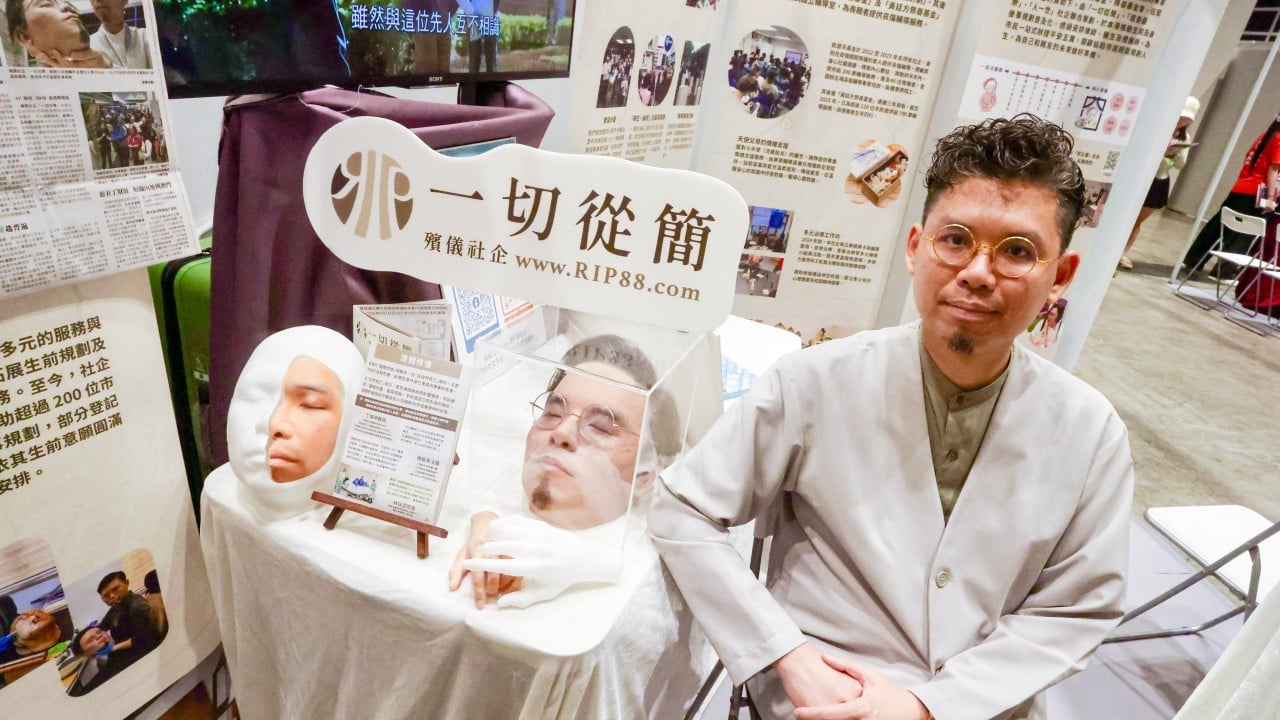
Hong Kong faces a demographic intersection where a legacy of cultural silence regarding death meets an unsustainable pressure on geriatric infrastructure. The city is currently navigating the "silver tsunami"—a term often used loosely but defined here as the period where the population aged 65 and over is projected to hit 31% by 2036. This shift is not merely a social evolution; it is a systemic bottleneck. The traditional "taboo" associated with end-of-life planning has historically suppressed market development for palliative care and bereavement services, leading to a massive misalignment between patient preference and institutional capacity.
The Tri-Factor Model of End of Life Friction
To understand why the conversation around death is suddenly "coming alive," one must analyze the three specific vectors of friction that have forced this change.
- Spatial Scarcity and the Urn Backlog: In most global cities, the primary concern with death is emotional or financial. In Hong Kong, it is physical. The scarcity of land creates a literal queue for the dead. Public columbarium niches often involve waiting periods that can span years. This physical constraint forces families to confront mortality as a logistical problem long before it becomes a sentimental one.
- The Institutional Default Path: Currently, a high percentage of deaths occur in hospital settings, often involving aggressive medical interventions that do not align with the patient’s quality-of-life goals. The lack of a robust legal framework for Advance Medical Directives (AMDs) creates a system where "doing everything" is the legal and medical default, regardless of the outcome.
- The Financial Burden of Super-Longevity: As life expectancy in Hong Kong remains among the highest in the world, the cost of late-stage care is draining family reserves. The economic necessity of planning for the final 24 months of life is overriding the cultural hesitation to discuss it.
The Economic Efficiency of Palliative Transition
The shift toward "dying at home" or specialized palliative centers is often framed as a compassionate choice, but from a consulting perspective, it is a necessary optimization of health expenditure. Hospital beds in acute wards are high-cost assets. When these beds are occupied by terminally ill patients receiving non-curative care, the system experiences a "misallocation of intensity."
The cost-saving mechanism of palliative care operates through the reduction of:
- Emergency room admissions in the final 90 days of life.
- Unnecessary diagnostic imaging (CT/MRI) for patients with a terminal prognosis.
- The use of intensive care units (ICU) for end-stage organ failure where recovery is statistically impossible.
Data suggests that proactive end-of-life planning reduces the total cost of the final year of life by 20% to 30%, primarily by shifting the site of care from high-overhead hospitals to lower-overhead community or home settings. However, the barrier to this efficiency is the "legal ambiguity of the home death." In Hong Kong, a death at home often triggers a police investigation or a coroner's report unless a doctor has seen the patient within the previous 14 days. This regulatory hurdle reinforces the hospital-centric model.
Mapping the Psychological Transition: From Taboo to Utility
The cultural shift in Hong Kong is better understood through the lens of Decision Theory. When the cost of silence (financial ruin, prolonged suffering, logistical chaos) exceeds the social cost of breaking a taboo, behavior changes.
We are seeing the emergence of "Death Cafes" and "Life Education" programs not as niche hobbies, but as risk-mitigation strategies. Younger generations—the "sandwich generation" caring for both children and aging parents—are the primary drivers. They view end-of-life planning as a form of "administrative hygiene."
The Components of Modern Bereavement Planning
- The Advance Medical Directive (AMD): Specifying the refusal of life-sustaining treatment when one is no longer capable of making decisions.
- Enduring Power of Attorney (EPA): Ensuring financial assets remain accessible to pay for care costs if cognitive decline occurs.
- Green Burials: The rise in scattering ashes at sea or in gardens of remembrance. This is a direct response to the columbarium shortage, reflecting a pragmatic shift from "ancestral permanence" to "ecological transience."
The Infrastructure Deficit in Geriatric Support
The current supply of hospice beds in Hong Kong is insufficient to meet the projected demand of the next decade. The ratio of palliative specialists to the aging population remains below international benchmarks for developed economies. To bridge this gap, the private sector is beginning to eye "Death Care" as a growth industry. This includes specialized insurance products, private palliative suites, and digital legacy management.
The bottleneck here is human capital. The training of medical professionals in Hong Kong has historically prioritized curative medicine (saving lives) over palliative medicine (managing the end of life). Shifting this requires a fundamental change in the medical school curricula, emphasizing communication skills and the ethics of "de-escalation."
The Risk of Digital and Financial Fragmentation
As death becomes a more "managed" event, a new risk emerges: the fragmentation of the deceased’s digital and financial footprint. Hong Kong’s status as a financial hub means individuals often hold complex portfolios across multiple jurisdictions.
- Digital Asset Custody: Without clear protocols, access to encrypted data, crypto-assets, and even social media accounts becomes a legal quagmire.
- Cross-Border Legal Conflicts: For families with assets in mainland China or overseas, the lack of a unified recognition of AMDs or wills can lead to years of litigation, negating the benefits of planning.
Strategic Priority: The Normalization of the DNR
The most immediate lever for system-wide improvement is the standardization and social normalization of Do Not Resuscitate (DNR) orders. In a dense urban environment like Hong Kong, the sight of an ambulance is common. The default protocol for paramedics is to perform CPR unless presented with specific, legally binding documentation.
For a frail, 90-year-old patient with terminal cancer, CPR is often a violent and futile intervention that results in broken ribs and a death in a sterile ER. The "success" of the Hong Kong death conversation will be measured by the percentage of the population that has a recognized DNR on file, accessible via a centralized electronic health record (eHRSS).
The Inevitability of Reform
The government’s recent efforts to codify Advance Medical Directives into statutory law represent a critical move toward de-risking the medical profession. Once doctors have the legal "shield" to honor a patient's wish to refuse treatment, the institutional resistance to palliative care will diminish.
However, the real transformation is occurring in the living rooms of public housing estates and private apartments. The conversation is no longer about "inviting bad luck"; it is about "avoiding a bad end." This is a transition from a superstitious framework to a functionalist one.
The Hong Kong model of aging is a stress test for the rest of Asia. Cities in Singapore, South Korea, and Japan are watching. If Hong Kong can successfully integrate its "Spatial Scarcity" constraints with a modern "Palliative Legal Framework," it will provide the blueprint for the most efficient management of mortality in human history.
The final strategic move for the Hong Kong SAR government and private stakeholders is the aggressive expansion of "Community-Based Death Care." This involves decentralizing the dying process away from the Queen Marys and Prince of Wales Hospitals and into the districts. This requires a massive investment in home-nursing cadres and the simplification of the "Death Certificate" process for non-hospital expires.
The goal is a "closed-loop" end-of-life system where the patient's preferences are recorded digitally, honored legally, and executed locally. This is the only way to prevent the total collapse of the healthcare system under the weight of its own success in extending life. Focus must shift from the quantity of years to the management of the final 1,000 days. Any organization or government body failing to prioritize this logistical reality is ignoring the single most predictable data point in demographics: the mortality rate remains constant at 100%.