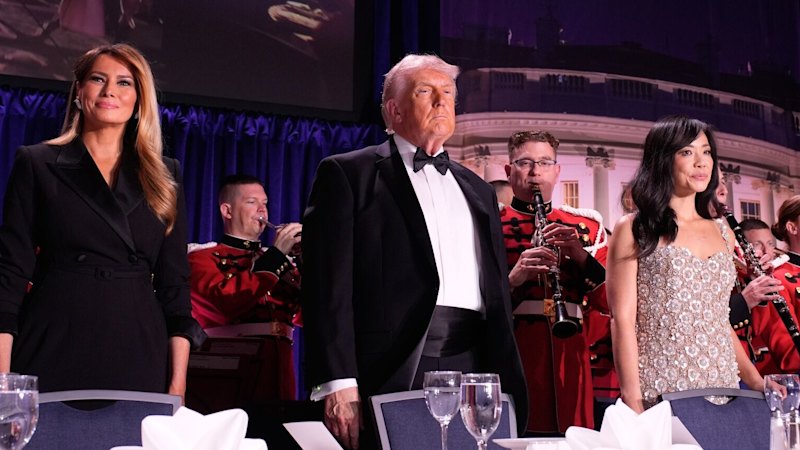
The cancellation of a high-profile institutional event—specifically one as culturally entrenched as a White House Correspondents’ Association (WHCA) gala—is rarely the result of a single external shock. Instead, it represents the terminal point of a cascading failure within three specific operational domains: institutional risk tolerance, stakeholder misalignment, and the erosion of the "exclusivity premium." When the aborted gala for White House journalists unfolded, it served as a case study in how fragile the tether between political power and media branding has become.
The collapse was not a logistical hiccup but a strategic breakdown. To analyze this event is to map the intersection of reputational liability and the diminishing returns of traditional prestige markers.
The Triad of Institutional Fragility
The stability of a premier industry event rests on three pillars. If one is compromised, the event becomes a liability; if two fail, cancellation is the only viable risk-mitigation strategy.
- The Access-Accountability Gap: The primary value proposition of the WHCA gala is the physical proximity of the press to the executive branch. When political volatility reaches a threshold where this proximity is viewed as complicity rather than professional access, the event’s social license expires.
- Corporate Underwriting Resilience: Large-scale galas are subsidized by third-party sponsors seeking brand association with "the room where it happens." If the "room" becomes a site of controversy, the cost-benefit analysis for a CMO shifts from brand-building to damage control.
- Optics Equilibrium: There is a delicate balance between a high-society celebration and the grim realities of the news cycle. When the delta between the opulence of the gala and the severity of global or domestic crises becomes too wide, the event transforms into a target for both public and internal criticism.
The Mechanics of the Aborted Gala
The dissolution of the event followed a predictable sequence of entropy. The process began with the withdrawal of key talent and progressed through a series of "silent exits" by major media organizations.
The Momentum of Withdrawal
The primary driver of the collapse was a feedback loop of social proof. In high-stakes environments, the first major stakeholder to withdraw provides a "moral hedge" for others. Once a top-tier news outlet or a headline entertainer signals that the event is a reputational hazard, the remaining participants face an asymmetric risk profile: staying offers marginal benefit, while leaving prevents catastrophic brand staining.
This creates a Contagion Effect where the value of the event drops exponentially with each departure. The gala’s utility is derived from the density of high-value participants. As that density thins, the remaining attendees are left with an "empty room" problem—they are paying the full reputational price for a fraction of the networking return.
Financial and Logistical Sunk Costs
The aborted gala revealed a significant misunderstanding of "sunk cost" vs. "prospective loss." Organizers often hesitate to cancel due to non-refundable venue deposits, security contracts, and catering commitments. However, the true cost of a failed gala is not found in the line items of an Excel sheet; it is found in the long-term devaluation of the host organization’s brand.
- Fixed Costs: Venue rental, equipment, and baseline staffing. These are lost the moment the contract is signed.
- Variable Costs: Security scaling, gift bags, and high-end catering. These can sometimes be mitigated if the cancellation happens within a specific window (typically 14 to 30 days).
- Reputational Equity: The unquantifiable trust that members and sponsors place in the organization. The decision to cancel is an attempt to preserve this equity at the expense of the cash-on-hand.
The Information Bottleneck
A secondary cause for the gala's failure was the inability of the WHCA to define the event’s purpose in a fragmented media environment. Historically, the gala served as a demonstration of the First Amendment’s health. In the current era, that narrative has been disrupted by a more aggressive, adversarial model of journalism that views "socializing with the subject" as a fundamental breach of ethics.
This shift in the Journalistic Normative Framework meant the gala no longer had a unified defense. When the event faced external pressure, there was no cohesive internal argument to justify its existence beyond "tradition." Tradition is a weak shield against modern social media-driven boycotts.
Analyzing the Stakeholder Conflict
The failure of the gala was essentially a conflict between three distinct groups with non-overlapping incentives:
- The Institutionalists: Older members and leadership who view the event as a necessary ritual for maintaining the dignity of the office and the press corps.
- The Disruptors: Younger journalists and digital-native outlets who prioritize perceived independence and "purity" over institutional access.
- The Commercial Interests: Sponsors and advertisers who simply want a "clean" environment for client entertainment and are allergic to any form of protest or political friction.
The aborted gala showed that the Institutionalists have lost their majority. The Disruptors now hold the "veto power" via social media amplification, and the Commercial Interests are the first to flee when the atmosphere turns toxic.
Tactical Deficiencies in Event Management
The organizers failed to implement a Tiered Contingency Plan. In professional crisis management, an event of this scale should have pre-defined "Tripwires" that dictate specific actions:
- Level 1 Tripwire: Loss of a secondary sponsor. Action: Scaling back of luxury components to reduce the "optics" risk.
- Level 2 Tripwire: Withdrawal of a major media partner. Action: Re-branding the event from a "Gala" to a "Symposium" or "Working Dinner" to lower the social profile.
- Level 3 Tripwire: Loss of the keynote speaker or headline entertainer. Action: Full cancellation.
The WHCA’s failure was in treating the event as a binary (it happens or it doesn't) rather than a modular structure that could be adapted to the political climate. By the time they reached the cancellation point, the "Level 3" threshold had been crossed several times over.
The Long-Term Impact on Media Branding
The cancellation of the gala is a data point in a larger trend: the "Unbundling of Prestige." For decades, being a "White House Journalist" carried a specific social and professional weight that was validated by this annual event. As the gala fails, the prestige becomes decentralized.
This leads to a Fragmentation of the Press Corps. If the centralizing ritual of the gala is gone, the WHCA loses its primary tool for collective bargaining and internal cohesion. This makes the press corps more vulnerable to "divide and conquer" tactics from the administration, as there is no longer a unified forum for asserting their collective role in the democratic process.
Structural Recommendations for Future Engagement
To avoid a repeat of this collapse, organizations must move away from the "Gala Model" and toward a "Mission-Centric Model." The following adjustments are necessary for any high-stakes institutional event:
- Shift the Metric of Success: Move away from "Celebrity Attendance" and toward "Scholarship Impact" or "Legislative Advocacy." If the core purpose of the event is to fund-raise for journalism scholarships, the social aspect should be a footnote, not the headline.
- Decouple from Political Attendance: The event should be able to stand on its own without the presence of the President or administration officials. This removes the "Hostage to the News Cycle" risk where a single policy decision can ruin the event’s viability.
- Implement Radical Transparency: Publish the cost-benefit analysis of the event to the membership. Show exactly how much is spent on "party" vs. "purpose." This preempts the "Elitist" critique by grounding the event in data.
- Adopt an Agile Hosting Strategy: Smaller, more frequent "Press Salons" are more resilient than one massive annual gala. They offer the same networking benefits with 10% of the reputational risk.
The failure of the gala was not an accident; it was an inevitability for a 20th-century format operating in a 21st-century risk environment. The path forward requires a brutal reassessment of what "access" is worth and whether the price of the ticket—both financial and reputational—is still a sound investment.
The most effective strategic move is to pivot the remaining funds into a decentralized digital defense fund. By moving the capital from a one-night physical event into a multi-year legal and professional support system for journalists, the organization replaces a fragile social asset with a durable operational one. This removes the "target" of the gala while doubling down on the actual mission, effectively neutralizing the external pressures that led to the initial collapse.



