The Illusion of the Hardened Perimeter
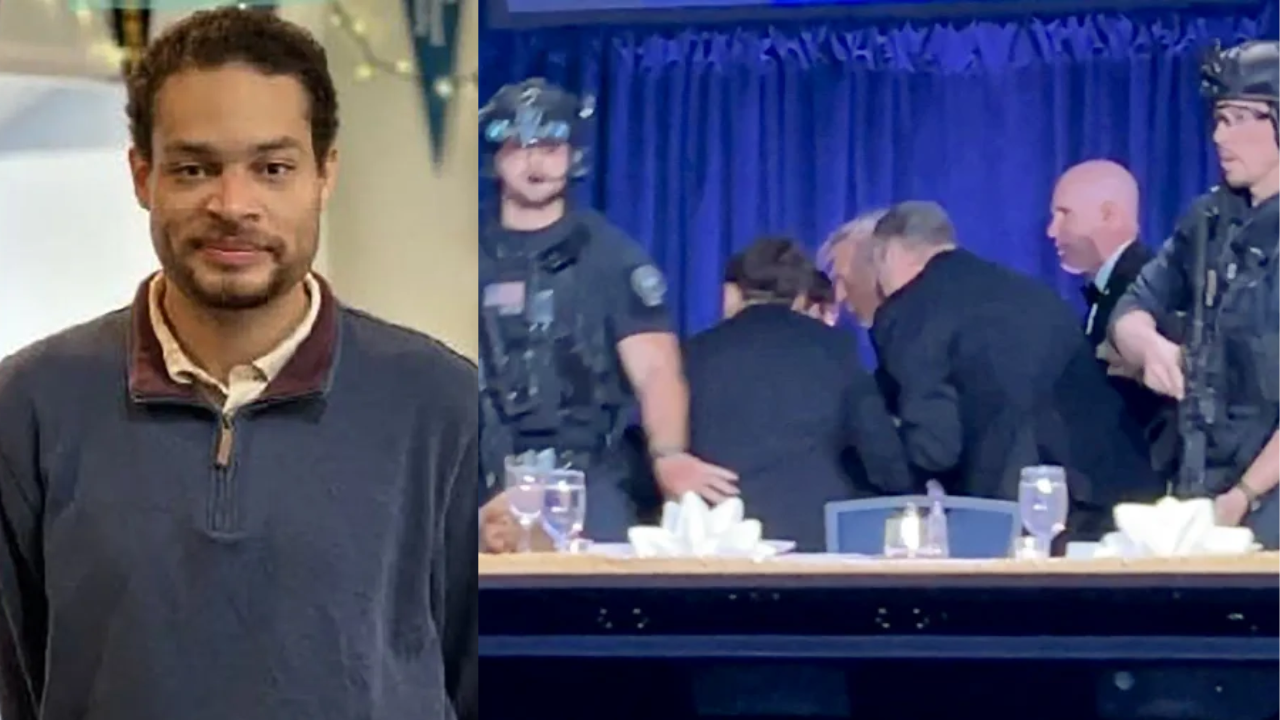
Security failures at high-profile events are rarely the result of a single point of failure; they are the logical outcome of a "Swiss Cheese Model" where latent organizational defects align with active human errors. The breach during the White House Correspondents’ Dinner at the Washington Hilton exposes a critical disconnect between perceived security—the visible presence of law enforcement and Secret Service—and the operational reality of multi-use urban infrastructure. When a suspect bypasses tiered checkpoints to introduce a kinetic threat into a "secure" environment, the failure is not tactical but systemic.
The fundamental flaw lies in the Assumed Security Paradox. High-occupancy venues like the Hilton operate under a dual mandate: providing open hospitality for hotel guests while maintaining a sterile environment for a National Special Security Event (NSSE). The friction between these two mandates creates "seams"—unmonitored transit points where the transition from a public zone to a restricted zone is governed by policy rather than physical barriers. You might also find this similar article interesting: Why China's Economic Carrots Won't Buy Taiwan in 2026.
Mapping the Security Seams
To quantify how a suspect enters a high-security environment undetected, we must categorize the venue into distinct operational layers.
The Hospitality Loophole
The Washington Hilton functions as a massive, porous ecosystem. Unlike a dedicated government facility, a hotel maintains secondary and tertiary entrances for staff, deliveries, and standard overnight guests. The suspect utilized the hospitality layer as a staging ground. By establishing a presence as a legitimate guest or merely blending into the high-volume flow of the lobby, the individual effectively bypassed the primary perimeter meant to vet attendees of the dinner. As discussed in detailed reports by The New York Times, the effects are widespread.
Asset-to-Area Mismatch
Security density is often concentrated at the "Point of Impact"—the ballroom where the President and high-level dignitaries are located. This creates a vacuum in the "Buffer Zone"—the hallways, elevators, and pre-function spaces. The suspect moved through these zones because the surveillance architecture was optimized for crowd management rather than individual behavioral detection.
The Technological Gap in Magnetometry
The absence of metal detectors at specific access points is frequently cited as a failure, but the deeper issue is the Detection Threshold Strategy. Deploying magnetometers at every single entry point of a 1,000-plus room hotel is logistically prohibitive for standard operations. The suspect identified a path of least resistance where the "Hardened Shell" met the "Soft Interior."
The Three Pillars of Perimeter Decay
The breach can be deconstructed into three specific failures of operational logic:
- Credentialing Friction: In high-density events, security personnel often prioritize speed over scrutiny. When a suspect mimics the visual cues of an authorized individual—through attire, confidence, or proximity to valid groups—they exploit the "Heuristic Bias" of the guards.
- Temporal Desynchronization: Security is highest during the arrival of the "Protectee" (the President). However, the suspect likely established their position hours or days prior. If the security sweep (the "Sweep and Lock") does not account for individuals already residing within the structure, the perimeter is compromised before it is even established.
- Communication Silos: The Washington Hilton breach reveals the gap between private hotel security and federal law enforcement. If the hotel’s internal monitoring systems do not feed directly into the Secret Service Command Center in real-time, "Red Flag" behaviors—such as an individual loitering in non-public service corridors—go unaddressed until the kinetic event begins.
The Cost Function of Invisible Threats
Security planning often operates on a Linear Risk Assessment, which assumes threats will arrive through the front door. A sophisticated or even a determined "lone wolf" actor operates on Asymmetric Logic. The suspect’s ability to bring a weapon into the venue suggests a failure in "Deep Screening."
- Physical Vector: The use of service elevators or "back-of-house" routes to avoid traditional checkpoints.
- Cognitive Vector: Exploiting the assumption that anyone already inside the hotel lobby has been pre-screened by local law enforcement or the hotel itself.
- Logistic Vector: The concealment of hardware in a manner that defeats visual inspection but would have been caught by thermal imaging or advanced millimetric wave sensors—technologies rarely deployed in hotel hallways due to privacy concerns and cost.
Re-engineering the NSSE Security Architecture
The current model of "Point-Defense" security is obsolete for urban venues. A transition toward Persistent Area Dominance is required.
Integrated Sensor Fusion
The reliance on human eyes at checkpoints must be augmented by AI-driven behavioral analytics. Modern systems can identify "Gait Anomaly" and "Hidden Object Detection" via existing CCTV feeds. If the suspect displayed movements inconsistent with a typical guest—heavy-sided walking indicating a concealed firearm—an automated alert should have triggered an intercept before they reached the inner sanctum.
Dynamic Internal Perimeters
Instead of a static line of metal detectors, security must implement "Phased Interdiction." This involves randomized, mobile checkpoints within the hotel’s interior. By making the path to the ballroom unpredictable, the suspect’s "Pre-Attack Surveillance" is rendered useless. They cannot plan a route if the checkpoints move every sixty minutes.
The Zero-Trust Hospitality Model
For the duration of an NSSE, the hotel must cease to function as a public space. This requires a "Full-Facility Lockdown" 24 hours prior to the event. Every guest room must be swept, and every guest must be re-vetted. The Hilton breach happened because the venue attempted to maintain "Business as Usual" in the shadow of a high-profile target.
The Mechanism of the Kinetic Event
The transition from a "Security Breach" to an "Active Shooter Incident" occurs in seconds. In the Hilton case, the "OODA Loop" (Observe, Orient, Decide, Act) of the security team was lagging behind the suspect’s timeline.
- Observation Failure: The suspect was present but not "seen" as a threat.
- Orientation Failure: Personnel did not recognize the suspect’s location as a breach point until shots were fired.
- Decision/Action Failure: The response was reactive rather than preemptive.
To prevent a recurrence, the mandate of the Secret Service and local PD must extend beyond the ballroom doors to the "Structural Interstitials"—the stairwells, utility rooms, and guest floors that overlook the event space.
Strategic Recommendation for High-Occupancy Security
The objective is no longer to build a wall, but to create a "Defense in Depth" that treats the entire building as a singular, contested environment.
- Mandatory millimetric wave screening at all vehicle and pedestrian entry points for 48 hours prior to an NSSE, regardless of guest status.
- Implementation of "Electronic Fencing": RFID-tagged credentials for all staff and guests that trigger alarms if an unauthorized person enters a restricted "red zone" corridor.
- Unified Command Structure: Abolishing the distinction between hotel security and federal agents. Every camera and every door sensor must be integrated into a single tactical dashboard.
The Washington Hilton incident is a warning that the "Soft Underbelly" of the hospitality industry is the primary vector for future high-consequence attacks. Security strategy must move from a model of Selective Hardening to one of Total Environmental Control. Failure to integrate the "Back-of-House" into the primary security plan ensures that the next suspect will use the same elevator, the same service hallway, and the same lack of magnetometry to reach their target.