.png?width=1200&auto=webp&trim=0%2C0%2C0%2C0)
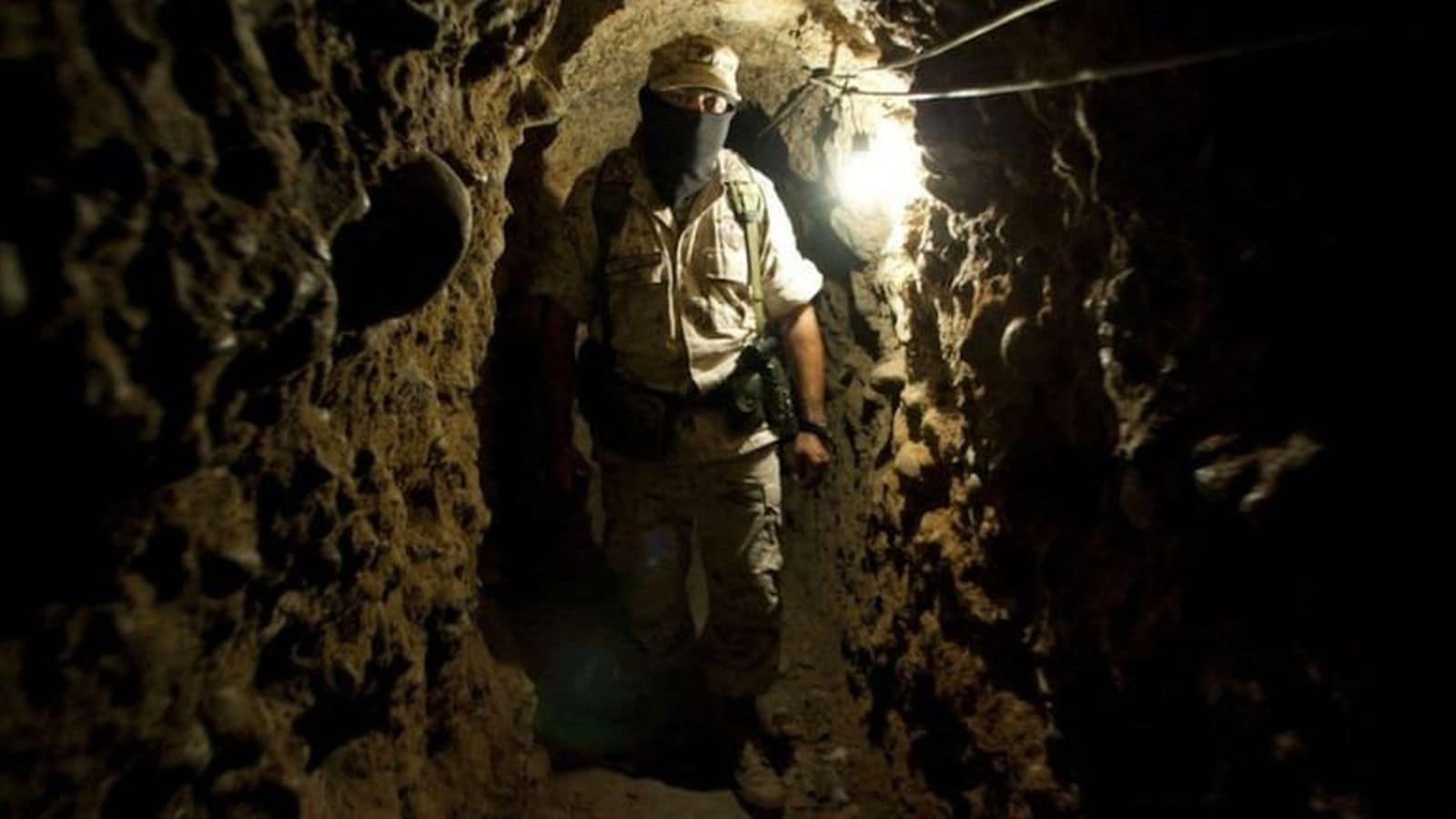
Viral media depicting individuals emerging from New York City’s subterranean utility networks highlights a critical, unquantified failure in municipal asset management and physical security architecture. While public discourse categorizes these incidents as cultural anomalies or internet pranks, a structural analysis reveals them as systematic breaches of critical infrastructure. Municipal subterranean networks—comprising subterranean transit, combined sewer systems, telecommunications conduits, and steam distribution lines—are high-hazard environments engineered strictly for controlled industrial access.
When unauthorized personnel breach these systems, they exploit systemic vulnerabilities in physical access control while introducing unpredictable liabilities into dense urban ecosystems. Quantifying this phenomenon requires moving past sensationalism to analyze the structural mechanics of utility access, the socio-economic drivers of unauthorized penetration, and the engineering limitations of municipal monitoring.
The Tripartite Network Architecture of Subterranean Vulnerability
Urban subterranean infrastructure is not a homogenous labyrinth; it is a highly segmented, multi-tiered utility ecosystem. Unauthorized access typically intersects three distinct engineering networks, each presenting unique structural hazards and security failures.
                  [MUNICIPAL SURFACE ACCESS]
                             │
         ┌───────────────────┼───────────────────┐
         ▼                   ▼                   ▼
┌─────────────────┐ ┌─────────────────┐ ┌─────────────────┐
│ Combined Sewer  │ │ Transit/Utility │ │ District Steam  │
│  Systems (CSS)  │ │    Conduits     │ │    Networks     │
├─────────────────┤ ├─────────────────┤ ├─────────────────┤
│ • Atmospheric   │ │ • High-Voltage  │ │ • Superheated   │
│   Toxicity      │ │   Electrocution │ │   Vapor (180°C) │
│ • Hydraulic     │ │ • Kinetic Rail  │ │ • Catastrophic  │
│   Surges        │ │   Impacts       │ │   Thermal Shock │
└─────────────────┘ └─────────────────┘ └─────────────────┘
1. Combined Sewer Systems (CSS)
Designed to collect rainwater runoff, domestic sewage, and industrial wastewater in a single pipe network, these systems represent the most frequent point of viral documentation. The structural hazard profile of a CSS includes:
- Atmospheric Toxicity: The biochemical degradation of organic matter generates a stratified layer of lethal gases, primarily hydrogen sulfide ($H_2S$), methane ($CH_4$), and carbon monoxide ($CO$), alongside severe oxygen depletion.
- Hydraulic Volatility: CSS volume is highly sensitive to real-time meteorological events. A localized precipitation event can trigger a rapid hydraulic surge, converting a walkable conduit into a pressurized, high-velocity fluid vector within minutes.
2. Transit and Telecommunication Conduits
Unlike the fluid dynamics of sewers, transit and utility tunnels function as high-energy kinetic and electrical corridors. Breaching these zones introduces variables such as high-voltage traction power systems (third rails carrying 600V to 750V DC) and structural clearance bottlenecks where kinetic impacts with rolling stock are statistically inevitable.
3. District Steam Distribution Networks
New York City features the largest commercial steam system globally, moving superheated vapor under high pressure to manage climate control across Manhattan. Conduits running parallel to or intersecting these lines present localized ambient temperatures exceeding 60°C, with the ever-present risk of pipe wall failure resulting in catastrophic thermal shock or immediate barotrauma to unauthorized occupants.
The Cost Function of Subterranean Penetration
The societal and economic externalities of unauthorized infrastructure access are rarely borne by the individuals executing the breach. Municipal operators face a complex cost function driven by three primary variables.
The Liability and Asset Protection Vector
When a civilian enters a subterranean utility asset, the asset manager’s operational posture shifts from passive distribution to active hazard mitigation. If an unauthorized individual is detected or suspected within a sector, transit authorities or utility operators must initiate emergency protocols.
This triggers an immediate containment sequence: power distribution grids are de-energized, rolling stock is braked across entire lines, or water treatment diversion gates are altered. The economic cost of a single 30-minute system shutdown on a major transit artery incurs hundreds of thousands of dollars in lost productivity, labor overtime, and cascading logistical delays across the surface network.
The Search and Rescue Burden
Extracting untrained personnel from confined spaces requires specialized municipal assets, specifically Technical Rescue Components (such as the FDNY Rescue Operations Command). These operations demand high resource allocation:
$$Resource\ Cost = (Personnel \times Specialized\ Equipment\ Hours) + Surface\ Traffic\ Disruption\ Cost$$
Because subterranean environments inherently degrade radio frequency propagation, standard communication arrays fail. Rescue teams must deploy tethered communication lines or specialized low-frequency arrays, extending the time-to-extraction and pulling elite rescue units away from surface-level emergencies.
Infrastructure Degradation and Vandalism
Unauthorized access frequently correlates with the degradation of physical assets. Intruders tampering with fiber-optic trunk lines, signaling relays, or environmental monitoring sensors introduce systemic risks. Even minor structural alterations—such as propping open a self-closing fire door or displacing a gritted drainage grate—compromise the fire separation boundaries and security perimeters engineered to protect the city above.
The Mechanics of Failure: Why Current Access Controls Fail
The proliferation of digital media showing individuals lifting manhole covers on public streets highlights a fundamental vulnerability in physical security engineering: the reliance on gravity as a primary security mechanism.
Historically, the security of subterranean access points relied on the sheer physical mass of the cast-iron manhole cover, typically weighing between 90 and 150 kilograms. The engineering assumption was that the requirement of specialized tools (manhole hooks) and significant physical exertion would deter casual intrusion.
This assumption fails in the modern urban environment due to decentralized access to information and tools. Low-cost, high-leverage mechanical tools are easily acquired, and online subcultures crowdsource the precise geographic coordinates of unsecured access points.
[Traditional Security Assumption] ──> High Mass (100kg) = High Security
                                            │
                                            ▼ (Failure Point)
[Modern Operational Reality]     ──> Low-Cost Mechanical Leverage + Crowdsourced Mapping
Furthermore, standard municipal utility access points lack electronic intrusion detection systems. While surface buildings utilize multi-layered biometric and card-access protocols, the entrance to the critical infrastructure beneath those buildings is frequently an unmonitored piece of cast iron flush with the asphalt. Installing electronic access monitoring across hundreds of thousands of utility access points presents severe capital expenditure and maintenance hurdles, as the chemical and moisture profiles of sewer environments rapidly corrode standard electronic components and disrupt battery arrays.
Typology of Subterranean Intruders
To develop effective mitigation strategies, municipal security analysts must categorize the distinct demographics driving this phenomenon. The motivation directly influences the point of entry and the level of structural risk assumed.
- Urban Explorers and Content Creators: Driven by the pursuit of digital capital and aesthetic documentation. They prioritize highly visual, structurally complex environments like abandoned transit stations or deep-bore storm tunnels. This group relies heavily on digital reconnaissance, mapping apps, and shared intelligence, making their access points predictable but highly visible to copycat actors.
- Vulnerable Populations Seeking Shelter: Chronically displaced individuals utilizing subterranean spaces for survival. They typically seek out static thermal environments, such as dry utility tunnels or spaces adjacent to steam lines. Their occupancy is long-term and stationary, creating distinct challenges for municipal outreach and sanitation teams.
- Malicious Actors and Saboteurs: The smallest but highest-risk category. These individuals target infrastructure nodes with the intent to disrupt service, steal valuable raw materials (such as copper wiring), or commit acts of eco-terrorism or industrial espionage. They exploit the systemic anonymity of the network to avoid surface-level surveillance.
Advanced Mitigation Frameworks for Municipal Operators
Addressing this vulnerability requires moving away from reactive police deployment toward a data-driven, hard-engineered infrastructure defense model.
Implementing Mechanical Impedance Upgrades
Municipalities must systematically replace standard gravity-held manhole covers with mechanical locking mechanisms in high-risk zones. This involves the deployment of cam-lock or bolt-down security covers that require proprietary, non-standard wrenches to disengage. Priority must be assigned using a critical node matrix:
| Priority Level | Node Characteristics | Target Infrastructure |
|---|---|---|
| Priority 1 (Critical) | High-density pedestrian zones intersecting transit or fiber trunks. | Midtown transit grates, financial district fiber vaults. |
| Priority 2 (High) | Combined sewer overflows adjacent to public rights-of-way. | Outfall structures, major intersection storm overflows. |
| Priority 3 (Medium) | Peripheral industrial sectors with lower pedestrian traffic. | Secondary storm water channels, isolated utility easements. |
Deploying Low-Power Environmental Sensor Networks
To solve the battery-drain and corrosion challenges of subterranean monitoring, operators should deploy specialized Internet of Things (IoT) sensors utilizing Long Range Wide Area Network (LoRaWAN) protocols. These sensors do not require continuous video streaming; instead, they monitor binary state changes:
- Optical Tamper Sensors: Trigger an alarm the moment ambient light enters a normally pitch-black conduit chamber, signaling a displaced cover.
- Acoustic/Vibration Sensors: Monitor the specific frequency of cast-iron impacts, distinguishing between vehicular traffic rolling over a cover and a manual lift attempt.
- Gas Micro-Sensors: Track sudden fluctuations in localized oxygen or toxic gas levels that occur when a shaft is opened to the surface air.
Algorithmic Content Monitoring
Law enforcement and infrastructure security teams must integrate automated scraping of open-source intelligence (OSINT). Digital media platforms serve as leading indicators of structural breaches. By algorithmically monitoring specific metadata, geofences, and keyword clusters associated with urban exploration subcultures, municipal authorities can identify newly compromised access points before they become systemic liabilities, allowing targeted physical reinforcement.
The Operational Reality
There is no economically viable scenario where every subterranean access point in a major metropolitan area can be rendered completely impenetrable. The sheer scale of legacy infrastructure dictates that vulnerability management, rather than absolute elimination, is the only achievable objective.
The ultimate defense of urban infrastructure relies on shifting the risk-reward calculus for potential intruders. By hardening highly connected central nodes, automating the detection of access point displacement, and aggressively prosecuting systematic breaches under critical infrastructure protection statutes, municipalities can degrade the viability of these subterranean vectors. Failing to transition from a legacy posture of passive gravity-based security to an active, sensor-driven defense model ensures that critical municipal lifelines will remain exposed to public exploitation and unpredictable operational shocks.