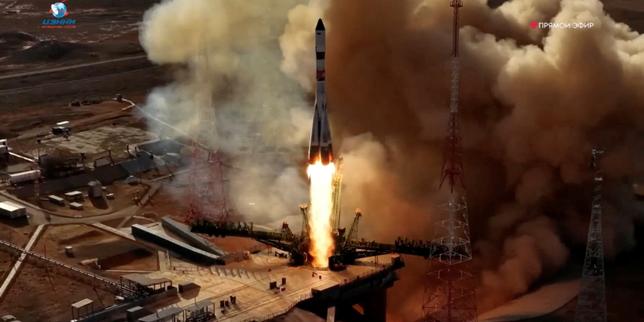
The Russian space program just breathed a massive sigh of relief. After years of technical delays and the literal wear and tear of decades of use, a Soyuz-2.1a rocket successfully blasted off from the newly repaired Site 31 at the Baikonur Cosmodrome. It wasn’t just another routine milk run to the International Space Station (ISS). This launch carried the Progress MS-26 cargo ship, but more importantly, it carried the weight of Moscow’s entire orbital strategy. If this launch had failed, or if the pad hadn't held up, we’d be looking at a very different conversation about how much longer the ISS can actually stay inhabited.
You’ve probably heard the rumors that Roscosmos is ready to pack its bags and build its own station. While that makes for a great headline, the reality on the ground in Kazakhstan tells a more complicated story. Russia needs the ISS as much as the ISS needs Russia. This successful mission from a refurbished launch pad proves that, despite the sanctions and the aging infrastructure, the Soyuz remains the most resilient workhorse in the sky. It's a blunt instrument, but it works when everything else is falling apart. Don't forget to check out our recent post on this related article.
The high stakes of Site 31
Site 31 isn't just some concrete slab in the desert. It’s the backbone of Russian crewed and cargo missions now that the legendary "Gagarin’s Start" (Site 1) is effectively a museum piece. The repairs to this pad were extensive. We’re talking about massive overhauls to the telemetry systems, the fueling lines, and the physical structure that has to withstand the incredible heat of a Soyuz liftoff.
When you see a rocket go up, you’re seeing the end of a long, stressful chain of logistics. For Russia, fixing Baikonur was a matter of survival. They don't have the luxury of switching to a different provider like NASA does with SpaceX or Boeing. If Baikonur fails, the Russian segment of the ISS goes dark. It’s that simple. The fact that they pulled this off without a hitch shows that the technical expertise hasn't totally evaporated, even if the budget has seen better days. If you want more about the context here, TechCrunch offers an excellent breakdown.
Why the ISS still depends on these cargo runs
Progress MS-26 isn't just delivering snacks and clean socks to the cosmonauts. It’s delivering fuel. One of the most critical roles the Russian segment plays is "re-boosting" the station. The ISS is technically in a very thin layer of atmosphere. Over time, that tiny bit of air resistance drags the station down. If a Progress ship doesn't show up periodically to fire its engines and push the station back up into a higher orbit, the whole $150 billion laboratory eventually becomes a very expensive shooting star.
- Fuel transfers: Progress ships pump propellant directly into the Zvezda module's tanks.
- Oxygen generation: They carry replacement parts for the Elektron system which keeps the air breathable.
- Scientific gear: New experiments that keep the station relevant in 2026.
People often ask why we don't just use the Dragon or the Starliner for everything. Honestly, it's about the plumbing. The ISS was built with a specific Russian design for its propulsion. You can't just plug a Tesla battery into a vintage diesel engine and expect it to run. We are stuck with this partnership until the station is decommissioned, likely around 2030.
Breaking down the Moscow space strategy
Moscows's plan is basically a high-stakes game of "fake it till you make it." They talk a big game about the Russian Orbital Service Station (ROSS), but that costs billions they don't necessarily have right now. By fixing up Baikonur and proving they can still hit their marks with the Soyuz-2.1a, they’re buying themselves time.
It’s a smart move. If they can keep the ISS missions running smoothly, they remain an indispensable partner in the eyes of the international community. It gives them leverage. It also keeps their engineers busy and their factories running. Without these regular launches, the institutional knowledge of how to build a reliable rocket would vanish within a generation. You don't just "restart" a space program after a five-year gap. You keep the engines hot or you lose the capability forever.
The technical reality of the Soyuz 2.1a
The Soyuz-2.1a is a digital upgrade of a Cold War classic. It replaced the old analog flight control systems, which allowed for much more precise injections into orbit. It’s more efficient. It’s safer. But it’s still essentially the same architecture that sent Sputnik up. There’s a beauty in that simplicity. While Western companies are obsessed with reusability and flashy touchscreens, the Russians are focused on a machine that can launch in a blizzard and still deliver its cargo within a few centimeters of the target.
What this means for the next two years
Between now and 2028, expect a frantic pace of launches from Baikonur. Russia has to clear a backlog of missions and prove that Site 31 can handle the cadence. We’re going to see more "fast-track" docking procedures where the cargo ships reach the station in just a few hours rather than days.
Don't buy the narrative that Russia is "done" with space. They are pivoting. They are leaning into their strengths as a low-cost, high-reliability transport service while they try to figure out their long-term orbital home. If you're tracking the space industry, keep your eyes on the frequency of these Progress launches. If they stay on schedule, the ISS is safe. If we start seeing delays or "technical anomalies" at Site 31 again, it’s time to start worrying about the de-orbit plan.
The next step for anyone following this is to watch the docking telemetry for the MS-26. It’s the final test of the mission's success. Check the official Roscosmos or NASA feeds for the automated docking sequence. It tells you everything you need to know about the health of the station's Russian segment.



/this-little-piggie----157402234-5c8badbac9e77c0001ac181f.jpg)