The departure of Tim Cook as CEO of Apple Inc. marks the completion of the most successful leadership transition in corporate history, shifting the organization from a founder-led product lab to an optimized global logistics and services engine. Under Cook, Apple’s market capitalization scaled from approximately $350 billion in 2011 to peak valuations exceeding $3.5 trillion. This growth was not a byproduct of visionary serendipity but the result of a rigorous operational framework designed to extract maximum lifetime value from a closed ecosystem. The impending transition to a successor—likely Jeff Williams or a high-level lieutenant within the hardware or services divisions—will test whether the "Apple Operating System" of management can survive without its chief architect.
The Operational Triad of the Cook Era
To understand the vacuum Cook leaves behind, one must define the three structural pillars he used to outpace the broader technology market. Meanwhile, you can find similar developments here: The $166 Billion Fiscal Correction Quantifying the Aftermath of the Supreme Court Ruling on Reciprocal Tariffs.
- Supply Chain weaponization: Cook transformed inventory from a liability into a strategic moat. By utilizing "Just-in-Time" manufacturing and aggressive vertical integration (specifically the transition to Apple Silicon), he achieved industry-leading gross margins.
- The Services Pivot: Recognizing the saturation of the global smartphone market, Cook redirected capital toward high-margin recurring revenue. Services (iCloud, App Store, Apple Music) now account for over 20% of total revenue, carrying gross margins significantly higher than hardware.
- Capital Return Purity: Through massive share buybacks and consistent dividend increases, Cook engineered a financial environment where the stock price could appreciate even during periods of stagnant unit growth.
The Efficiency Trap and the Innovation Deficit
A primary critique of the Cook administration is the perceived "innovation plateau." While Steve Jobs focused on the creation of new product categories (Mac, iPod, iPhone), Cook focused on the iteration of existing ones. This created a specific tension within Apple’s R&D department. The Apple Vision Pro and the discontinued Apple Car project represent the difficulty of finding a "Fourth Act" capable of moving the needle for a company of Apple's scale.
The successor faces a fundamental mathematical constraint: Law of Large Numbers. To grow revenue by 10%, a $400 billion company must find $40 billion in new sales—roughly the size of a Fortune 100 company—every single year. To understand the bigger picture, we recommend the detailed analysis by Investopedia.
The Replacement Architecture
Apple’s Board of Directors utilizes a "Cold Standby" succession model. Jeff Williams, the Chief Operating Officer, is the functional mirror of Tim Cook. Like Cook, Williams managed the supply chain and oversaw the development of the Apple Watch, proving he can shepherd a new category from concept to a multi-billion dollar business. However, his age suggests a "bridge" presidency rather than a multi-decade tenure.
Internal candidates such as John Ternus (Hardware Engineering) represent the younger tier of leadership. Ternus has become the face of the iPad and Mac transitions to M-series chips. The choice between Williams and Ternus indicates whether the Board prioritizes short-term operational stability or a long-term technical reset.
Geopolitical Friction and Manufacturing Realignment
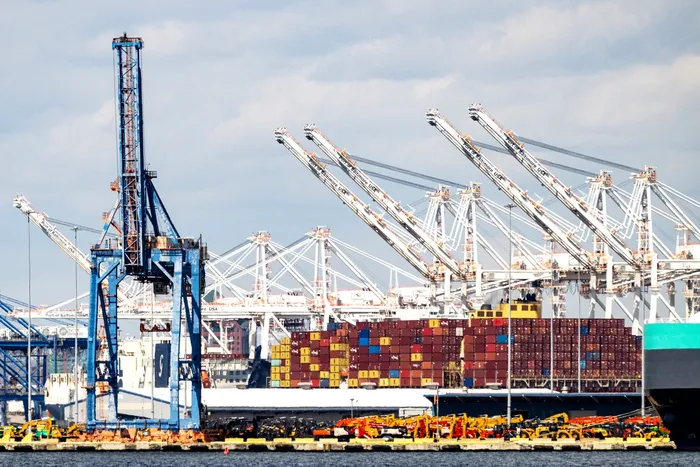
The most significant "hidden" cost of the Cook era is Apple's deep dependency on Chinese manufacturing. Cook spent twenty years building a friction-less assembly line in the Zhengzhou region. The next CEO inherits the "China Plus One" strategy, which involves the arduous process of migrating production to India and Vietnam.
This migration introduces three specific variables that will compress margins:
- Infrastructure Deficits: Unlike the integrated hubs in Shenzhen, Indian manufacturing hubs currently face fragmented logistics networks.
- Labor Proficiency Curves: The specialized skill sets required for high-precision assembly take years to mature, leading to higher initial defect rates (Yield Loss).
- Regulatory Variance: Navigating the bureaucratic layers of the Indian government requires a different diplomatic skillset than the one Cook refined with the CCP.
The Regulatory War on the Walled Garden
The "Walled Garden" business model is currently under existential threat from the Digital Markets Act (DMA) in Europe and Department of Justice (DOJ) antitrust suits in the United States. The core of Apple’s profitability—the 30% "Apple Tax" on digital goods—is being unbundled by court order.
The next CEO cannot simply be an operator; they must be a litigator and a diplomat. The strategic pivot will likely involve "Malicious Compliance"—obeying the letter of the law while maintaining the economic moats of the ecosystem through secondary fees (e.g., the Core Technology Fee in the EU).
Valuing the Successor’s Risk Profile
Investors typically apply a "Key Man Discount" when a long-term CEO departs. However, Apple is no longer a "Key Man" company; it is a "Key System" company. The risk is not that a new CEO will make a poor product decision, but that they will fail to maintain the delicate balance between the following forces:
- R&D vs. Buybacks: Apple currently spends roughly $30 billion on R&D and over $70 billion on buybacks. If the "next big thing" requires a $50 billion capital expenditure, the market’s reaction to reduced buybacks could trigger a massive de-rating of the stock.
- Privacy as a Product: Cook successfully marketed privacy as a luxury feature, which also served to handicap competitors' advertising models (App Tracking Transparency). A successor must ensure this narrative remains credible as Apple expands its own advertising business.
- AI Integration (Apple Intelligence): Apple is currently a laggard in generative AI. The successor must integrate LLMs into the OS layer without compromising the "on-device" privacy ethos that defines the brand. Failure here leads to the "Nokia Moment"—where the hardware remains excellent, but the software becomes irrelevant.
The Post-Cook Mandate
The strategic priority for the incoming CEO is the aggressive expansion into the "Ambient Computing" and "Health Data" sectors. iPhone hardware has reached its terminal form factor. The growth frontier lies in the monetization of biometric data. By transforming the Apple Watch and future wearables into essential medical devices, Apple can move from a discretionary consumer spend to a non-discretionary healthcare spend.
This shift requires the CEO to negotiate with insurance providers and healthcare systems, a pivot from retail to institutional sales. The candidate who demonstrates the ability to navigate this regulatory and institutional complexity, while maintaining the supply chain's 40%+ gross margins, will be the one to lead the next decade.
The board must ignore the "Product Visionary" archetype. Apple does not need another Steve Jobs; it needs a ruthless optimizer who can defend a $3 trillion treasury from regulatory erosion while slowly migrating the production base out of the crosshairs of a potential US-China conflict. The era of the "Aha!" moment is over. The era of the "Basis Point" has arrived. Apple’s next leader will be judged not by the magic of their keynotes, but by the resilience of their margin.