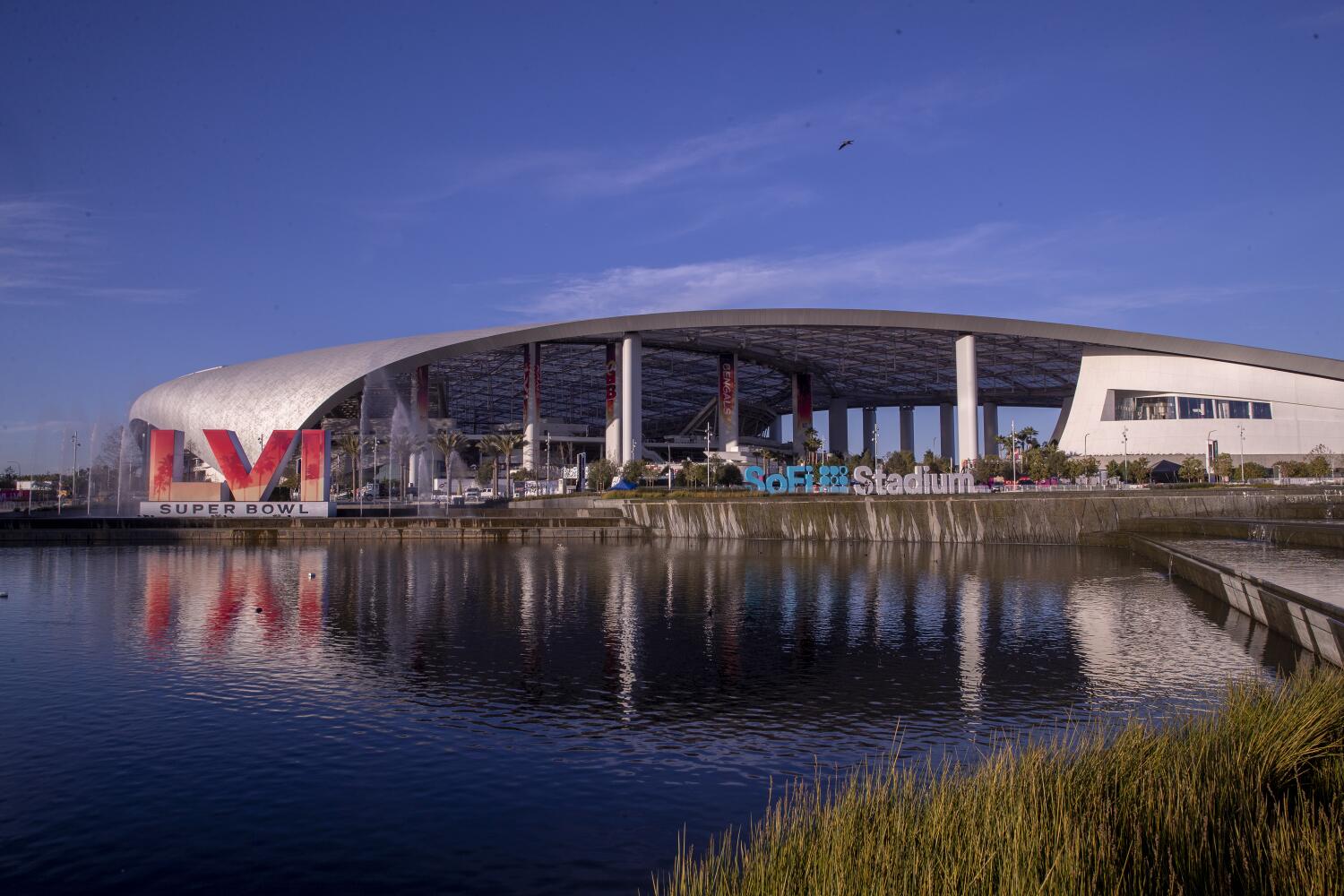
Super Bowl LXI represents the apex of North American sports commerce, scheduled to occur on February 14, 2027, at SoFi Stadium in Inglewood, California. This event is not merely a championship game but a high-density logistical operation requiring the synchronization of urban infrastructure, broadcast technology, and global capital. The selection of Los Angeles as the host site for the second time in five years underscores a shift in NFL strategy toward high-capacity, "destination" stadiums that offer vertical integration of entertainment and commercial space.
The Infrastructure Framework: SoFi Stadium Analysis
SoFi Stadium operates on a scale that fundamentally alters the Super Bowl hosting model. Unlike traditional open-air or fixed-roof stadiums, the venue utilizes a translucent ETFE (Ethylene Tetrafluoroethylene) canopy that creates an indoor-outdoor hybrid environment. This architectural choice mitigates meteorological risk—a primary variable in NFL site selection—while maintaining the aesthetic of the Southern California climate.
The stadium’s technical capacity for Super Bowl LXI will likely be configured for 70,000 to 100,000 spectators. The fluidity of this number depends on the conversion of "standing room only" zones and the expansion of the "Infinity Screen" by Samsung, a 70,000-square-foot, dual-sided 4K LED display. For analysts, the stadium’s design represents a solution to the "dead zone" problem in large-scale venues; its open-ended bowls allow for natural airflow and light, reducing the energy load required for HVAC systems during a peak-occupancy event.
Geographic and Temporal Constraints
The February 14 date aligns with the NFL’s 17-game regular-season structure, which pushed the championship game into the second weekend of February. This creates a specific intersection with the hospitality industry, as Super Bowl LXI will coincide with Valentine’s Day. This temporal overlap introduces a "congestion pricing" model for local services.
- Regional Saturation: The Los Angeles basin must absorb an estimated 150,000 to 200,000 out-of-state visitors.
- Aviation Logistics: Fixed-base operators (FBOs) at LAX, Van Nuys, and Long Beach airports will reach peak capacity for private aviation slots 72 hours prior to kickoff.
- Transit Bottlenecks: Despite the multi-billion dollar investment in the LA Metro, the Inglewood site remains heavily reliant on shuttle systems and ride-share integration, creating a significant "last-mile" friction point for attendees.
The Economic Multiplier vs. Net Leakage
Economic impact reports for Super Bowls often cite figures between $500 million and $1 billion. A rigorous analysis must distinguish between gross economic activity and net regional benefit.
- The Substitution Effect: Local residents often curtail their spending or leave the area during the event window to avoid congestion. This offsets a portion of the incoming tourist revenue.
- Capital Leakage: A significant percentage of revenue generated during the Super Bowl—specifically hotel room nights and corporate sponsorships—flows back to national corporate headquarters rather than remaining in the Inglewood or Los Angeles economy.
- Public Safety Costs: The municipal burden involves massive deployment of the LAPD, LASD, and federal agencies. While the NFL provides a host committee grant, the actual cost of security and infrastructure wear-and-tear often approaches or exceeds the direct tax revenue generated from ticket sales.
The value proposition for Los Angeles rests not in the immediate cash flow, but in the long-term appreciation of its "Sports Capital" branding. Super Bowl LXI serves as a high-stakes rehearsal for the 2028 Summer Olympics, allowing the city to stress-test its transportation and security protocols under global scrutiny.
Broadcast Dynamics and Media Valuation
The 2027 broadcast rights fall to ABC/ESPN, marking the first time the network has aired the Super Bowl since 2006. This transition is critical for the Disney ecosystem. The broadcast will serve as a pilot for integrated streaming-linear distribution models.
The cost of a 30-second commercial spot is projected to exceed $7.5 million, driven by two primary factors:
- The Scarcity of Live Aggregation: As linear television viewership fragmentizes, the Super Bowl remains the only remaining vehicle for simultaneous mass-market reach.
- Inventory Control: The NFL maintains strict control over ad categories, ensuring that high-margin sectors (automotive, beverage, fintech) bid against each other for limited slots.
Risk Assessment and Contingency Planning
The "Home Field Advantage" variable has become a recurring theme in recent Super Bowls, with the Tampa Bay Buccaneers and Los Angeles Rams both winning championships in their home stadiums. For Super Bowl LXI, the probability of the Rams or Chargers competing in their home venue introduces a unique security and ticketing challenge. A "home" Super Bowl typically increases secondary market ticket prices by 15-25% due to the reduction in travel costs for the local fan base.
Operational Risks include:
- Cybersecurity: The stadium’s reliance on integrated digital systems—from mobile ticketing to 5G-enabled fan experiences—creates a wide attack surface for state-sponsored or independent actors.
- Grid Stability: The energy demand of a Super Bowl broadcast is immense. SoFi Stadium’s integration with the local power grid requires redundant failsafes to prevent a repeat of the Super Bowl XLVII blackout.
The NFL’s site selection process has evolved from a reward system for owners into a data-driven search for "Tier 1" infrastructure. Los Angeles satisfies every metric: high-end hospitality inventory, a state-of-the-art venue, and a media-centric time zone that maximizes East Coast prime-time viewing while maintaining West Coast afternoon sunlight for the visual broadcast.
To capitalize on the Super Bowl LXI window, stakeholders must pivot from general hospitality to specialized logistics. For corporate entities, this means securing aviation and lodging contracts 18 months in advance to bypass the February 14 price surge. For municipal planners, the focus must be on the "Inglewood Transit Connector" to solve the inherent bottleneck of the stadium’s geography. The success of the event will be measured not by the final score, but by the throughput efficiency of 100,000 people in a 3.5-mile radius.