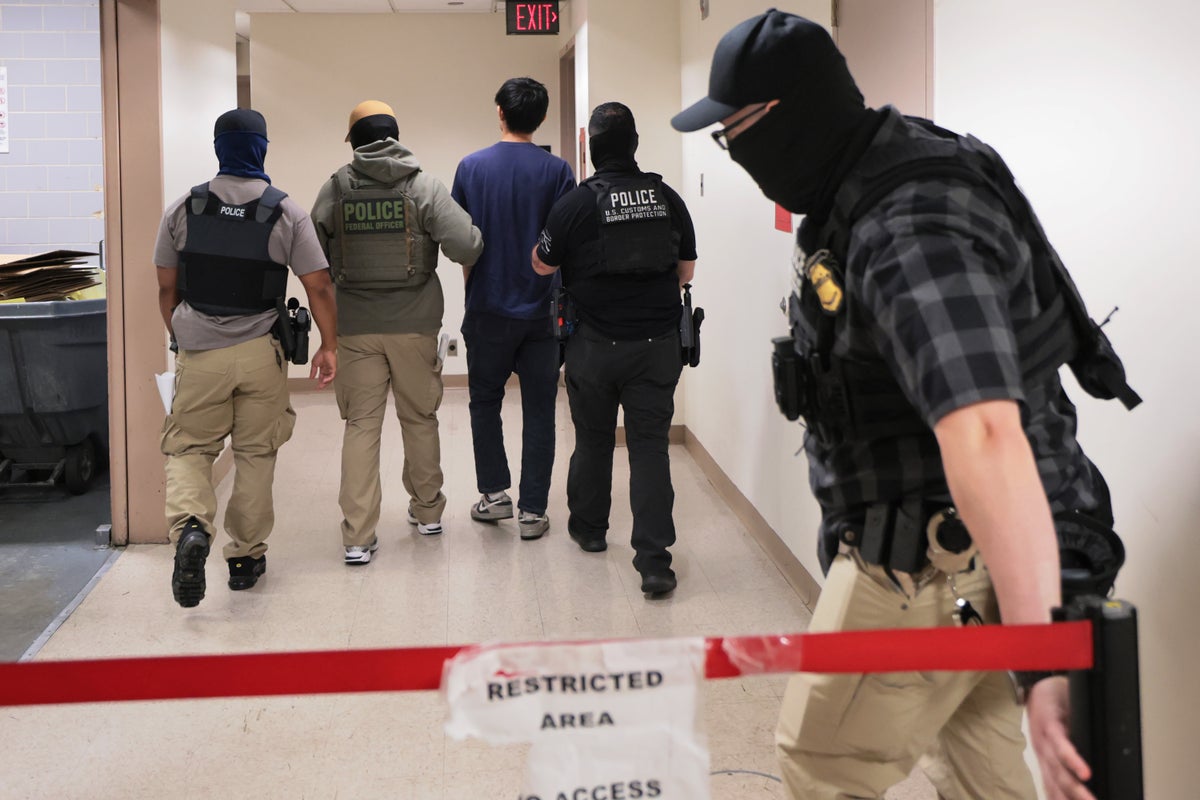
The federal government wants you to believe that immigration enforcement is a finely tuned machine. They print reports, share statistics, and talk about border security with clinical precision. But behind the closed doors of Lower Manhattan, the people tasked with running this machine are panicking. Their own internal communications show a reality that looks less like a government operation and more like a public health disaster.
A federal bench trial before Senior U.S. District Judge Lewis Kaplan recently exposed the internal communications of U.S. Immigration and Customs Enforcement (ICE) officials. The emails and text messages aren't sanitized for public consumption. They are raw, frantic, and filled with genuine horror about the conditions inside the holding facility on the 10th floor of 26 Federal Plaza. You might also find this connected coverage insightful: The Mechanics of US Iran Backchannel Diplomacy Quantifying the Friction Points in Asymmetric Negotiations.
When the people running the jail are calling the situation "insane" and "gross," the standard bureaucratic denials simply don't hold weight anymore.
The Reality of 26 Federal Plaza
The holding facility at 26 Federal Plaza isn't a long-term detention center, at least not on paper. It consists of four windowless cells designed to hold people temporarily before they go to immigration court or get transferred to larger facilities. But during an immigration enforcement push, ICE packed these rooms far beyond what they were built to handle. As reported in recent reports by The Washington Post, the effects are widespread.
Immigration advocates filed a class-action lawsuit on behalf of detainees, exposing how a space meant for short stays turned into a multi-day trap. Legal filings show that some individuals stayed in these cramped quarters for more than 20 days. One person spent over a month inside.
The physical reality of the facility includes:
- Zero natural light: Four windowless cells rely entirely on harsh fluorescent lighting that remains on 24 hours a day, making sleep nearly impossible.
- Extreme overcrowding: Detainees were packed in at seven to eight times the room's legal capacity, leaving no physical space for people to lie down on the floor.
- No basic plumbing infrastructure: The cells lack showers and laundry access, forcing detainees to use the shared cell toilets to wash their bodies.
During the trial, ICE’s New York Deputy Field Office Director William Joyce downplayed the severity. He testified that the facility was "not quite as crowded as a subway car" but admitted it was more full than he wanted. Yet, his subordinates were singing a completely different tune in their private logs.
What the Leaked Emails Reveal
The most damning evidence didn't come from the plaintiffs. It came directly from the internal email accounts of the ICE administrators managing the daily chaos.
"This is insane," one ICE employee wrote bluntly to a colleague in an email presented to the federal court. "We desperately need to get some detainees out of 26 Fed."
The panic wasn't just about a lack of physical space. The crowding turned the 10th floor into a breeding ground for disease. In another internal email from Nancy Zanello, an assistant field office director for ICE in New York, the medical reality of the facility becomes terrifyingly clear.
"This week has been one gross contagion after another," Zanello wrote to colleagues.
She explicitly noted the presence of highly infectious diseases, including a detainee with suspected monkeypox. Her emails also detailed multiple medical emergencies inside the cells where staff had to deal with detainees experiencing cardiac events and severe seizures due to the stress and poor conditions.
Misleading Data and Judicial Anger
The defense put forward by the Department of Homeland Security didn't sit well with Judge Kaplan. The government submitted declarations claiming that the holding rooms averaged only eight people at a time during the peak summer months.
The agency’s own internal logs told a different story. The actual daily logs showed numbers regularly exceeding 20 people per cell, directly contradicting the official sworn statements.
Judge Kaplan didn't hold back. He openly called the government's official declaration "egregiously misleading" during the proceedings, demanding to know how the defense could justify the blatant discrepancy between their public numbers and their internal logbooks.
The court had already issued a temporary order requiring ICE to cap its capacity, provide basic hygiene supplies, give detainees clean bedding mats, and set up a private space for legal counsel. The trial revealed that ICE took months to comply with the order to provide a private phone area, only acting after attorneys threatened the agency with contempt of court.
The Broader Impact on New York Immigration Courts
This breakdown on the 10th floor of 26 Federal Plaza isn't happening in a vacuum. It's the direct result of a massive surge in local enforcement velocity. A recent multi-agency audit from the New York City Mayor's office revealed that ICE arrests in the metropolitan area spiked by 71% over a 14-month period, totaling 5,567 apprehensions.
With thousands of new detainees entering the local pipeline, the system has choked. The surge has completely overwhelmed the city's key immigration battlegrounds, including 26 Federal Plaza and the adult detainee dockets over at 201 Varick Street.
To cope with the self-inflicted bottleneck, federal authorities have ramped up out-of-state transfers. Rather than dealing with the lack of space locally, ICE transferred more than a thousand individuals from New York courts to remote jails in southern states like Texas and Louisiana. This tactic effectively severs detainees from their families and their New York-based legal defense teams, making a fair trial nearly impossible.
Real Next Steps for Reform
Fixing a broken detention infrastructure requires moving past empty political rhetoric and implementing immediate, structural changes to ensure accountability.
First, independent oversight must be established. The fact that ICE submitted "egregiously misleading" numbers to a federal judge proves the agency cannot be trusted to monitor itself. A permanent, third-party medical and operational auditor needs access to 26 Federal Plaza to verify daily occupancy limits and sanitary conditions.
Second, the system needs to mandate the immediate release or rapid transfer of non-violent detainees when local capacity thresholds are breached. Holding individuals for weeks in short-term legal screening rooms violates basic operational standards and human decency. If the government cannot provide a bed, a shower, and medical safety, it shouldn't hold the individual.
Finally, New York civic leaders and legal advocacy groups must push for a permanent injunction that codifies Judge Kaplan's temporary restrictions into binding law. Public pressure and legal accountability are the only mechanisms that have successfully forced the federal apparatus to change its behavior.