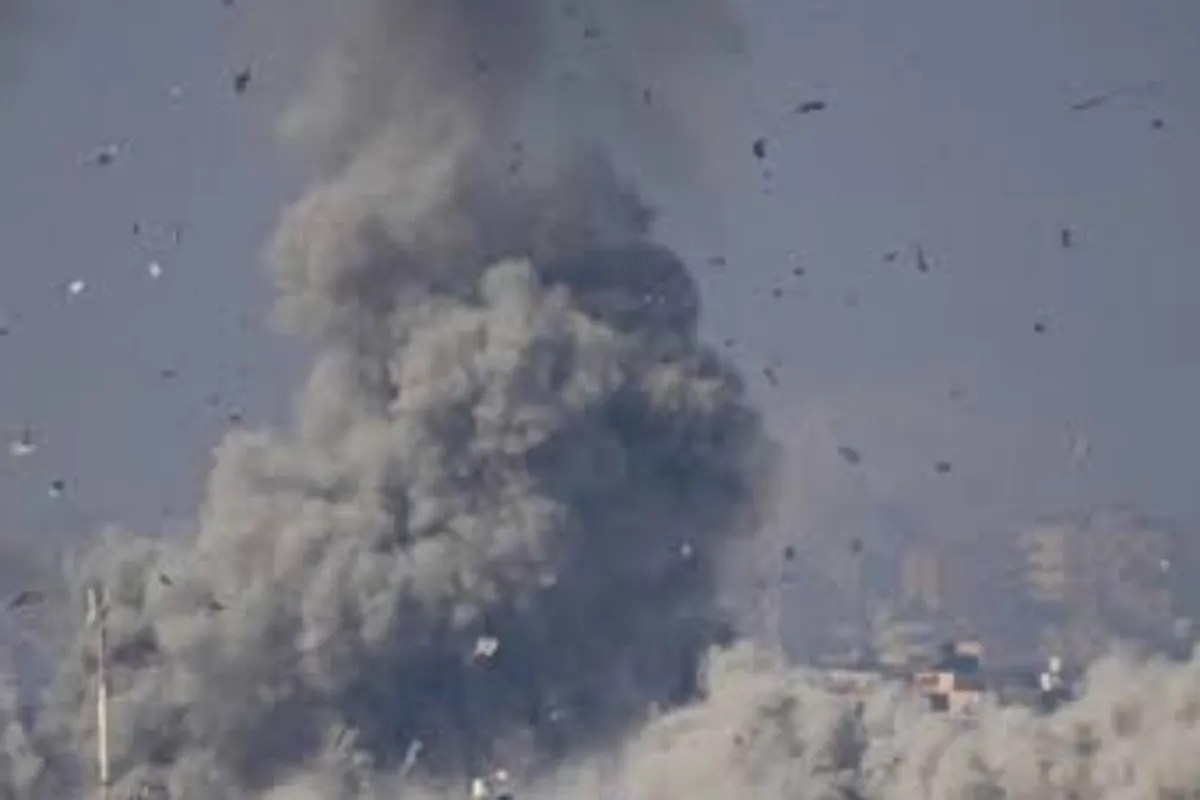
Every time a headline flashes across the screen about another high-ranking militant accountant or finance chief meeting their end in a precision strike, the mainstream media treats it like a championship game-winning touchdown. The narrative writes itself with lazy predictability. Take out the bean counter, choke the cash flow, and watch the administrative machinery collapse under its own weight. It sounds neat. It looks clean on a tactical briefing slide. And it is entirely, dangerously wrong.
I have watched strategists fall for this accounting fallacy for decades across multiple asymmetric conflicts. The core misconception is that insurgent networks operate like Fortune 500 corporations, where eliminating the chief financial officer freezes payroll, halts operations, and sends the board scrambling for forensic auditors. That framework is a fantasy. Hamas is not a traditional state entity with centralized ledgers, bloated pensions, and rigid corporate governance. It is a decentralized, hyper-resilient hybrid organism designed specifically to absorb high-value decapitation strikes without missing a beat.
When you take out a finance chief, you are not destroying the financial apparatus. You are simply forcing a structural evolution that was likely already underway.
The Myth of the Bottleneck
The conventional wisdom argues that modern warfare is won by dismantling logistics and financial pipelines. Cut off the funds, and the weapons stop flowing. But this assumes that financial management in an underground asymmetric network relies on wire transfers, SWIFT codes, and physical bank branches.
In reality, funding streams for organizations like Hamas are aggressively diversified, fragmented, and decentralized by design. They operate through sprawling webs of cryptocurrency wallets, underground hawala networks operating across multiple borders, shell companies masking real estate portfolios in friendly or indifferent jurisdictions, and direct cash infusions smuggled through complex trade networks.
Imagine a scenario where a multinational corporation relies on a single chief financial officer to sign off on every budget line. If that person disappears, operations stall. Now, imagine a decentralized syndicate where every operational cell acts as its own autonomous financial node. In this environment, the finance chief is less of a corporate gatekeeper and more of a high-level coordinator who can be replaced by a mid-level lieutenant within forty-eight hours.
By celebrating the elimination of administrative figureheads as strategic victories, analysts confuse tactical motion with strategic progress. You can eliminate every single person who holds the title of finance chief, and the capital will still find its way through the cracks because the underlying demand for illicit liquidity meets a supply chain engineered for redundancy.
The Asymmetric Advantage of Decentralization
To understand why traditional military strikes fail to cripple insurgent administration, we have to look at the mechanics of network theory. Centralized hierarchies are fragile because they have a single point of failure. Cut off the head, and the body flails.
Insurgencies evolved past this vulnerability decades ago. They operate on distributed network models, similar to peer-to-peer file sharing or resilient cybersecurity infrastructure. Every node possesses local autonomy. When a node is targeted and destroyed, the surrounding nodes absorb its functions dynamically.
What happens when an air strike takes out a finance minister? The immediate short-term disruption is real, but the long-term adaptive response is terrifyingly efficient. Decentralization means that lower-tier operatives already understand the protocols for shifting funds, establishing new communication channels, and hiding assets. The system self-heals because it was built from the ground up to expect attrition at the leadership tier.
We are measuring success by counting dead bureaucrats while ignoring the structural adaptability of the network itself. Every time a high-profile target is eliminated, the organization gains valuable stress-testing data on its own security gaps, patching them faster than external intelligence agencies can map them.
The Cost of Strategic Comfort
Why do governments and media outlets cling to the illusion of financial decapitation? Because it offers the comfort of quantifiable metrics in an unquantifiable war.
It is easy to release a press statement claiming a critical blow was dealt. It satisfies domestic audiences looking for tangible milestones. It provides a clean narrative arc for evening news broadcasts. War is chaotic, messy, and deeply frustrating, so military PR machines naturally gravitate toward enemy casualty counts and leadership titles as proxies for victory.
However, running a war based on what feels good to report rather than how asymmetric systems actually function is a recipe for endless attrition. When you celebrate the death of a finance chief, you are essentially cheering for the enemy to upgrade their security architecture. You are providing them with the exact catalyst they need to purge inefficiencies, weed out compromised personnel, and transition to even harder-to-track financial mechanisms.
True strategic disruption requires choking off the systemic dependencies that allow an insurgency to root itself in a civilian population in the first place—a task so politically difficult and operationally complex that military planners prefer the dopamine hit of a precision airstrike instead.
Stop looking at the org chart. The org chart is an illusion. The real war is being fought in the dark corners of decentralized logistics, where a dead accountant is just a placeholder for the next one in line.