The air in the arrivals hall at Pearson International is always thick with a specific kind of kinetic energy. It is the scent of jet fuel, overpriced coffee, and the desperate, crushing hope of reunions. For months, that air felt different for a specific subset of travelers. It felt heavy. It felt watched.
To understand the diplomatic frost that settled between Ottawa and New Delhi, you have to look past the podiums and the prepared statements. You have to look at the man sitting in a suburban living room in Surrey or Brampton, scrolling through his phone, wondering if a social media post from five years ago might suddenly make him a person of interest. You have to feel the hesitation of a grandmother in Punjab, clutching a visa application, terrified that the bridge between her and her grandchildren has been burned by men in suits she will never meet.
Politics is rarely about the handshake. It is about the space between the hands. For the last year, that space was a chasm filled with accusations of extrajudicial plots and the cold machinery of state-sponsored surveillance. But today, the wind has shifted.
A senior Indian official, speaking on the eve of a high-stakes prime ministerial visit, has signaled a quiet, seismic retreat. The message is clear: the targeting of Canadians on Canadian soil has stopped. The "intelligence activities" that sent a shiver through the diaspora have been recalibrated, or perhaps, shelved entirely.
Peace. Finally.
But peace in diplomacy is never a switch flipped in a dark room. It is a slow, agonizing dawn.
Consider a hypothetical student named Arjun. He arrived in Toronto with two suitcases and a mountain of debt, his entire village’s expectations resting on his narrow shoulders. For Arjun, the headlines weren't just "news." They were a threat to his status, his safety, and his ability to see his mother again. When the Canadian government alleged that Indian agents were involved in the killing of a Canadian citizen, Arjun didn't see a geopolitical chess move. He saw a target painted on his community. He saw neighbors looking at him differently. He saw the spectral hand of a distant government reaching across an ocean to disrupt his new life.
This is the "invisible stake" of international relations. When two G20 nations square off, the collateral damage isn't measured in dollars or trade tariffs first. It is measured in sleep lost. It is measured in the silence of people who used to speak freely.
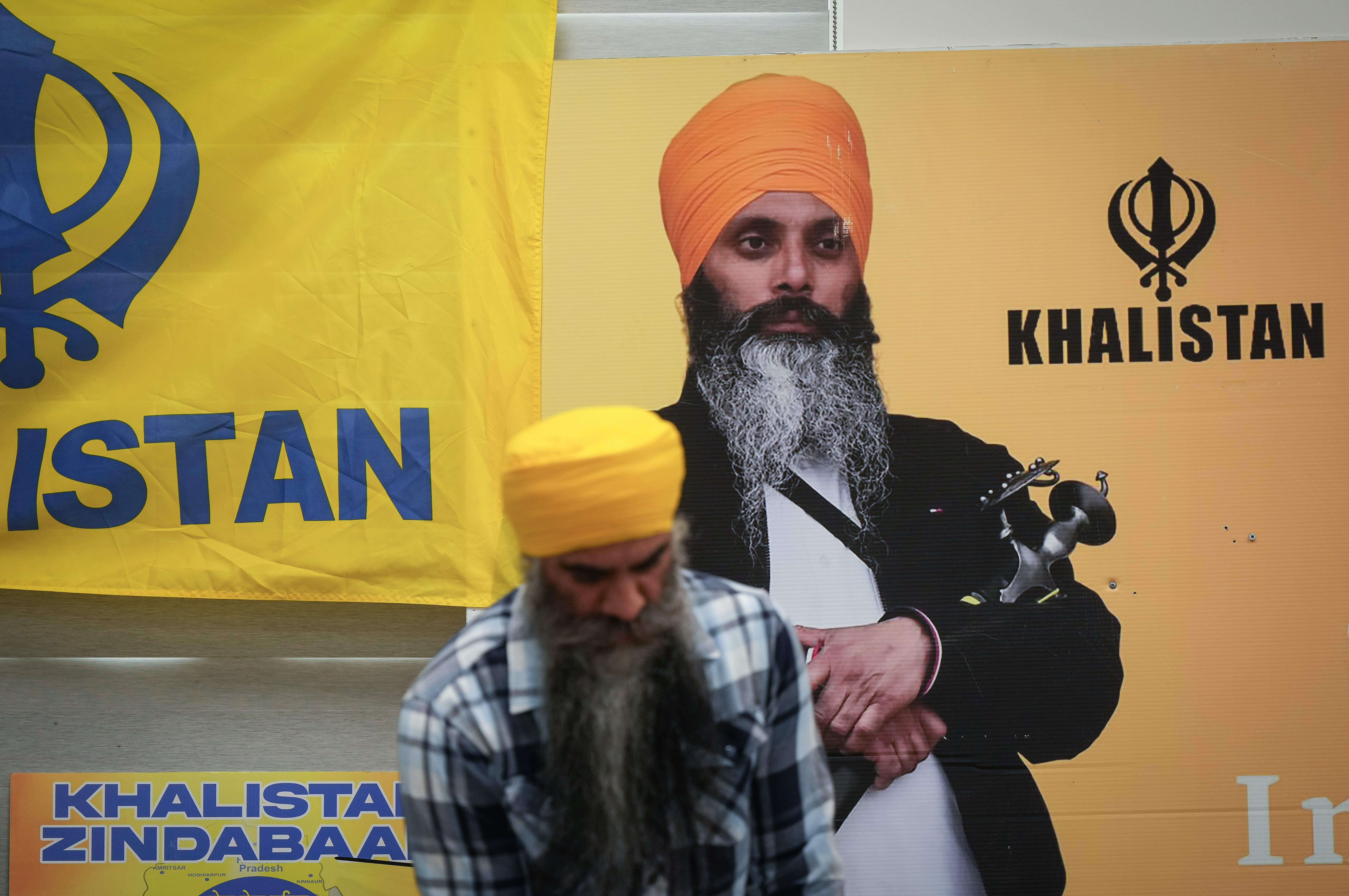
The conflict began with a thunderclap. The assassination of Hardeep Singh Nijjar in British Columbia wasn't just a crime; it was an affront to sovereignty that Canada could not ignore. Prime Minister Justin Trudeau’s public accusation set off a cycle of retaliation: expelled diplomats, suspended visa services, and a rhetoric that grew sharper by the day. India’s response was a wall of indignant denial, coupled with a counter-accusation that Canada had become a "safe haven" for extremists.
For a while, it seemed the relationship was headed for a permanent freeze. The mechanics of the two nations began to grind to a halt. Families were split. Business deals vanished into the ether. The "Living Bridge"—that beautiful, poetic term for the 1.8 million people of Indian heritage who call Canada home—started to look more like a crumbling ruin.
Then, the back channels began to hum.
Diplomacy is often the art of finding a way to say "my mistake" without ever using those words. The shift we are seeing now isn't an admission of guilt. It is a pragmatic pivot. As the Prime Minister prepares for this upcoming visit, the "senior official" acts as the scout, clearing the brush so the leaders don't trip. By signaling that Canadians are no longer being targeted, India is offering a graceful exit from the hostility. They are indicating that the "aggressive" phase of their intelligence gathering has served its purpose—or proved too costly to continue.
Why now?
Money talks, but stability screams. Both nations realized they were holding a hot coal, waiting for the other to get burned, only to find their own palms blistering. Canada needs the labor, the students, and the strategic partnership in the Indo-Pacific. India needs the Canadian pension fund investments and the global legitimacy that comes with being a rule-following international player.
The official’s statement is a pressure valve. It tells the Arjuns of the world that they can breathe again. It tells the business owners in Vancouver that the supply chains of human capital will not be severed.
But the scars remain. Trust is a glass vase; it takes a second to shatter and a lifetime of careful gluing to resemble its former self. Even if the targeting has stopped, the memory of the "fear year" persists. The diaspora is resilient, but it is also observant. They have seen how quickly they can be used as pawens in a game played at 30,000 feet.
I remember talking to a shop owner in Little India during the height of the tension. He told me he had stopped hanging both flags in his window. "One makes me look like a traitor there," he said, gesturing toward the East. "The other makes me look like a threat here." He just wanted to sell silk and spices. He wanted the world to be small again.
The upcoming visit is the first real attempt to make that world small again. It is an exercise in managed expectations. Don't look for a grand apology. Don't look for a joint confession. Look for the small things: the streamlining of visa processes, the resumption of security dialogues, the subtle softening of the language used in parliament.
We are moving from a state of active combat—metaphorically speaking—to a state of "cold peace." It is not as warm as friendship, but it is infinitely better than the alternative. It is the realization that in a globalized world, you cannot simply excise a part of your own heart because you disagree with where it beats.
The real test won't be in the high-level meetings in New Delhi. The real test will be at the gate in Pearson. It will be in the kitchen of that house in Surrey. It will be when people feel safe enough to speak their minds without looking over their shoulder to see if a shadow from their homeland is following them.
The official says the targeting has stopped. We want to believe him. We need to believe him. Because the alternative is a world where borders are meaningless and nowhere is truly home.
The ice is thinning. You can hear it cracking under the weight of necessity. It is a terrifying sound, but it is the only sound that precedes a spring. The walk across that ice will be tentative. Every step will be measured. But for the first time in a long time, both sides are finally walking in the same direction.
The sun is setting over the tarmac, casting long, distorted shadows of the planes. Those shadows used to look like threats. Tonight, they just look like shadows. Perhaps that is the greatest victory diplomacy can claim: making the world boring again.