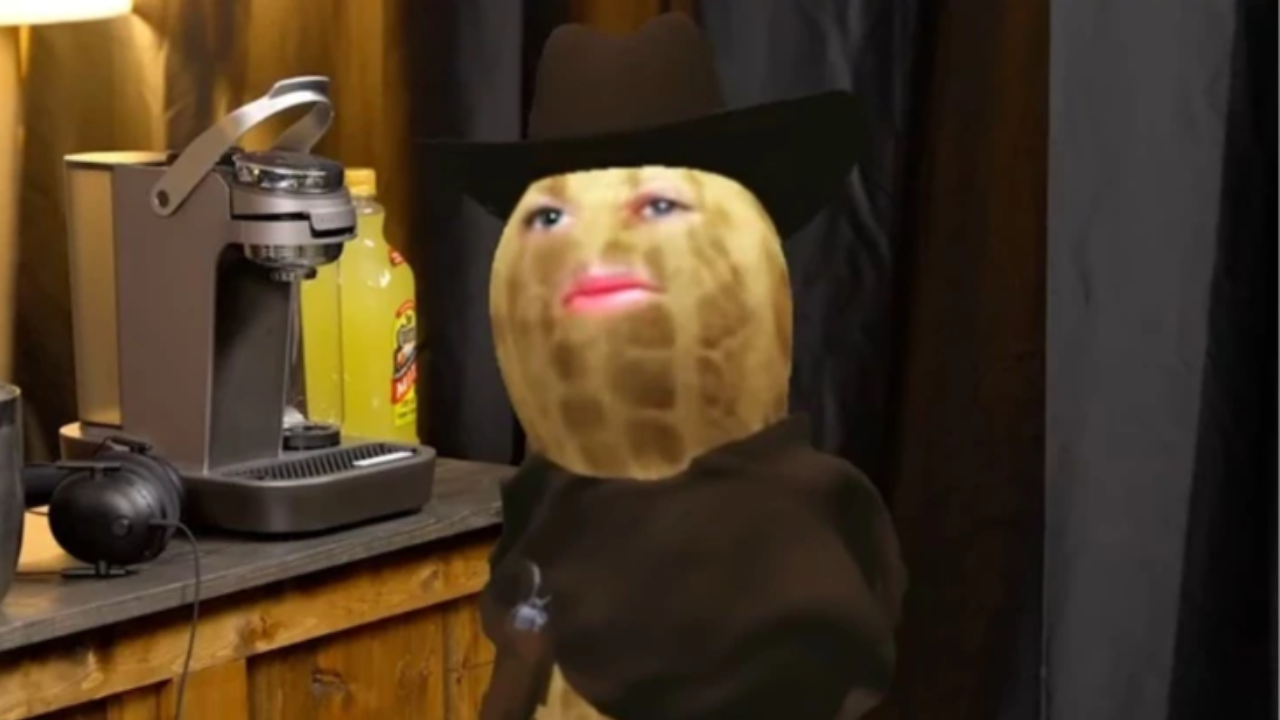
TheBurntPeanut built a massive streaming audience by ditching standard face-cam broadcasts and committing entirely to a low-budget, live-tracked CGI peanut avatar paired with deadpan, unscripted comedy. Instead of chasing algorithmic trends or grinding eighty hours a week in saturated tactical shooters, the creator leaned into absurdity, strict character discipline, and tight improvisational pacing. That single shift transformed an overlooked channel into one of the most distinct personalities in modern gaming entertainment, proving that visual novelty combined with sharp comedic timing beats high-end production budgets every time.
Most industry observers get the story completely wrong. They look at the meteoric rise of TheBurntPeanut and assume it was a lucky break—just another bizarre meme channel that happened to catch a stray wave on TikTok or YouTube Shorts. Having watched thousands of creators burn out over the last two decades trying to manufacture virality, I can tell you luck had very little to do with it. What happened here was a deliberate structural rejection of how modern game streaming operates.
The Death of the Standard Face-Cam Formula
For more than a decade, live streaming operated under an unspoken, rigid orthodoxy. You bought a crisp DSLR camera, set up pink and blue LED strips behind a gaming chair, played the hottest extraction shooter or battle royale on the market, and yelled at your monitor. It worked in 2016. By the mid-2020s, that formula had become visual white noise.
Viewers scrolling through Twitch or YouTube Live suffer from severe banner blindness. When every thumbnail features a twenty-something guy with his mouth open next to a bright yellow weapon skin, the human brain simply tunes it out. TheBurntPeanut recognized this fatigue early. Rather than upgrading to a better camera or buying a more expensive microphone, the creator stripped away the human element entirely, replacing it with a weirdly expressive, textured peanut shell brought to life through basic facial tracking.
It looks absurd on paper. Yet that visual friction is precisely why it works. When a viewer scrolls past fifty identical gaming setups and suddenly sees a hyper-focused peanut arguing about loot spawns with lethal seriousness, the scroll stops. Curiosity takes over before the viewer even hears a single word of dialogue.
Why Absurdity Outperforms High Production
There is a persistent myth in the creator economy that spending more money automatically yields better retention. Agencies push creators toward custom animated overlays, studio lighting, and multi-editor clip pipelines. In reality, over-production often creates an invisible wall between the entertainer and the audience. It signals corporate polish rather than genuine spontaneity.
TheBurntPeanut operates on the exact opposite principle. The aesthetic is intentionally jarring, bordering on crude, yet the comedic execution is razor-sharp. This contrast—often referred to in comedy circles as tonal dissonance—is the engine driving the channel's growth. When a photorealistic CGI legume delivers dry, observational humor or reacts to high-stress gameplay with total deadpan apathy, the brain registers a comedic mismatch that demands attention.
Consider how traditional VTubers operate versus what TheBurntPeanut does. The vast majority of virtual creators rely on anime-inspired avatars designed to look appealing, stylized, or aspirational. They build lore around fantasy worlds, celestial beings, or cybernetic heroes. TheBurntPeanut threw that entire handbook out the window. There is no sprawling anime backstory. There is just a peanut sitting in front of a screen, often sounding like a tired middle-manager who wandered into a warzone by mistake.
The Psychology of the Mask
Wearing a digital mask does something remarkable to a performer's psychology. Even seasoned entertainers hold back when a real camera is pointed at their face. They worry about their posture, their facial expressions, or how a clip might look out of context.
By hiding behind an absurd avatar, the performer gains absolute creative immunity. You cannot embarrass a peanut. That freedom allows for bolder improvisational choices, sharper deadpan delivery, and a willingness to let awkward silences hang in the air until they become hilarious. Audiences pick up on that lack of self-consciousness immediately. It feels authentic precisely because the visual wrapper is completely fake.
Breaking Down the Content Pivot
Before the avatar took center stage, the channel struggled with the same discovery bottleneck that traps ninety-nine percent of mid-sized streamers. Playing hardcore tactical games like Escape from Tarkov or similar high-stakes shooters requires intense concentration. When a creator is locked into survival mechanics, commentary naturally dries up. You get minutes of silence punctuated by brief callouts and sighs. That makes for terrible short-form clips, and without short-form clips, modern channels starve.
The pivot changed the fundamental unit of entertainment on the channel. Gameplay ceased to be the main event and became merely the backdrop for character work.
| Traditional Gaming Stream | TheBurntPeanut Model |
|---|---|
| Gameplay skill is the primary hook | Character absurdity is the primary hook |
| Relies on high-energy reactions and yelling | Relies on deadpan delivery and tonal contrast |
| Requires long watch times to understand context | Instantly funny in a 15-second vertical clip |
| Competes directly with thousands of identical setups | Occupies a visual category of one |
| High vulnerability to game-specific burnout | Portable across any genre or dead-air moment |
Look at how that structural shift alters the economics of attention. In a traditional stream, if the game has a slow ten-minute lull—waiting in a lobby, organizing inventory, or walking across an empty map—viewers leave. On TheBurntPeanut's broadcast, those dead zones are actually the prime real estate. Without gunfire interrupting the audio, the character gets room to breathe, riff with chat, and build running jokes out of thin air.
The Short-Form Engine
You cannot discuss this rise without examining how vertical video algorithms reward visual clarity. On platforms like TikTok, Instagram Reels, and YouTube Shorts, a viewer decides whether to swipe within the first 1.5 seconds.
Standard gaming clips fail this test constantly. A tiny webcam box tucked into the bottom corner of a cluttered screen is illegible on a six-inch smartphone display. You cannot read the streamer's face, and you do not care about their gameplay. TheBurntPeanut's framing solves this automatically. The avatar is front and center, visually unmistakable even on a cracked phone screen, and the comedic premise is clear before the first sentence finishes.
The Hidden Mechanics of Character Discipline
Many copycats have tried to replicate this formula over the last year, and almost all of them have failed miserably. They slap a silly 3D model onto their stream, put on a goofy voice, and expect the views to roll in. Within three weeks, they quit because their numbers haven't moved.
They fail because they mistake a gimmick for a craft. Sustaining a character-driven broadcast for hours at a time requires immense discipline. If the performer breaks character to complain about stream bitrate, read donations in a normal voice, or whine about game balance, the illusion shatters. Once the audience sees the person behind the curtain, the magic evaporates.
TheBurntPeanut maintains strict kayfabe—a term borrowed from professional wrestling referring to the absolute commitment to maintaining an illusion, even when absurd things happen around you. Whether celebrating a massive in-game victory or dealing with technical glitches, the persona never cracks. Everything is filtered through the exact same dry, slightly exasperated worldview.
Furthermore, the pacing relies heavily on restraint. Bad comedians over-explain the joke; great ones let the audience connect the dots. By pairing minimal facial animations—a slight eye squint, a slow turn toward the camera—with understated vocal delivery, the stream invites the viewer to lean in. You are not being shouted at to laugh. You are witnessing a bizarre scenario play out with total sincerity.
Where the Model Faces Friction
No content strategy is bulletproof, and pretending otherwise would be dishonest. While the peanut persona solved the discovery problem overnight, it introduces long-term constraints that traditional creators never have to worry about.
First, there is the novelty ceiling. Visual shock gets people through the door, but it cannot keep them in the room forever. Once an audience gets used to seeing a talking peanut, the avatar becomes normal to them. At that point, the burden falls entirely on writing, comedic intuition, and community dynamics. If the jokes grow repetitive or the catchphrases turn into crutches, retention drops fast because the viewer no longer gets that initial hit of visual surprise.
Second, monetization and brand partnerships become trickier. Traditional lifestyle and tech sponsors love clean, predictable face-cam creators who can hold up an energy drink or wear a branded hoodie on stream. Integrating corporate sponsorships into an absurdist character universe requires clever creative workarounds. A standard ad read kills the comedic flow immediately, meaning the creator has to either turn the sponsorship into a bit or leave easy brand money on the table.
Finally, there is the trap of persona lock-in. If the creator ever wants to pivot away from the avatar, launch a podcast, or appear at live industry events as themselves, they face an uphill battle. The audience is fiercely attached to the character, not the human behind it. Separating the artist from the mask later in a career is notoriously difficult, as countless masked musicians and anonymous YouTubers have discovered the hard way.
What Other Creators Get Wrong About Rebranding
Whenever a channel like TheBurntPeanut explodes, a wave of desperate rebrands follows. Small streamers suddenly abandon their identities to chase whatever weird trend is dominating their feed that month. That is usually a fatal mistake.
The lesson here is not that every gamer needs to become a talking legume or buy facial-tracking software. Copying the surface-level aesthetic of a breakout hit guarantees you will always look like a cheap imitation. The real takeaway is about radical differentiation in an overcrowded market.
Most creators spend ninety percent of their energy optimizing things that do not matter—tweaking OBS settings, obsessing over bitrates, designing new channel badges—and ten percent thinking about why a stranger should care about them for more than five seconds. They try to be ten percent better than the competition when they actually need to be completely different.
If your content looks, sounds, and feels like everyone else in your category, the algorithm has no reason to surface you over established giants who already own that lane. You have to give the viewer a visual or tonal pattern interrupt. Sometimes that means adopting a bizarre digital avatar. Other times it means changing the format, the editing rhythm, or the entire premise of how you interact with a game.
The Brutal Reality of Modern Attention
We are past the era where simply being "good at video games" or "chill to hang out with" constitutes a viable growth strategy. There are too many talented players and too many pleasant personalities broadcasting into the void every single night. Attention has become the scarcest resource on the internet, and audiences have developed ruthless filtering mechanisms to protect their time.
TheBurntPeanut succeeded because the channel respected how harsh that environment actually is. Instead of asking viewers for patience while a slow stream warmed up, the creator engineered an immediate visual hook that required zero context to appreciate. Then, once the audience stopped scrolling, sharp comedic instincts kept them watching.
Industry analysts love to overcomplicate creator success stories with talk of funnel optimization and cross-platform ecosystems. Strip away the buzzwords, and the formula remains brutally simple. Make them stop scrolling with something they have never seen before, then make them stay with a voice they cannot find anywhere else.