You won't find Abu Musa, Greater Tunb, or Lesser Tunb on most tourist maps. If you zoom in on a digital map of the Persian Gulf, they look like little more than accidental drops of digital ink scattered near the narrowest choke point of the global oil trade. Together, their entire landmass measures just about ten square miles.
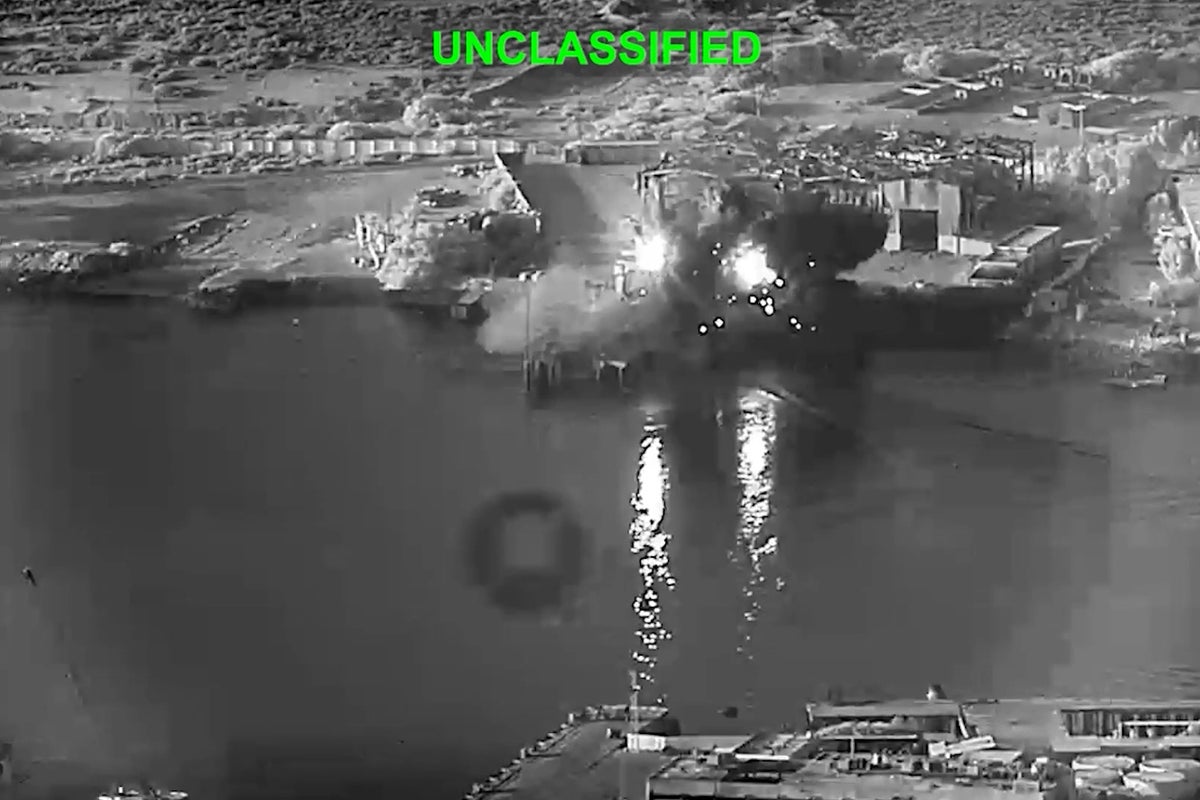
Yet right now, these three tiny islands in the Strait of Hormuz are at the center of a dangerous military escalation. Following recent U.S. airstrikes that targeted Iranian military installations in the Gulf—including the critical oil hub at Kharg Island—attention has shifted south to these disputed outposts.
For decades, they’ve been treated as a simmering diplomatic dispute between Iran and the United Arab Emirates (UAE). Today, they are active military strongholds packed with anti-ship missiles, air defense systems, and speedboats. If you want to understand how a localized conflict in the Middle East could suddenly spiral into a global energy crisis, you have to look at these rocks.
The 1971 Land Grab That Set the Stage
To understand why these islands matter so much today, we have to look back to late November 1971. The British Empire was pack-bagging its way out of the Persian Gulf, ending its long-standing protectorate agreements with the local Arab sheikhdoms. Just two days before those sheikhdoms officially united to form the United Arab Emirates, the Iranian military struck.
Under the direction of Shah Mohammad Reza Pahlavi, Iranian troops seized Abu Musa and the two Tunb islands by force. The Shah was Washington's favorite regional policeman at the time, so the West basically looked the other way. The UAE has never forgotten this loss, and the dispute has remained a bitter point of contention in Arab-Iranian relations ever since.
When the Shah was overthrown in the 1979 Islamic Revolution, the new clerical regime didn't give the islands back. Instead, they realized just how useful these geographic platforms could be. During the grueling "Tanker War" of the 1980s, Iran used these islands as forward staging bases to launch speedboats, lay naval mines, and attack commercial shipping.
Decades later, the playbook hasn't changed. If anything, Iran has turned these specks of sand into unsinkable aircraft carriers.
Three Tiny Islands with Massive Military Power
These islands are not just passive lookouts. They are heavily fortified garrisons designed to project lethal force across the world’s most critical maritime corridor. Here is a breakdown of what Iran has built on each of them:
- Abu Musa: The largest of the three, home to a civilian village and a heavy military footprint. It serves as a major base for Iran’s paramilitary Revolutionary Guard (IRGC). Iran has stationed fast-attack craft, long-range anti-ship missiles, and advanced air defense systems here to monitor and threaten passing ships.
- Greater Tunb: Like Abu Musa, this island has been transformed into a military fortress. It features underground bunkers, rocket launchers, and radar facilities designed to track commercial and military vessels entering the Gulf.
- Lesser Tunb: The smallest of the trio, hosting no civilian population. It is used exclusively as an early warning post and a launchpad for small-scale military operations.
These islands sit directly alongside the deep-water shipping lanes that supertankers must use to navigate the Strait of Hormuz. If a ship wants to enter or leave the Persian Gulf, it has to pass right in front of Iranian guns.
Why the US Military is Targeting These Outposts Now
The recent round of U.S. airstrikes in the region was not a random show of force. Striking Iran's mainland or its nuclear facilities carries massive political risk. Targeting islands like Abu Musa, Greater Tunb, and Kharg Island, however, is a direct attempt to degrade Tehran's tactical options without triggering an all-out land war.
By knocking out radar installations, missile batteries, and fast-boat harbors on these islands, the U.S. and its allies are trying to pre-emptively disarm Iran's ability to shut down the Strait. It's a high-stakes chess move. If the U.S. can neutralize these island garrisons, Iran loses its primary leverage over the global economy.
But this strategy has a major flaw. The IRGC has spent decades preparing for this exact scenario. Their defensive networks are highly dispersed, frequently buried deep underground in reinforced concrete bunkers. Bombing them from the air can damage their surface capabilities, but completely clearing them out is an entirely different challenge.
The Economic Reality of a Closed Strait
Let's look at the numbers because they are staggering.
About 20 percent of the world’s petroleum and liquefied natural gas passes through the Strait of Hormuz. It is the ultimate economic bottleneck. There are very few viable bypass routes. Saudi Arabia and the UAE have pipelines that can carry some crude to alternative ports, but these systems can only handle a fraction of the daily volume that usually transits the water.
If Iran decides to use its island bases to block the Strait—whether through anti-ship missiles, drone swarms, or sea mines—the global economy will feel the shockwaves instantly. Oil prices would skyrocket past record highs. Shipping insurance rates would make transit cost-prohibitive for commercial fleets. Energy-dependent nations in Europe and Asia would face immediate supply crises.
This is why the dispute over these three islands is not a localized real estate argument. It's a global security issue.
De-escalation Looks Unlikely
Don't expect either side to back down anytime soon. For Iran, these islands are a core component of its national defense strategy. They provide geographic depth and asymmetrical leverage against technically superior Western militaries. Giving them up or allowing them to be neutralized would leave Iran's southern coastline highly vulnerable.
At the same time, the United Arab Emirates is unlikely to drop its sovereign claims, especially with Western allies actively targeting Iranian military assets on the islands. The ongoing conflict has thrust the islands back into the international spotlight, giving the UAE fresh diplomatic leverage to press its claims on the global stage.
If you are tracking this conflict, keep your eyes on the shipping data and the local deployment patterns around the islands. Watch for any signs of Iranian naval mining activity or the deployment of additional air defense batteries to Abu Musa. These tiny islands will remain the ultimate bellwether for the stability of the global energy market. If things boil over here, the rest of the world will feel the heat.