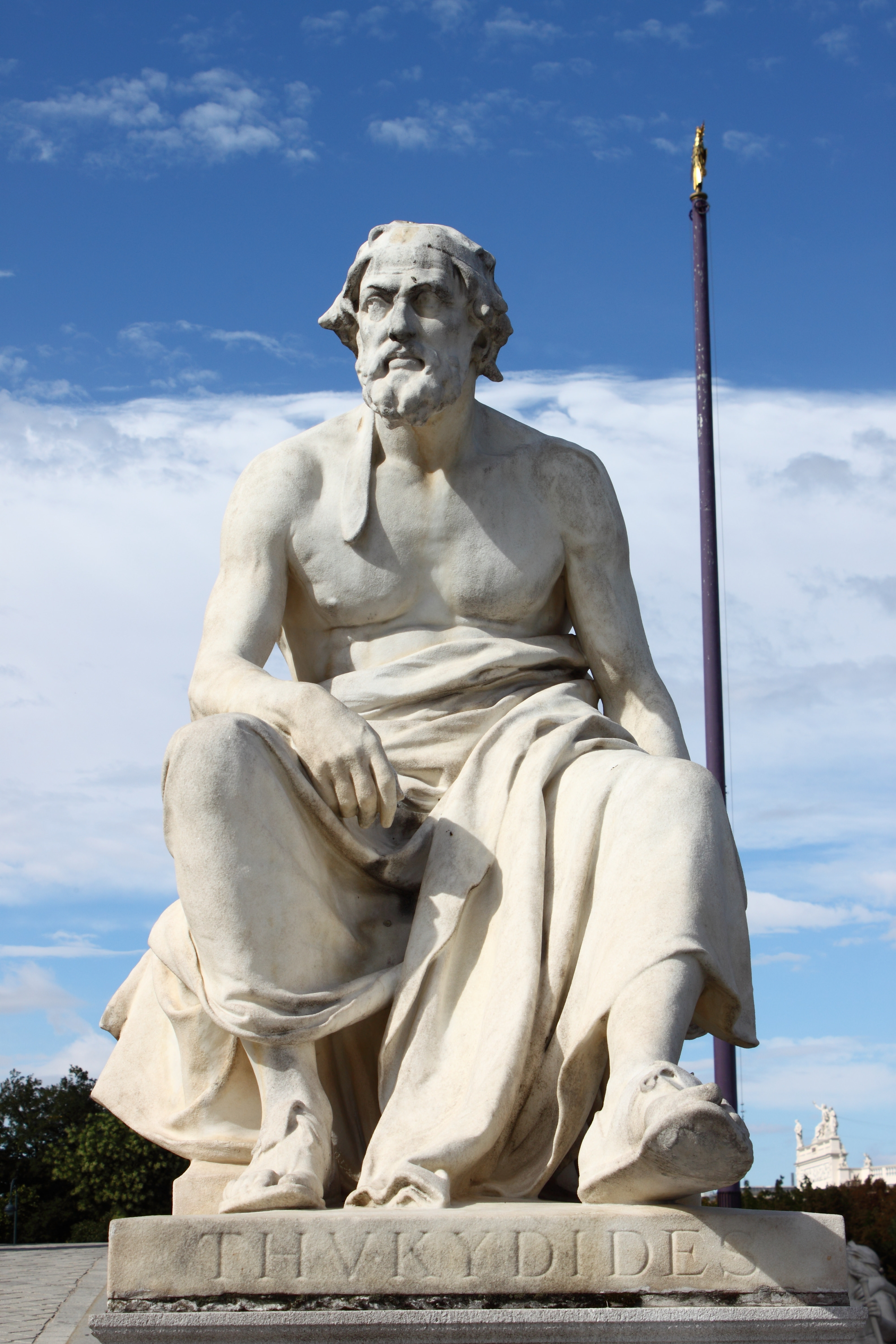
Graham Allison didn’t discover a law of nature; he rebranded a selection bias. The "Thucydides Trap" has become the intellectual security blanket of the DC and Beijing elite. It’s a convenient, fatalistic narrative that suggests war between a rising power (China) and an established one (the US) is an almost unavoidable destiny baked into the DNA of history.
It’s wrong. It’s intellectually dishonest. And it’s dangerous. For a different look, see: this related article.
When policy makers cite the Peloponnesian War to explain 21st-century trade deficits and semiconductor bans, they aren't being profound. They are being lazy. They are ignoring the massive, structural differences between a zero-sum agrarian world and a hyper-interconnected digital one. The "trap" isn't a historical inevitability—it’s a self-fulfilling prophecy for people who have lost the imagination to govern.
The Data is Skewed and the Sample is Broken
The core of the Thucydides Trap argument rests on a study of 16 historical cases where a rising power challenged a ruling power. In 12 of those cases, war was the result. 75%. Those are scary odds if you’re a gambler, but they are a statistical nightmare if you’re a historian. Similar analysis on this trend has been provided by USA Today.
History doesn't happen in a laboratory. You cannot isolate "power transition" as a single variable.
Most of these 16 cases involve European monarchies or colonial empires from centuries ago. Comparing the rivalry between the 17th-century Dutch Republic and England to the current US-China tension is like comparing a fistfight in a tavern to a legal dispute between two multinational conglomerates. The stakes, the tools, and the very concept of "power" have shifted so radically that the historical analogy collapses under its own weight.
In the ancient world, power was land. If you wanted more wealth, you took more territory. Today, power is compute, intellectual property, and capital flows. You don't gain more of those by leveling your neighbor's cities with cruise missiles.
The Nuclear Elephant in the Room
Thucydides didn't have to worry about Mutually Assured Destruction (MAD).
The 12 cases of war cited by Allison almost entirely predate the atomic age. This isn't just a minor detail; it’s the entire game. The introduction of nuclear weapons fundamentally broke the traditional cycle of great power war. In the 19th century, a rising power could gamble on a decisive military victory to reset the global order. In 2026, there is no such thing as a "decisive victory" between nuclear states. There is only mutual suicide.
To suggest that the US and China are "destined" for war because Sparta and Athens fought is to ignore the most significant military development in human history. We are not in a "trap." We are in a stalemate. The tension doesn't lead to a battlefield; it leads to a permanent, grinding competition in every sphere except direct kinetic warfare.
The Interdependence Myth
Critics often say that global trade didn't stop World War I. This is true. But the level of integration in 1914 was superficial compared to the current global supply chain.
The British and Germans weren't sharing the same operating systems. They weren't reliant on each other for the manufacture of every single high-end consumer good and medical device. Today, a total war between the US and China wouldn't just be a military catastrophe; it would be a total systemic collapse of the modern world.
If you want to understand why the "trap" is a myth, look at the boardroom, not the war room. Apple cannot exist without Chinese assembly. Chinese tech giants cannot exist without American-designed architecture. This isn't just "trading." It’s biological symbiosis. You don't kill your host.
The Real Risk is Internal Rot, Not External Rise
The fixation on Thucydides is a distraction. It allows leaders to point at an external "enemy" and blame historical forces rather than addressing their own domestic failures.
The US isn't threatened because China is "rising." The US is threatened because its own infrastructure is crumbling, its political system is paralyzed, and its education system is falling behind. Similarly, China isn't being "contained" by an old hegemon; it is being strangled by its own demographic collapse, a massive debt bubble, and an increasingly rigid internal security apparatus.
Both sides are using the "trap" as a convenient excuse to ramp up nationalism. If war is "inevitable," then you don't have to justify your trillion-dollar defense budgets. You don't have to explain why you're ignoring climate change or housing crises. You just have to prepare for the "trap."
Stop Asking if War is Inevitable
People always ask: "Are we heading for a collision?"
It’s the wrong question. It assumes we are two ships on a collision course. A better analogy is two mountain climbers tethered together on a sheer cliff. If one falls, both die. The competition is about who can climb higher and faster, not who can cut the rope first.
The real danger isn't a calculated "Thucydides" style war. The danger is an accident. A misunderstanding in the South China Sea. A technical glitch in an AI-driven defense system. A local conflict that spirals out of control because both sides have convinced themselves that "the trap" means the other guy is definitely going to strike first.
The Strategy of Managed Friction
We need to stop looking for a "solution" to the US-China rivalry. There isn't one. This isn't a problem to be solved; it’s a condition to be managed.
- Acknowledge the Stalemate: Direct war is off the table. Anyone telling you otherwise is selling a book or a missile system.
- Decouple the Rhetoric, Not the Economy: Selective "de-risking" in tech is fine. Total economic separation is a fantasy that would bankrupt both nations.
- Focus on Internal Resilience: The winner of the 21st century won't be the country with the most aircraft carriers. It will be the country with the most stable social fabric and the fastest innovation cycle.
The Thucydides Trap is a choice, not a destiny. Every time a politician mentions it, they are admitting they've run out of ideas. They are surrender monkeys dressed in the robes of ancient Greek historians.
History doesn't repeat itself. People repeat history because they are too unimaginative to do anything else.
The trap only exists if you walk into it.