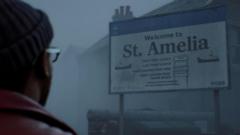
Pittenweem doesn't look like a place where nightmares are born. On a sunny afternoon, it’s all salt air, colorful boats, and the kind of quiet that makes you want to retire early. But wait for the haar to roll in. When that thick, grey Scottish fog swallows the coastline, the village transforms. The familiar stone walls of the East Neuk of Fife turn into silhouettes. The sea becomes a muffled roar. This specific atmosphere caught the eye of the developers behind the latest Silent Hill project, and it makes perfect sense to anyone who’s spent a night on the Scottish coast.
Most horror fans associate Silent Hill with decaying American rust-belt towns. We think of peeling wallpaper in Pennsylvania or fog-choked streets in the Midwest. Shifting the inspiration to a small, isolated Scottish fishing village is a brilliant move that taps into a different kind of dread. It's not about urban decay anymore. It's about the crushing weight of history, the isolation of a tight-knit community, and the terrifying vastness of the North Sea.
The Haunting Geography of the East Neuk
Pittenweem is built on levels. You have the harbor at the bottom and steep, narrow "wynds"—tiny alleyways—climbing up toward the main road. For a level designer, this is a goldmine. Imagine fleeing a creature through a gap so narrow your shoulders brush both walls, only to find the path ends in a sheer drop or a locked wooden door.
The village isn't just a collection of houses. It’s a labyrinth. The developers aren't just looking at the buildings; they’re looking at the layout. Silent Hill has always used its environment to reflect the protagonist's mental state. The claustrophobia of Pittenweem’s ancient streets provides a physical manifestation of being trapped. You aren't just lost in a town; you're trapped in a maze that’s hundreds of years old.
The "haar" is the real star here. In Fife, this sea fog can appear in minutes. It’s dense. It’s cold. It doesn't just obscure vision; it changes how sound travels. If you’ve ever walked through a Scottish coastal town in a heavy haar, you know the feeling of being completely alone even when you're ten feet from a front door. That’s the core of the Silent Hill experience.
Why Scotland Beats the American Midwest for Horror
Let’s be honest. The "spooky American town" trope is a bit tired. We’ve seen the abandoned hospitals and the rusty swing sets a thousand times. Scotland offers a different flavor of unease.
The history here is deep and often bloody. Pittenweem itself has a dark past involving 17th-century witch trials. We're talking about a place where real-world horrors actually happened on these specific cobblestones. When a game developer leans into that, the atmosphere feels earned rather than manufactured. You don't need to invent a cursed Indian burial ground when you have the actual history of the 1705 Pittenweem witch hunts to draw from.
The architecture plays a huge role too. Crow-stepped gables, roughcast walls, and small, sunken windows create a visual language that feels ancient and unwelcoming. It’s a stark contrast to the wooden siding and wide porches of typical survival horror settings. In Fife, the houses are built to keep the world out. They’re heavy. They’re stone. They feel permanent in a way that makes your character feel fleeting and insignificant.
The Sound of Silent Hill in a Fishing Village
Sound design is half the battle in horror. Most games rely on creaking floorboards or distant screams. A coastal setting like Pittenweem introduces a whole new palette.
- The rhythmic, metallic clanging of rigging against masts.
- The distorted cry of gulls that sounds uncomfortably like human wailing in the fog.
- The constant, low-frequency thrum of the tide against sea walls.
If the developers get this right, the environment will feel alive and hostile. The sea isn't just a background; it’s a boundary. In a typical Silent Hill game, the "edges" of the map are often just broken roads or bottomless pits. Here, the edge of the world is a freezing, black ocean. There’s no escape that way. You’re pinned between the cliffs and the water.
Breaking the Cycle of Traditional Horror Tropes
Psychological horror works best when it subverts your expectations of safety. We expect a fishing village to be cozy. We expect a "tiny village in Fife" to be the setting of a postcard, not a blood-soaked nightmare. By twisting these peaceful visuals into something grotesque, the game hits harder.
The developers have mentioned being struck by the "stillness" of the location. That stillness is a trap. In a game, it builds tension until the player is begging for something to happen just to break the silence. When the shift finally occurs—when the world peels back to reveal the "Otherworld"—seeing those familiar Scottish landmarks warped into something hellish will be far more effective than seeing another generic hallway.
It’s also about the scale. Pittenweem is small. You can walk from one end to the other in ten minutes. This allows the game to focus on extreme detail. Instead of a sprawling city where every third building is a copy-paste job, we might get a dense, handcrafted environment where every single shopfront and alleyway has a story. That level of intimacy makes the horror feel personal.
What This Means for the Future of the Series
This choice signals a shift toward "folk horror." Think of movies like The Wicker Man or Midsommar. It’s horror that grows out of the land and the traditions of the people who live there. It’s less about a generic evil and more about a specific, localized rot.
Fans have been skeptical about the direction of the series for years. However, choosing a location as specific and atmospheric as a Fife fishing village shows a level of creative risk-taking we haven't seen since the original Team Silent days. It’s a move away from the Hollywood-style jump scares and back toward the "something is wrong here" feeling that made the original trilogy legendary.
If you want to understand the vibe they’re going for, look up photos of Pittenweem during a storm or at dusk. Look at the way the light hits the wet stone. Then imagine those streets empty, the lights flickering out, and the sound of something heavy dragging itself up the harbor slipway.
If you’re planning to play the new Silent Hill, don't just watch the trailers. Spend some time looking into the actual folklore of the Scottish coast. The tales of selkies, kelpies, and the very real history of the witch trials in Fife provide a much deeper context for the terrors the developers are likely cooking up. Understanding the "why" behind the location makes the experience much richer. Keep an eye on the official dev-logs for more environment reveals, as the way they've scanned the local architecture suggests a level of realism that might be genuinely unsettling.