The Mediterranean "voluntary return" system is a misnomer designed to satisfy European bureaucracies while masking a brutal reality on the ground. In Tunisia, the choice for thousands of sub-Saharan migrants is not between staying or leaving. It is a choice between a slow, state-sanctioned starvation and a one-way ticket back to the very instability they fled. What we are witnessing is the outsourcing of border enforcement, where the currency is not just Euros, but human desperation.
Tunisia has shifted from a transit point to a trap. Following a series of political pivots and a deepening economic crisis, the North African nation has adopted a strategy of friction. This isn't just about police raids or border patrols. It is about the systematic removal of the means of survival. When you cannot work, cannot rent a home, and cannot walk the streets without the threat of arbitrary detention, "voluntary" becomes a word stripped of its meaning.
The Financial Mechanics of Departure
Brussels has funneled hundreds of millions of Euros into Tunisian coffers under the guise of "migration management." These funds are intended to bolster the coast guard and stabilize the economy. However, the true utility of this capital is the creation of a pressure cooker. By funding the interception of boats at sea, the EU ensures that the migrant population remains bottled up within Tunisia’s borders.
Once trapped, these individuals find themselves in a legal and social vacuum. The Tunisian government, grappling with its own internal instabilities, has found a convenient scapegoat. By framing the presence of sub-Saharan Africans as a demographic threat, the state has effectively deputized the populace. This creates an environment where the "voluntary" return programs, often run by international organizations, become the only escape hatch from a hostile environment.
The Business of Attrition
Consider the logistics of the return process. It is a highly choreographed operation. International agencies provide modest stipends and reintegration packages to those who agree to fly home. For the agencies, it’s a humanitarian success story. For the Tunisian state, it’s a reduction in "burden." But for the individual, it is often a return to square one with nothing to show for years of effort and debt.
The strategy is simple: make life unbearable enough that the alternative—even if it means returning to a war zone or extreme poverty—seems preferable. This is managed exhaustion. It is a policy of wearing down the human spirit until it breaks.
The Myth of the Safe Third Country
European policy increasingly leans on the idea that Tunisia is a "safe third country." This legal designation allows EU member states to deport asylum seekers back to Tunisian shores. Yet, the facts on the ground tell a different story. Human rights monitors have documented mass expulsions to the desert borders of Libya and Algeria, where migrants are left without water, food, or shelter.
If a country is safe, why are people being dumped in the "no man’s land" of the Sahara? The answer lies in the disconnect between diplomatic rhetoric and the harsh necessities of realpolitik. Tunisia is being used as a buffer zone, a geographical shock absorber that takes the impact of the global migration crisis so that European cities don’t have to.
The Economic Paradox
Tunisia’s own economy is in a tailspin. Inflation is rampant, and the youth are fleeing the country in record numbers. There is a bitter irony in a nation that is hemorrhaging its own citizens while simultaneously being paid to act as a jailer for others. The money received from the EU provides a temporary lifeline for the Tunisian central bank, but it does little to address the structural failures that drive migration in the first place.
Instead of investing in regional stability or legal labor pathways, the current model prioritizes hardware. Radars, thermal cameras, and high-speed patrol boats are the tools of the trade. These are lucrative contracts for European defense firms, creating a circular economy where the "crisis" fuels the very industries tasked with stopping it.
The Weaponization of Public Sentiment
Social media in Tunisia has become a battlefield. Incendiary rhetoric from the highest levels of government has triggered a wave of xenophobia. This isn't accidental. When a government fails to deliver on economic promises, it needs an enemy. By targeting sub-Saharan migrants, the administration redirects the frustration of its own citizens.
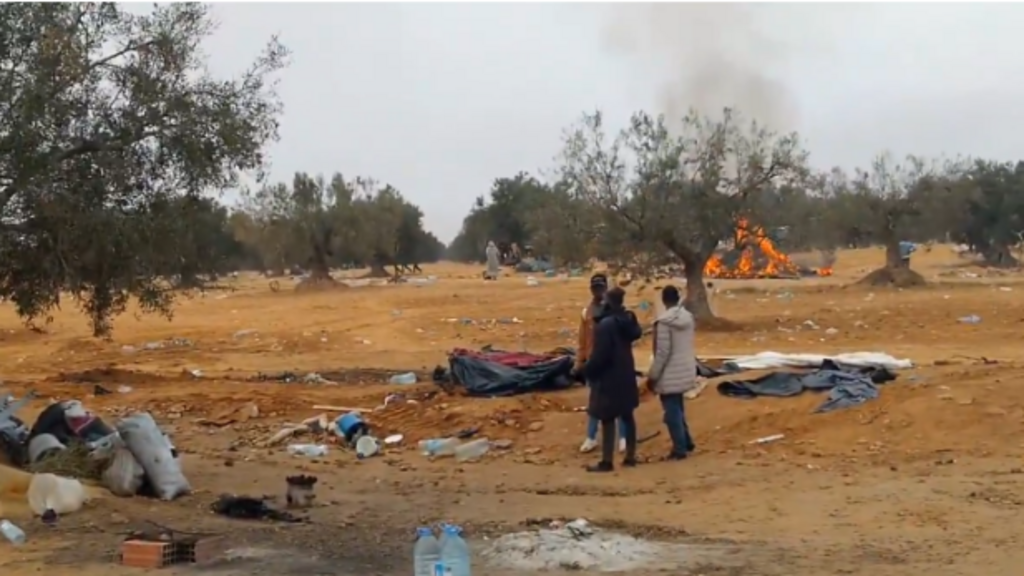
The result is a climate of fear. We have spoken with individuals who have lived in Sfax and Tunis for years, working in construction and agriculture. Overnight, they were evicted from their apartments. Their employers, fearing fines or arrest, stopped paying them. This is the "how" of the voluntary return program. You don't need to force someone onto a plane if you've already taken away their bed and their bread.
Broken Chains and Empty Promises
The reintegration packages offered by international bodies are often touted as a way to start over. In practice, they are frequently inadequate. A few hundred dollars and a promise of vocational training do not go far in countries like Guinea, Mali, or Sudan. Many of those who return find themselves in the same cycles of poverty that forced them to leave, but with the added weight of perceived failure.
The system ignores the "why" behind the migration. It treats a complex socio-economic phenomenon as a simple logistics problem. Until the root causes—climate change, conflict, and the massive wealth gap between the Global North and South—are addressed, these return programs are merely a temporary fix.
The Human Cost of Diplomacy
Behind every statistic is a person. There is the student from Ivory Coast whose dreams of a degree ended in a Tunisian jail cell. There is the mother from Cameroon who sold everything she owned to reach the coast, only to be told her only option is to go back to the beginning. These are not just "migrants." They are the casualties of a geopolitical game where the rules are written in Brussels and enforced in the streets of Tunis.
The transparency of these EU-Tunisia deals is virtually non-existent. There is little oversight on how the money is spent or how the coast guard operates. This lack of accountability is a feature, not a bug. It allows all parties to maintain "plausible deniability" while the dirty work of border enforcement is carried out away from the eyes of the European electorate.
A Fractured Foundation
The reliance on Tunisia as a border guard is a high-stakes gamble. If the Tunisian state becomes too unstable, the entire "voluntary" return apparatus collapses. We saw this in Libya. When the central authority crumbled, the migration routes didn't close; they became more dangerous, more profitable for traffickers, and more chaotic.
Europe is building its fortress on shifting sands. By incentivizing hardline tactics in Tunisia, they are eroding the very democratic values they claim to protect. The cost of a "secure" border is the normalization of human rights abuses. It is a price that is being paid by the most vulnerable people on the planet.
The Inevitability of Failure
The current trajectory is unsustainable. You cannot solve a migration crisis through attrition alone. People will continue to move because they have no choice. If the path through Tunisia becomes too deadly or too difficult, they will find another way. The human instinct for survival is stronger than any border fence or maritime patrol.
The tragedy is that there are alternatives. Regional cooperation, expanded legal pathways, and genuine economic investment could create a more humane and stable system. But those solutions require political courage and a long-term vision that is currently absent from the halls of power. Instead, we are left with a policy of managed exhaustion—a system that breaks people until they "choose" to disappear.
The next time you see a report about a successful "voluntary return" flight from Tunis, look past the smiling faces in the press release. Look at the empty pockets, the scarred spirits, and the structural violence that made that flight the only option left. This isn't a solution. It's a surrender.