Waking up to news of a jet on fire isn't how any traveler wants to start their Monday. Early this morning, May 11, 2026, a Turkish Airlines Airbus A330 (Flight TK726) arriving from Istanbul turned a routine landing into an emergency at Tribhuvan International Airport (TIA) in Kathmandu. Thick grey smoke and visible flames licked at the right rear landing gear as the plane touched down.
If you've followed aviation news for a while, this feels like a weird case of déjà vu. The exact same flight number and the exact same airline had a massive runway excursion at this exact airport back in 2015. While today's fire was contained and all 289 people on board (278 passengers and 11 crew) walked away without a scratch, it raises massive questions about the safety of Nepal's main gateway and why these incidents keep happening.
What actually went wrong on the runway
The fire started in the aircraft's right rear tyre immediately after touchdown. Airport officials confirm that a tyre burst, which likely sparked the blaze as the metal rims ground against the asphalt or hydraulic fluid ignited. Emergency crews at TIA didn't waste a second. Fire engines were on the scene within moments, dousing the landing gear and preventing the fire from spreading to the fuselage or the wings, where thousands of pounds of fuel are stored.
Everyone was evacuated through the emergency slides. It’s a chaotic process, especially with United Nations officials and international tourists on board, but the cabin crew managed to get everyone out safely. The runway—the only one TIA has—was shut down for over an hour. If you're flying into Kathmandu today, expect delays. The "single runway" problem in Nepal is a logistical nightmare; one flat tyre can literally cut the country off from the rest of the world.
The 2015 connection you can't ignore
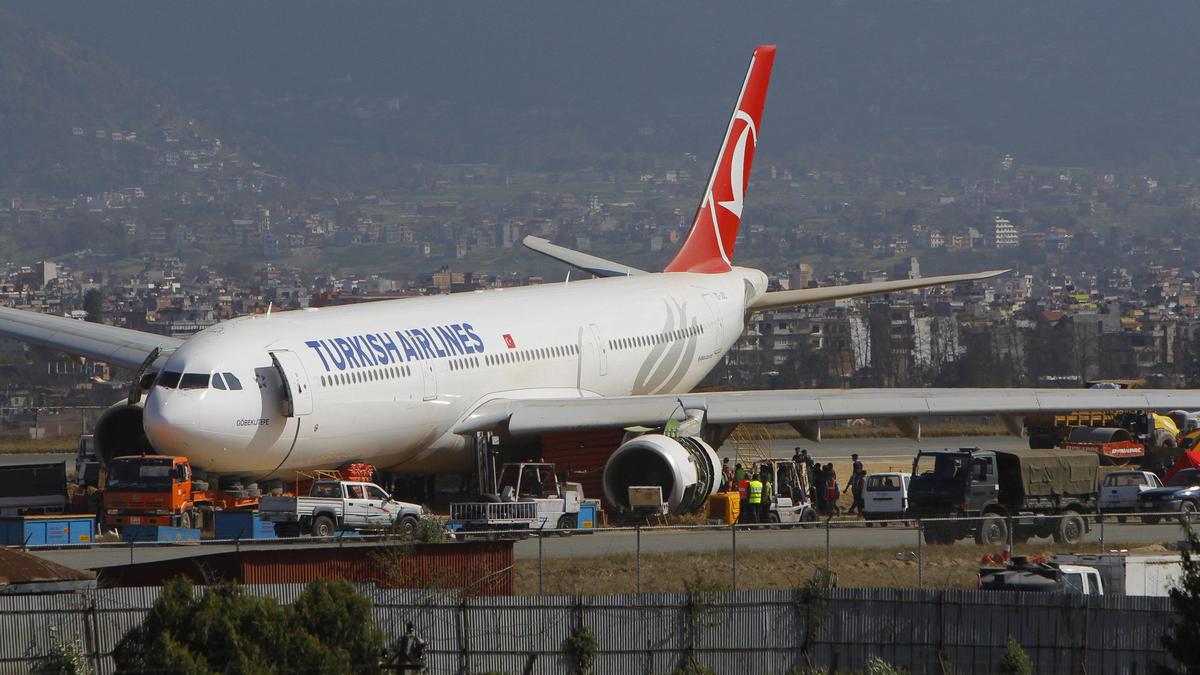
You can't talk about Turkish Airlines in Kathmandu without bringing up the 2015 disaster. Back then, another Airbus A330—also Flight TK726—tried to land in thick fog. The pilots missed the centerline, the nose gear collapsed, and the plane skidded into the grass. That mistake shut the airport down for four days because Nepal didn't have the heavy equipment to move a wide-body jet.
That 2015 plane never flew again. It’s actually still in Kathmandu, but it's been gutted and turned into an aviation museum. It’s a bit macabre if you think about it: today’s passengers might have looked out their windows during the fire and seen the skeleton of the last TK726 that crashed at the same spot.
Why Kathmandu is an aviation nightmare
Nepal’s terrain is beautiful for trekking but a nightmare for pilots. TIA is a "tabletop" airport located in a bowl-shaped valley. You’ve got high mountains on all sides, meaning there’s zero room for error.
- No ILS: Unlike most international hubs, Kathmandu lacks a sophisticated Instrument Landing System (ILS). Pilots often have to rely on visual cues or satellite-based procedures that aren't always 100% accurate.
- Micro-climates: The weather changes in seconds. One minute it’s clear, the next a wall of fog rolls in from the valley floor.
- Equipment Gaps: While the fire response today was quick, the airport still struggles with infrastructure. A single runway means no backup plan.
Is it safe to fly into Nepal
Honestly, yes, but you have to know the risks. Nepal’s aviation record is spotty, mostly due to its domestic airlines flying small turboprops into tiny mountain strips like Lukla. International flights into Kathmandu are generally much safer because they use modern jets like the A330 or Boeing 777 which have better safety tech.
But today's fire proves that even the big players aren't immune to the "Kathmandu curse." The investigation is now looking into whether this was a mechanical failure of the tyre or if the heavy braking required for TIA's relatively short runway caused the overheat.
If you have a flight booked to Nepal this week, don't panic. The airport is back open. However, I’d suggest keeping a close eye on your flight status. With the investigation ongoing and the damaged plane needing to be moved and inspected, the schedule is going to be a mess for at least the next 48 hours.
Check your airline's app before you head to the terminal. If you're flying Turkish, maybe double-check which gate you're at—and hope the "TK726" luck has finally run out of bad vibes.
Turkish Airlines Kathmandu landing incident
This video provides a detailed breakdown of previous Turkish Airlines incidents at Kathmandu, helping to explain why this specific route is so technically challenging for pilots.