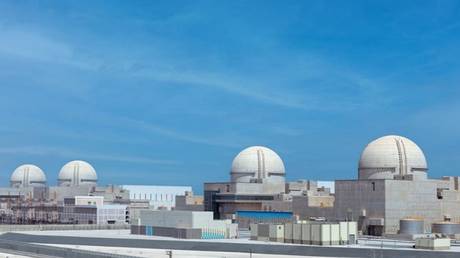
The headlines are dripping with panic. "Drone strike targets UAE nuclear plant." Media outlets are practically hyperventilating, spinning a narrative of apocalyptic vulnerability. They want you to picture a dystopian nightmare where a commercial quadcopter can trigger a regional meltdown.
It is a spectacular exercise in collective ignorance.
The lazy consensus across the media landscape—and among armchair geopolitical analysts—is that the Barakah nuclear power plant is a sitting duck. They look at cheap, weaponized drones reshaping modern warfare and assume a multi-billion-dollar reactor is just as fragile.
They are fundamentally wrong. They are miscalculating the physics of containment, the reality of modern engineering, and the sheer scale of nuclear defense.
The recent drone incident in the UAE does not expose a terrifying vulnerability. It proves the exact opposite. It demonstrates that the most hardened, resilient energy infrastructure on earth is practically immune to the theater of asymmetric warfare.
The Myth of the Flying Soda Can
Let's dismantle the physics of this panic immediately.
Mainstream reporting treats a drone strike on a nuclear facility as if it is a direct hit to an exposed core. They ignore the basic structural reality of a Generation III+ reactor like the APR-1400 units at Barakah.
The outer layer is not a sheet-metal roof. It is a massive, steel-reinforced concrete containment building. We are talking about walls several feet thick, engineered to withstand extreme kinetic impacts.
Decades ago, the nuclear industry did not just guess about this. They proved it. In 1988, Sandia National Laboratories ran an F-4 Phantom fighter jet into a concrete wall at 480 miles per hour to test impact resistance. The jet was vaporized into powder. The wall suffered superficial scraping.
Compare an F-4 Phantom—weighing 42,000 pounds and traveling near the speed of sound—to a loitering munition or a commercial drone carrying a few dozen pounds of explosives. The drone hitting a reactor containment dome is the kinetic equivalent of a mosquito hitting a bulletproof windshield.
To cause a catastrophic release of radiation, an attacker needs to breach the containment structure, destroy the reactor pressure vessel, sever the primary cooling loops, and disable the redundant emergency backup systems. A drone carrying a shaped charge might chip the concrete. It might destroy an auxiliary transformer in an outer yard. It will not cause a meltdown.
Breaking Down the Barakah Design
I have spent years evaluating industrial risk profiles, and the sheer ignorance surrounding nuclear defense depth is staggering. The UAE’s Barakah plant uses the South Korean APR-1400 design. It is not a legacy Soviet reactor built without a containment structure.
The system is defined by layers of redundancy that look like logistical paranoia:
- Four Independent Safety Trains: If an attack managed to completely sever one cooling system, three identical, physically separated backup systems are ready to take over.
- The Core Catcher: Even in a worst-case scenario where the core melts through the reactor vessel, the system is designed to catch, retain, and cool the corium melt inside the containment structure automatically.
- Missile Shielding: The design explicitly accounts for aircraft impacts. The outer shell is built to flex, absorb, and deflect massive kinetic energy.
When a drone strikes the perimeter or an auxiliary building, it causes a financial headache and a PR nightmare. It does not cause a nuclear disaster. The grid might lose power temporarily if an external switchyard is damaged, but the reactor itself remains entirely safe.
The Real Threat Nobody Wants to Talk About
If the physical infrastructure is functionally impregnable to small-scale aerial attacks, where is the actual vulnerability?
It is not the sky. It is the supply chain and the digital architecture.
While the media chases the clickbait of exploding drones, the real threat vectors are sophisticated cyber operations and insider sabotage. Stuxnet proved fifteen years ago that you do not need to drop a bomb to disrupt a nuclear program; you just need a corrupted USB drive and a flawed piece of industrial software.
An adversary targeting Barakah or any other global nuclear hub knows that physical destruction is a fool’s errand. Instead, they look for vulnerabilities in the distributed control systems (DCS), the supply chain of replacement components, or the psychological vulnerabilities of the staff.
Amateur analysts ask: "Can a drone blow up the reactor?"
The correct question is: "Can a state-sponsored actor spoof the data feeding into the control room to force an unnecessary, economically devastating emergency shutdown?"
By focusing entirely on the cinematic threat of drones, operators risk misallocating defense budgets. Millions spent on physical anti-drone netting and kinetic interception systems is money diverted from zero-trust cyber architecture and deep background screening.
The Cost of the Panic Matrix
There is a massive downside to my contrarian position, and it is a bitter pill to swallow: admitting that the physical structure is safe does not solve the economic fallout of the panic itself.
Nuclear energy relies heavily on public perception and political capital. The moment the word "strike" appears next to "nuclear plant," the financial markets react. Insurance premiums for nuclear operators spike. Regulatory bodies demand immediate, expensive safety reviews. Public opposition grows, delaying future projects.
This is the true objective of an asymmetric drone strike on a nuclear facility. The attacker knows they cannot breach the concrete. They do not want to. They want to weaponize the media’s ignorance to create an economic blockade around clean energy.
Every time an outlet publishes a sensationalized piece about a drone threat without explaining the physics of containment, they are doing the attacker’s marketing work for them. They are driving up the cost of capital for zero-carbon baseload electricity.
Stop Treating Nuclear Like Glass
We need to stop treating our most resilient energy assets as if they are made of porcelain. The energy transition requires massive, reliable power, and nuclear is the only technology capable of delivering it 24/7 without choking the atmosphere.
If a drone strikes an oil refinery or a natural gas storage tank, you get a massive, uncontainable fireball that burns for days. If a drone strikes a solar farm, it shatters acres of generation capacity. If a drone strikes a nuclear plant, it scratches the paint on a concrete bunker.
The UAE incident is not a warning to stop building nuclear plants. It is a validation of why we should build more of them. They are the only power plants designed from the ground up to survive a warzone.
Build the walls. Harden the networks. Ignore the noise.



