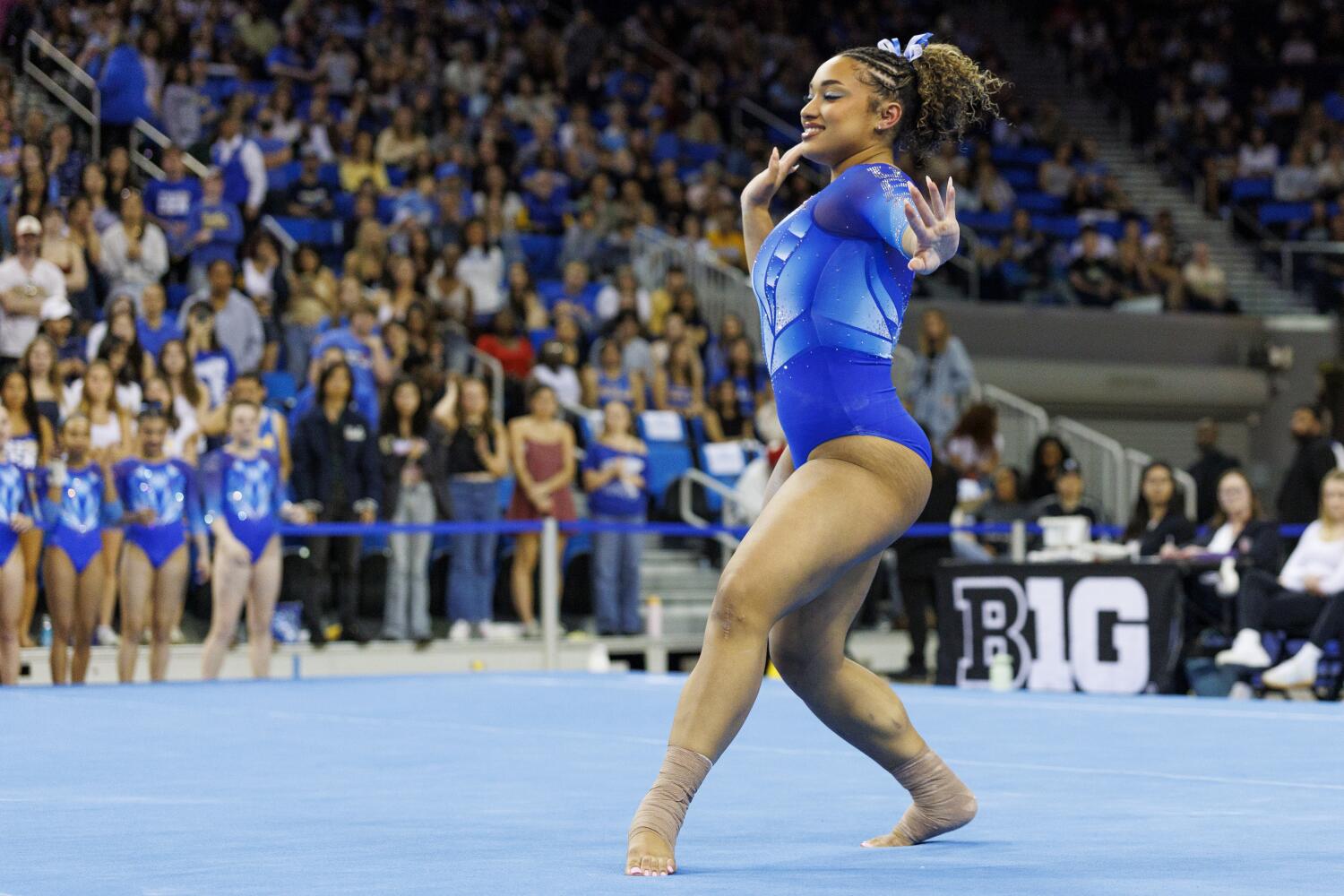
The transition of UCLA gymnastics into the Big Ten isn't just a change of scenery or a logistical shift in flight patterns. It is a fundamental collision of cultures that will dictate whether the Bruins remain a national powerhouse or become a cautionary tale of realignment. While casual observers view mid-season conference matchups as mere tune-ups for the postseason, the reality inside the gym is far more clinical. UCLA is currently using these high-stakes meets to stress-test a roster that must trade its trademark West Coast flair for the sheer mechanical consistency required to survive the Midwest winters.
The "primer" for the postseason is already happening in the scoring gaps. In the Pac-12, UCLA could often rely on performance art—those viral floor routines that racked up millions of views—to mask minor technical deductions. The Big Ten offers no such sanctuary. This is a conference built on the bones of blue-collar execution, where judges often reward the "stuck" landing over the charismatic choreography.
The Scoring Infrastructure Crisis
To understand why UCLA is treating these meets with such intensity, you have to look at the mathematical evolution of the sport. The gap between a national title contender and a regional also-ran is no longer measured in full points. It is measured in the flicker of a heel on a landing or the slight separation of knees in a double tuck.
In the Big Ten environment, the judging climate is notoriously rigid. Teams like Michigan and Michigan State have spent years perfecting a style of gymnastics that mirrors a machine shop—precise, repetitive, and devoid of unnecessary movement. UCLA, conversely, has historically leaned into a brand of "theatre on the mat." The investigative truth is that the Bruins are currently in the middle of a painful recalibration. They are stripping back the layers of their performance to see if the skeletal structure of their technique can hold up when the "wow factor" is stripped away by a conservative judging panel.
The Depth Chart Gamble
Coach Janelle McDonald isn't just looking for wins in February. She is looking for endurance. The Big Ten schedule is a physical assault compared to the relatively compact travel of the former Pac-12. The Bruins are now facing back-to-back weekends of cross-country flights, fluctuating arena temperatures, and equipment that feels different in the humidity of the East Coast versus the dry air of Westwood.
This creates a "depth trap." If you ride your superstars—your Olympic-level talents—too hard in these "primer" meets, they will be frayed by the time the NCAA Championships arrive in April. If you rest them, you lose the seeding advantage that ensures an easier path through Regionals.
- The Lead-Off Strategy: UCLA has begun experimenting with high-ceiling, low-floor freshmen in the lead-off spots to see who can handle the pressure of setting the tone.
- The Anchor Pressure: They are moving veteran anchors into the middle of the lineup to provide a safety net, a tactical shift intended to prevent "snowball" falls.
- The Recovery Window: Analyzing biometric data to determine exactly how much a five-hour flight impacts a gymnast’s inner ear balance before a beam routine.
The Vault Problem
The most glaring vulnerability for UCLA remains the vault. While the Bruins can dance and tumble their way to 9.950s on floor and bars, the vault is where the Big Ten’s powerhouses usually bury their opponents. A 10.0 start value is the price of admission. If UCLA cannot consistently land Yurchenko doubles or high-end saltos without the dreaded "hop" on the landing, the conference title will remain out of reach.
In recent meets, the focus has shifted from "big air" to "dead stops." The coaching staff is obsessed with the final two inches of the routine. They know that in a postseason environment, a team that gives away three-tenths of a point on landing hops is effectively starting the meet with a deficit that even a perfect floor rotation cannot erase. This isn't about athleticism anymore. It is about the physics of deceleration.
The Mental Fatigue of Rebranding
There is an overlooked psychological tax on these athletes. For decades, UCLA gymnastics was the "cool" program. They were the innovators. Now, they are the outsiders trying to prove they belong in a conference that prides itself on being "tougher" than the West Coast.
During a mid-season meet in a cold, half-empty arena in the Midwest, the "fun" of gymnastics evaporates. What remains is the sheer grit of the sport. We are seeing a shift in the Bruins' body language. The smiles are still there for the cameras, but the huddles between rotations are grittier. They are learning that in the Big Ten, you don't win by being liked; you win by being undeniable.
The real test of this "postseason primer" isn't the final score on the scoreboard. It is the medical report and the judge’s shorthand. If UCLA can emerge from this stretch with their ankles intact and their execution scores trending upward, they will be the most dangerous team in the country. If they continue to chase the ghost of the Pac-12’s stylistic freedom, they will find themselves outmuscled by programs that prioritize the grind over the glamor.
The transition is a cold shower for a program used to the sun. But cold showers have a way of waking you up just when you need it most. Watch the feet, not the faces. That is where the season will be won or lost.